
Canadian Pacific Kansas City: A Fortress of Operational Stability in a Volatile Market
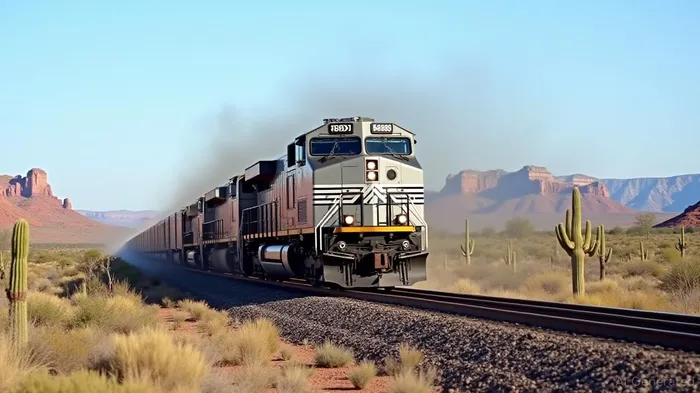
In an era of economic uncertainty and supply chain volatility, Canadian Pacific Kansas CityCP-- (CPKC) has emerged as a beacon of operational stability through its recently secured four-year collective agreements. These agreements, which include 3% annual wage increases for employees across key divisions, are not merely labor contracts—they are strategic masterstrokes that eliminate disruption risks, fortify cash flows, and position CPKC as a must-own rail stock for investors seeking growth with minimal downside exposure.
Labor Stability: The Foundation of CPKC's Competitive Edge
CPKC's recent agreements with unions like the Teamsters Canada Rail Conference (TCRC), United Steelworkers (USW), and Unifor are game-changers. By locking in 3% annual wage hikes for approximately 7,000 employees—from locomotive engineers to clerical staff—CPKC has eliminated the threat of labor strikes for the next four years. This contrasts sharply with Canadian National Railway (CN), which faced a 2024 freight stoppage due to unresolved wage disputes.
The reflects this advantage. While CN's shares dipped during its labor strife, CPKC's stock rose steadily, signaling investor confidence in its ability to avoid disruptions.
Predictable Costs, Uninterrupted Operations
The 3% annual increases may seem modest, but their impact is transformative. By pre-negotiating labor costs through 2027, CPKC gains clarity over its largest operational expense. This predictability allows the company to focus on post-merger integration with Kansas City Southern (KCS) without the distraction of union negotiations.
Consider CPKC's Q1 2025 results: 8% revenue growth to $3.8 billion, a 17% rise in diluted EPS, and improved safety metrics. These figures are not accidental—they stem from uninterrupted rail service and a workforce incentivized by fair, stable compensation.
Strategic Advantage in a High-Stakes Industry
North America's rail sector is a zero-sum game. Every hour of service disruption costs millions in lost revenue. CPKC's multi-year agreements ensure its 20,000-mile network remains operational, safeguarding relationships with shippers like oil companies, manufacturers, and agricultural exporters. This reliability translates to sticky customer contracts and recurring revenue streams, making CPKC a cash-flow powerhouse.
Moreover, the agreements address a critical investor concern: geopolitical risk. As trade policies shift and climate challenges loom, CPKC's labor peace allows it to adapt quickly to disruptions without internal strife.
Why Investors Should Act Now
CPKC's shares are primed for growth. The company's forward guidance projects a 10–14% increase in core adjusted diluted EPS for 2025, driven by post-merger synergies and stable operations. With labor costs secured and capital expenditure plans on track, CPKC is poised to capitalize on rising demand for rail freight in energy, agriculture, and e-commerce.
For income-focused investors, CPKC's dividend yield (currently 1.5%) may understate its value—it's the operational resilience that truly matters. Unlike cyclical stocks, CPKC's rail services are recession-resistant; even in downturns, goods still need to move.
Final Call: Secure Your Stake in a Stable Giant
The writing is on the tracks: CPKC's labor agreements are a multi-year moat against volatility. With predictable costs, integration-ready operations, and a network that fuels North America's economic engine, this is a stock built to outperform.
Investors who act now gain access to a company with:
- Zero labor disruption risk through 2027
- 8% revenue growth already in 2025
- A 20,000-mile asset base with untapped merger synergies
The question isn't whether CPKC will thrive—it already is. The question is: Will you be aboard for the next leg of this journey?
This article is for informational purposes only. Always conduct your own research or consult a financial advisor before making investment decisions.





Comentarios
Aún no hay comentarios