
Canadian Dollar Bond Market Volatility: Navigating Currency Risk and Central Bank Timing
The Canadian dollar bond market has become a focal point for investors navigating a complex interplay of currency risk and central bank policy. From 2023 to Q3 2025, volatility in this market has been driven by a combination of trade policy uncertainty, divergent monetary policy trajectories, and shifting investor sentiment. As the Bank of Canada (BoC) grapples with a weakening economy and inflationary pressures, the bond market has reflected both optimism and caution, offering insights into how currency risk and central bank timing shape fixed-income returns.
Currency Risk: Trade Policy and Interest Rate Differentials
The Canadian dollar's depreciation against the U.S. dollar since October 2024 has been a defining feature of this period. According to a Bank of Canada report, rising uncertainty around U.S. trade policies-particularly the imposition of tariffs on Canadian goods-has been a primary driver of this trend. These tariffs have not only reduced demand for Canadian exports but also eroded investor confidence in the CAD. Compounding this, the widening interest rate differential between Canada and the U.S. has further pressured the currency. As of Q3 2025, the 5-year bond yield spread between the two countries stood at 1.59%, the highest in over four decades, according to a bond spread analysis. This divergence has led to a flight of capital from Canadian assets, as investors seek higher returns in U.S. Treasuries.
Exchange rate risk premiums have also surged, with investors demanding higher compensation for holding Canadian assets. Data from the Bank of Canada's Staff Analytical Note highlights that traditional global factors-such as U.S. dollar fluctuations and oil prices-have lost explanatory power since 2022, suggesting that idiosyncratic risks like trade policy now dominate. This shift has made hedging strategies more critical for Canadian bond investors, as currency movements increasingly decouple from broader macroeconomic trends.
Central Bank Timing: Policy Divergence and Market Reactions
The BoC's response to economic headwinds has been cautious but decisive. In September 2025, the central bank cut its benchmark interest rate by 25 basis points to 2.5%, marking the first reduction since March 2025, according to a Bank of Canada press release. This move followed a 1.6% contraction in Canada's GDP during Q2 2025, driven largely by a 27% decline in exports due to U.S. tariffs, as noted in the Bank of Canada report. The BoC's decision was widely anticipated, with bond yields on 2-year and 5-year Canada bonds already falling by 13 basis points in August as markets priced in the cut, according to the staff analytical note. However, the yield on 30-year bonds rose by 7 basis points, reflecting concerns over fiscal deficits and the potential for inflation to persist in the medium term, as the staff analytical note also discusses.
The BoC's actions contrast sharply with those of the U.S. Federal Reserve, which has maintained a tighter policy stance. This divergence has created a unique environment for Canadian bonds. While shorter-term yields have fallen, longer-term yields have risen, steepening the yield curve. As of late August 2025, 10-year Canadian bond yields settled at 3.47%, reflecting a balance between easing monetary policy and lingering inflationary risks, a point the staff analytical note highlights. This steepening curve has attracted investors seeking both capital appreciation and income, particularly in the investment-grade corporate bond sector, where strong demand has narrowed yield spreads, according to the Bank of Canada report.
Market Implications and Future Outlook
The interplay of currency risk and central bank timing has left the Canadian bond market in a state of flux. On one hand, the BoC's rate cuts have made Canadian bonds more attractive relative to U.S. Treasuries, especially for investors seeking higher yields. On the other, the CAD's weakness has introduced volatility, with exchange rate fluctuations amplifying returns for foreign investors but complicating hedging strategies for domestic ones.
Looking ahead, the BoC faces a delicate balancing act. While it has signaled its intention to maintain the current rate through the remainder of 2025, it will need to monitor the evolving trade environment and its impact on inflation, as noted in the Bank of Canada press release. The recent removal of retaliatory tariffs on U.S. imports could ease inflationary pressures, but the path of U.S. trade policy remains uncertain. For bond investors, this uncertainty suggests a need for flexibility. Shorter-duration bonds may offer better protection against rate hikes, while longer-duration bonds could benefit from continued BoC easing.
In conclusion, the Canadian dollar bond market's volatility underscores the importance of understanding both currency risk and central bank timing. As trade policy uncertainties persist and monetary policy divergences play out, investors must remain agile, leveraging insights from yield curves, exchange rate dynamics, and central bank communications to navigate this complex landscape.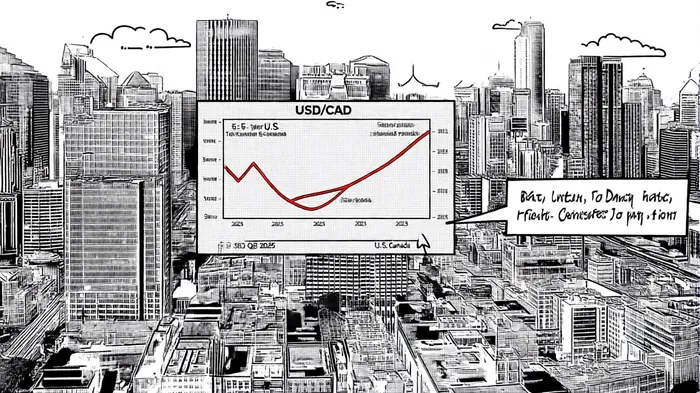







Comentarios
Aún no hay comentarios