
Canada's West Coast LNG Project: A Strategic Inflection Point for Energy Exports and Geopolitical Realignment
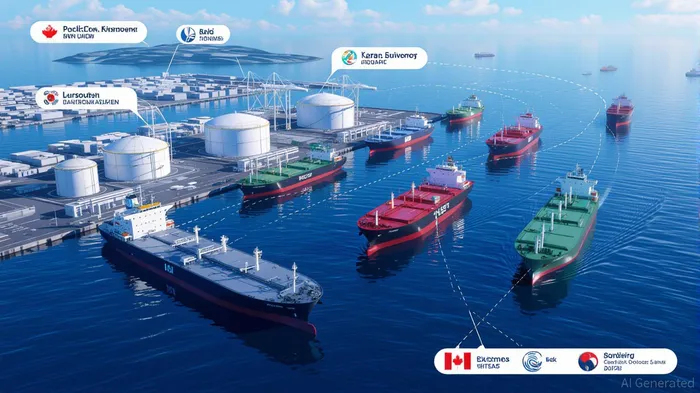
The Canada West Coast LNG Project represents a pivotal shift in the nation's energy strategy, positioning British Columbia (BC) as a critical node in the global liquefied natural gas (LNG) supply chain. For investors in energy and infrastructure, this initiative offers a unique confluence of economic and geopolitical opportunities, even as it navigates complex global dynamics.
Economic Implications: Fueling Growth and Employment
The project is projected to catalyze significant economic activity in BC, a province already central to Canada's trade with the Pacific Rim[2]. By expanding LNG export capacity, the initiative is expected to create thousands of jobs across construction, operations, and supply chain sectors[1]. According to the Future of Jobs Report 2025, energy infrastructure projects like LNG terminals are among the fastest-growing employment drivers, with frontline roles such as construction workers and logistics specialists seeing robust demand[2].
Moreover, the project aligns with Canada's broader economic strategy to leverage its natural resources in a decarbonizing world. As global demand for cleaner energy sources intensifies, LNG—particularly if produced with carbon capture technologies—could become a cornerstone of Canada's export portfolio[2]. This positions BC not just as a regional hub but as a strategic asset for investors seeking exposure to energy transition themes.
Geopolitical Realignment: Strengthening Ties with Asia
Geopolitically, the West Coast LNG Project underscores Canada's ambition to deepen energy partnerships with Asia, a region accounting for over 60% of global LNG demand[1]. By diversifying export routes and reducing reliance on U.S. markets, Canada aims to insulate its energy sector from North American trade volatility while reinforcing its role in global energy security[2].
This alignment with Asian markets also intersects with broader U.S.-China dynamics. As China seeks to reduce its carbon footprint and diversify energy imports, Canadian LNG could fill a critical gap, particularly if U.S. exports face regulatory or geopolitical headwinds[2]. For investors, this creates a dual opportunity: capitalizing on Asia's energy transition while navigating the shifting contours of trans-Pacific trade.
Risks and Challenges: Navigating Uncertainty
Despite its promise, the project faces headwinds. Rising global tariffs and geoeconomic fragmentation could dampen export growth, as noted in the World Economic Forum's 2025 Global Shifts Report, which projects a slowdown in global GDP growth to 2.3% amid trade tensions[1]. Additionally, environmental concerns—particularly around methane emissions and Indigenous land rights—require careful management to avoid regulatory delays or reputational risks[2].
Investors must also weigh the pace of the global energy transition. While LNG is seen as a "bridge fuel," long-term demand could wane if renewable energy adoption accelerates faster than anticipated. However, the project's potential to integrate carbon capture and storage (CCS) technologies may mitigate this risk, aligning with international climate goals[2].
Strategic Outlook for Investors
For energy and infrastructure investors, the West Coast LNG Project embodies a high-impact, high-risk proposition. Its success hinges on three factors:
1. Policy Stability: Continued government support for energy exports and carbon-neutral infrastructure.
2. Market Access: Securing long-term contracts with Asian buyers amid evolving trade policies.
3. Technological Integration: Adoption of CCS and other innovations to meet decarbonization targets.
Conclusion
The Canada West Coast LNG Project is more than an infrastructure endeavor—it is a strategic recalibration of Canada's role in the global energy landscape. For investors, it offers exposure to a sector poised for growth in both economic and geopolitical terms, provided risks are managed effectively. As the world grapples with energy security and climate imperatives, projects like this will define the next phase of global trade and investment.







Comentarios
Aún no hay comentarios