
Canada's Washington Campaign: A Last-Ditch Effort Against Tariffs
Generado por agente de IAWesley Park
miércoles, 26 de febrero de 2025, 6:22 pm ET2 min de lectura
FORD--
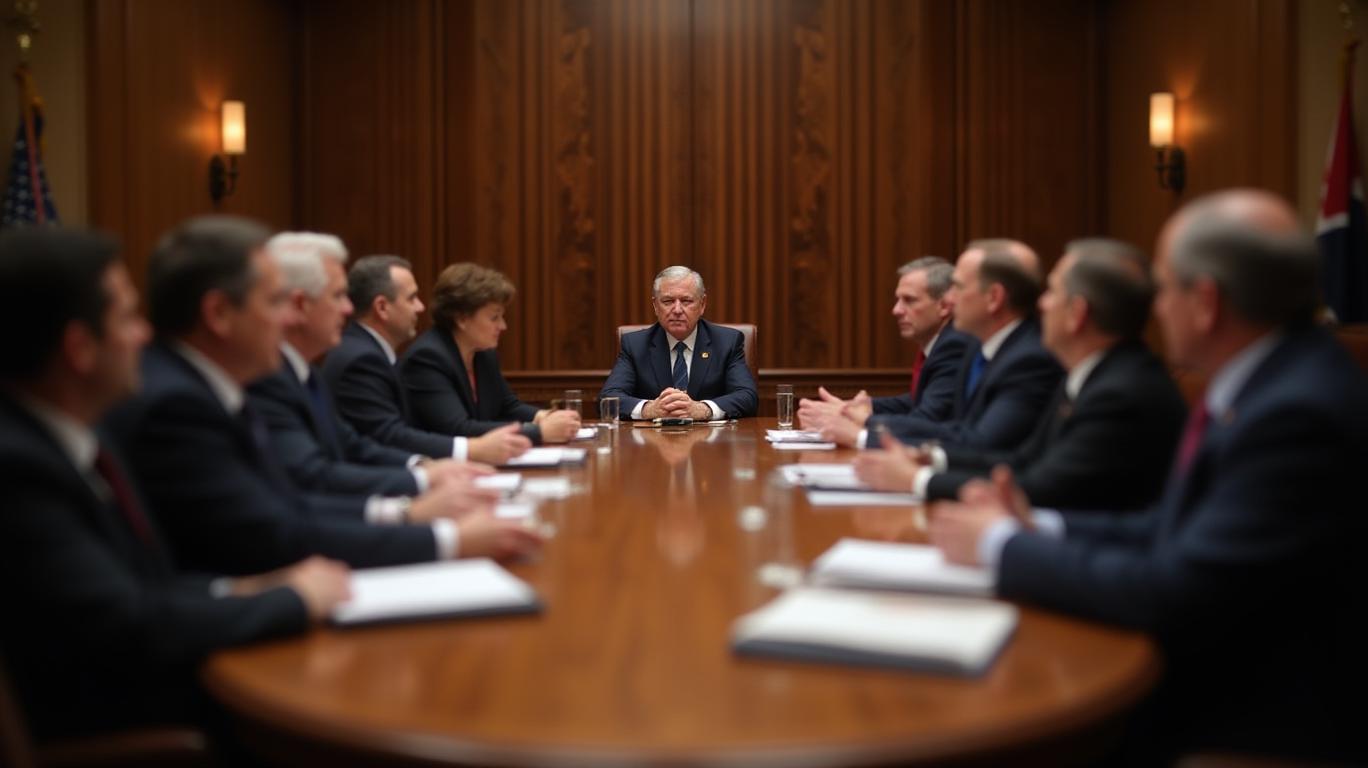
As the March 4 deadline looms, Canada has launched a concerted campaign in Washington to persuade the U.S. government to reconsider its tariff threats. Led by the Council of the Federation, which includes all 13 provincial and territorial premiers, this diplomatic push is a last-ditch effort to mitigate the potential economic harm that the tariffs could cause to both countries.
The Canadian government's strategy is multifaceted, targeting both American business leaders and Republican lawmakers. Ontario PremierPINC-- Doug FordFORD-- has directly reached out to members of the U.S. Chamber of Commerce, appealing to them to engage with Republican lawmakers and the president on Canada's behalf. Ford emphasized the importance of maintaining a strong North American economy that benefits both countries (Source: "Ontario Premier Doug Ford appeals directly to American business leaders in Washington").
British Columbia Premier David Eby has also stressed the need to reach out to Republicans, acknowledging that Canadians are "way too reliant on the decisions of one person in the White House" (Source: "B.C. Premier David Eby says Canadians are 'way too reliant' on U.S. president's decisions"). This approach aims to leverage the strong ties between Canada and the U.S., as well as address Trump's specific concerns, to mitigate the impact of the tariff dispute.
Canadian officials have been emphasizing the deep integration of the two economies, with Canada being the largest trading partner of the U.S. In 2022, over $960.9 billion in total trade was conducted between the two countries, accounting for close to two-thirds of Canada's worldwide trade (Source: "Bilateral relations"). This highlights the potential economic consequences for both countries if the tariffs are implemented.
If the tariffs are implemented, both Canada and the U.S. could face potential economic consequences. Canadian businesses, particularly those in the auto, steel, aluminum, and consumer goods sectors, may face higher production costs due to increased tariffs on imported U.S. goods. This could lead to reduced competitiveness in the North American market (Source: "Tariffs could hurt these TSX sectors the most"). U.S. consumers may face higher prices for Canadian goods, such as vehicles, aluminum, steel, and consumer staples, due to the retaliatory tariffs imposed by Canada. This could lead to a decrease in consumer spending and potential economic slowdown (Source: "U.S.-Canada trade war escalates").
Canadian businesses are exploring alternative markets and supply chains to reduce their dependence on the U.S. market. For example, Canadian companies are looking to increase exports to Asia and Europe to diversify their trade portfolio (Source: "Coordination on Fight Against the Pandemic and Building Back Better" section). U.S. businesses are also exploring ways to adapt to the new trade environment, such as investing in automation and technology to reduce their reliance on foreign labor and materials (Source: "United States-Mexico-Canada Agreement" section).
In conclusion, Canada's Washington campaign is a last-ditch effort to mitigate the potential economic harm that the U.S. tariffs could cause to both countries. While the outcome remains uncertain, the Canadian government's strategy aims to leverage the strong ties between the two countries and address Trump's specific concerns. If the tariffs are implemented, both Canada and the U.S. could face potential economic consequences, including increased costs, disruptions in supply chains, and reduced trade and investment. Businesses in each country may need to adapt by finding alternative suppliers, investing in domestic production, or exploring new markets to mitigate the impact of tariffs.
PINC--
As the March 4 deadline looms, Canada has launched a concerted campaign in Washington to persuade the U.S. government to reconsider its tariff threats. Led by the Council of the Federation, which includes all 13 provincial and territorial premiers, this diplomatic push is a last-ditch effort to mitigate the potential economic harm that the tariffs could cause to both countries.
The Canadian government's strategy is multifaceted, targeting both American business leaders and Republican lawmakers. Ontario PremierPINC-- Doug FordFORD-- has directly reached out to members of the U.S. Chamber of Commerce, appealing to them to engage with Republican lawmakers and the president on Canada's behalf. Ford emphasized the importance of maintaining a strong North American economy that benefits both countries (Source: "Ontario Premier Doug Ford appeals directly to American business leaders in Washington").
British Columbia Premier David Eby has also stressed the need to reach out to Republicans, acknowledging that Canadians are "way too reliant on the decisions of one person in the White House" (Source: "B.C. Premier David Eby says Canadians are 'way too reliant' on U.S. president's decisions"). This approach aims to leverage the strong ties between Canada and the U.S., as well as address Trump's specific concerns, to mitigate the impact of the tariff dispute.
Canadian officials have been emphasizing the deep integration of the two economies, with Canada being the largest trading partner of the U.S. In 2022, over $960.9 billion in total trade was conducted between the two countries, accounting for close to two-thirds of Canada's worldwide trade (Source: "Bilateral relations"). This highlights the potential economic consequences for both countries if the tariffs are implemented.
If the tariffs are implemented, both Canada and the U.S. could face potential economic consequences. Canadian businesses, particularly those in the auto, steel, aluminum, and consumer goods sectors, may face higher production costs due to increased tariffs on imported U.S. goods. This could lead to reduced competitiveness in the North American market (Source: "Tariffs could hurt these TSX sectors the most"). U.S. consumers may face higher prices for Canadian goods, such as vehicles, aluminum, steel, and consumer staples, due to the retaliatory tariffs imposed by Canada. This could lead to a decrease in consumer spending and potential economic slowdown (Source: "U.S.-Canada trade war escalates").
Canadian businesses are exploring alternative markets and supply chains to reduce their dependence on the U.S. market. For example, Canadian companies are looking to increase exports to Asia and Europe to diversify their trade portfolio (Source: "Coordination on Fight Against the Pandemic and Building Back Better" section). U.S. businesses are also exploring ways to adapt to the new trade environment, such as investing in automation and technology to reduce their reliance on foreign labor and materials (Source: "United States-Mexico-Canada Agreement" section).
In conclusion, Canada's Washington campaign is a last-ditch effort to mitigate the potential economic harm that the U.S. tariffs could cause to both countries. While the outcome remains uncertain, the Canadian government's strategy aims to leverage the strong ties between the two countries and address Trump's specific concerns. If the tariffs are implemented, both Canada and the U.S. could face potential economic consequences, including increased costs, disruptions in supply chains, and reduced trade and investment. Businesses in each country may need to adapt by finding alternative suppliers, investing in domestic production, or exploring new markets to mitigate the impact of tariffs.

Divulgación editorial y transparencia de la IA: Ainvest News utiliza tecnología avanzada de Modelos de Lenguaje Largo (LLM) para sintetizar y analizar datos de mercado en tiempo real. Para garantizar los más altos estándares de integridad, cada artículo se somete a un riguroso proceso de verificación con participación humana.
Mientras la IA asiste en el procesamiento de datos y la redacción inicial, un miembro editorial profesional de Ainvest revisa, verifica y aprueba de forma independiente todo el contenido para garantizar su precisión y cumplimiento con los estándares editoriales de Ainvest Fintech Inc. Esta supervisión humana está diseñada para mitigar las alucinaciones de la IA y garantizar el contexto financiero.
Advertencia sobre inversiones: Este contenido se proporciona únicamente con fines informativos y no constituye asesoramiento profesional de inversión, legal o financiero. Los mercados conllevan riesgos inherentes. Se recomienda a los usuarios que realicen una investigación independiente o consulten a un asesor financiero certificado antes de tomar cualquier decisión. Ainvest Fintech Inc. se exime de toda responsabilidad por las acciones tomadas con base en esta información. ¿Encontró un error? Reportar un problema




Comentarios
Aún no hay comentarios