
U.S.-Canada Trade Tensions: Navigating Risks and Opportunities in Energy and Manufacturing
The escalating U.S.-Canada trade tensions, marked by the looming 35% tariff on non-USMCA-compliant goods effective August 1, 2025, present both challenges and opportunities for investors. While the immediate focus is on supply chain disruptions and retaliatory measures, a deeper analysis reveals sector-specific vulnerabilities—and resilient pockets of value—across energy and manufacturing. This article explores how investors can position portfolios to capitalize on these dynamics, emphasizing contrarian strategies and underappreciated equities.
Energy Sector: Navigating USMCA Exemptions and Currency Fluctuations
The energy sector faces mixed pressures. U.S. tariffs on non-USMCA-compliant Canadian energy goods remain at 10%, while non-energy products face the new 35% levy. Canadian energy infrastructure firms, such as Enbridge (ENB) and TC Energy (TRP), which operate cross-border pipelines, are largely shielded by USMCA exemptions. Their stable cash flows from long-term contracts make them attractive defensive plays.
However, Canadian oil and gas producers, such as Cenovus Energy (CVE) and Petroliam Canada (PCZ), face headwinds. Their U.S. export competitiveness hinges on CAD weakness, as a weaker Canadian dollar could offset tariff costs for U.S. buyers. Investors should monitor the CAD/USD exchange rate, which has fluctuated sharply amid geopolitical noise.
A tactical contrarian bet lies in Canadian energy infrastructure stocks, which benefit from North American energy demand and are less exposed to trade disputes. Meanwhile, Canadian Natural Resources (CNQ), with its diversified portfolio and hedging strategies, could outperform if CAD weakness persists.
Manufacturing: USMCA Compliance and Supply Chain Diversification
The automotive and industrial sectors are ground zero for tariff impacts. Non-USMCA-compliant auto parts face 35% tariffs, while compliant producers (e.g., those meeting regional value content rules) escape penalties. Canadian auto parts giant Magna International (MGA), which derives 80% of revenue from U.S. sales, could weather tariffs better than rivals due to strong USMCA compliance.
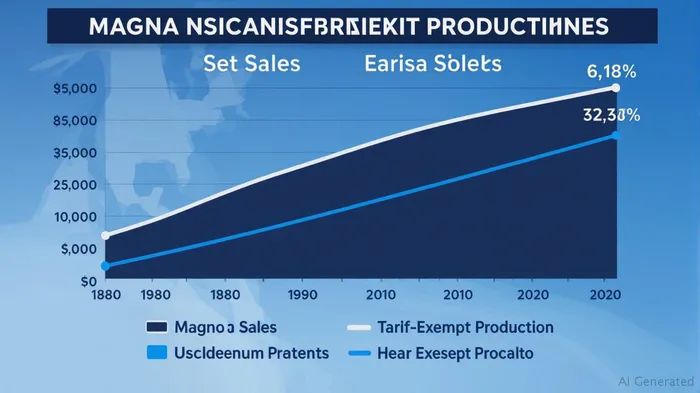
Contrarian opportunities arise in U.S. manufacturers positioned to replace Canadian imports. American Axle & Manufacturing (AXL), a U.S.-based auto supplier, could gain market share if Canadian competitors face higher tariffs. Investors should also consider 3M (MMM), which benefits from diversified supply chains and strong U.S. market presence.
Currency Dynamics: CAD Weakness as a Double-Edged Sword
A weakening CAD could advantage Canadian exporters outside the U.S., such as those targeting Europe or Asia. Bombardier (BBDb), a manufacturer of aircraft and rail equipment, might see cost advantages in non-U.S. markets. Meanwhile, U.S. firms importing Canadian goods could face margin pressures unless they pass costs to consumers—a risk for retailers like Walmart (WMT).
Investors should pair Canadian equity exposure with CAD-hedged ETFs (e.g., RYTCF) to mitigate currency volatility.
Contrarian Plays: High Dividends and Policy Pivots
The uncertainty surrounding the August 1 tariff deadline creates a tactical window for investors. Key strategies include:
- USMCA-Compliant Dividend Stocks:
- Enbridge (ENB): 6.2% dividend yield, stable cash flows from pipelines.
Brookfield Infrastructure Partners (BIP): 4.5% yield, global exposure beyond U.S.-Canada trade.
Underappreciated Canadian Exporters:
- SNC-Lavalin (SNC): Engineering firm with U.S. infrastructure projects under the USMCA.
AltaGas (ALB): Utilities and infrastructure, 5.5% dividend yield.
U.S. Firms with Diversified Supply Chains:
- General Electric (GE): Industrial leader with global sourcing flexibility.
- Cisco Systems (CSCO): IT infrastructure for alternative supply routes.
Risk Management: Timing and Legal Uncertainties
The timeline remains fluid. A court injunction or diplomatic breakthrough could delay or reduce tariffs. Investors should:
- Avoid overexposure to non-USMCA stocks until clarity emerges.
- Use options or inverse ETFs (e.g., FXC for CAD shorting) to hedge against volatility.
Conclusion: Position for Resilience and Policy Shifts
While U.S.-Canada trade tensions amplify near-term uncertainty, they also highlight sectors and companies equipped to thrive. Investors should prioritize USMCA-compliant firms with stable dividends, diversify into currency-hedged Canadian equities, and monitor policy developments closely. The key is to avoid binary bets on tariffs and instead focus on structural advantages and contrarian value—positions that could outperform as markets digest the noise and seek stability.
Investors should consult with a financial advisor before making any investment decisions.





Comentarios
Aún no hay comentarios