
U.S.-Canada Trade Tensions and Canadian Equities: Navigating Defensive Sectors and Currency Risks in 2025
The U.S.-Canada trade tensions of 2025 have reshaped the investment landscape for Canadian equities, creating both challenges and opportunities. As retaliatory tariffs escalate and legal battles unfold, Canadian investors are recalibrating their strategies to prioritize defensive sector positioning and currency risk mitigation. This analysis examines how these dynamics are influencing market behavior and outlines actionable insights for navigating the evolving geopolitical and economic environment.
Defensive Sector Positioning: A Buffer Against Trade Volatility
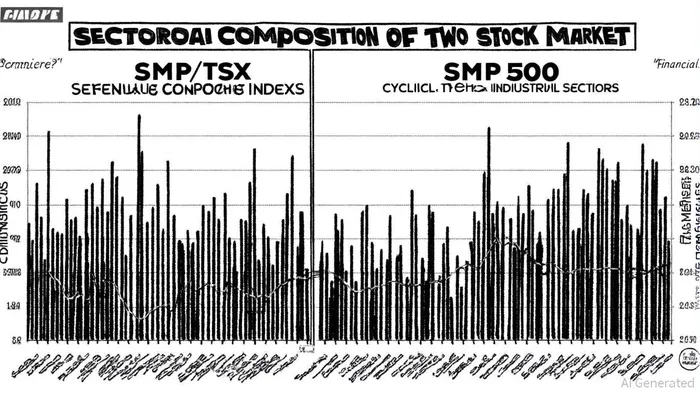
The S&P/TSX Composite Index has emerged as a relative safe haven amid global trade uncertainty, with over 50% of its weighting concentrated in defensive sectors such as financials, pipelines, communications, consumer staples, and utilities[1]. This structural advantage has cushioned Canadian equities from the sharp selloffs seen in more cyclical markets, particularly in the U.S., where technology and industrial sectors dominate. For instance, while U.S. markets faced a 12% decline in Q2 2025 due to trade-related disruptions, the TSX Composite recorded a more orderly 4% pullback, reflecting its defensive tilt[1].
The Bank of Canada's rate-cut cycle has further bolstered this trend. With interest rates falling from 5.25% in January 2025 to 3.75% by September, investors have shifted capital from low-yielding bonds to equities, driving gains in stable sectors like utilities and consumer staples[1]. Analysts note that Canadian equities now trade at a valuation discount, with a forward P/E ratio of 15x compared to 22x for U.S. counterparts, making them attractive for long-term investors[1]. However, sectors directly exposed to U.S. tariffs—such as steel, aluminum, and autos—remain vulnerable. Over half of Canadian exporters to the U.S. anticipate negative impacts, with many delaying investments or seeking alternative markets[2].
Currency Risk Mitigation: Hedging a Weakening Canadian Dollar
The Canadian dollar has depreciated by 8% against the U.S. dollar since February 2025, driven by trade policy uncertainty and a widening interest rate differential[3]. This depreciation has amplified costs for Canadian importers and exporters, with goods exports to the U.S. declining 15.7% in April 2025[1]. To mitigate these risks, businesses are adopting sophisticated hedging strategies:
- Forward Contracts: Locking in exchange rates for future transactions to stabilize cash flows.
- Currency ETFs: Gaining long or short exposure to CAD/USD movements without direct forex trading.
- Options Strategies: Limiting downside risk while retaining upside potential in volatile markets[2].
For example, Canadian energy firms, which face U.S. tariffs on oil exports, have increasingly used forward contracts to hedge revenue streams, reducing exposure to currency swings[3]. Similarly, small- and medium-sized enterprises (SMEs) are leveraging government-backed programs to access affordable hedging tools[1].
Legal and Policy Uncertainties: A Double-Edged Sword
The legal challenges to U.S. tariffs under the International Emergency Economic Powers Act (IEEPA) add another layer of complexity. U.S. courts have ruled that the executive overstepped its authority in imposing tariffs on Canada and Mexico, citing constitutional concerns about trade regulation[2]. While these rulings could eventually invalidate tariffs, the prolonged uncertainty has forced Canadian businesses to adopt a dual strategy: short-term resilience through hedging and long-term diversification into non-U.S. markets[4].
Prime Minister Mark Carney's push for a new trade and security partnership with the U.S. underscores the political will to resolve disputes, but investors remain cautious. Canada's removal of retaliatory tariffs on CUSMA-compliant U.S. goods in September 2025—while retaining tariffs on strategic sectors—signals a pragmatic approach to balancing economic and political interests[4].
Conclusion: Strategic Opportunities in a Fragmented Landscape
The U.S.-Canada trade tensions of 2025 present a paradox: while tariffs and legal battles create headwinds, they also highlight the resilience of Canadian equities and the ingenuity of risk mitigation strategies. Investors should focus on:
- Defensive Sectors: Overweighting utilities, consumer staples, and financials to capitalize on valuation advantages.
- Currency Hedging: Prioritizing forward contracts and options for businesses with significant U.S. exposure.
- Diversification: Exploring emerging opportunities in clean energy and resource sovereignty, which remain insulated from trade volatility[1].
As the trade dispute enters its next phase, adaptability and strategic foresight will be critical for preserving capital and capturing long-term growth.







Comentarios
Aún no hay comentarios