
Canada's Strategic Trade Dilemma: Navigating the US-China Crossfire
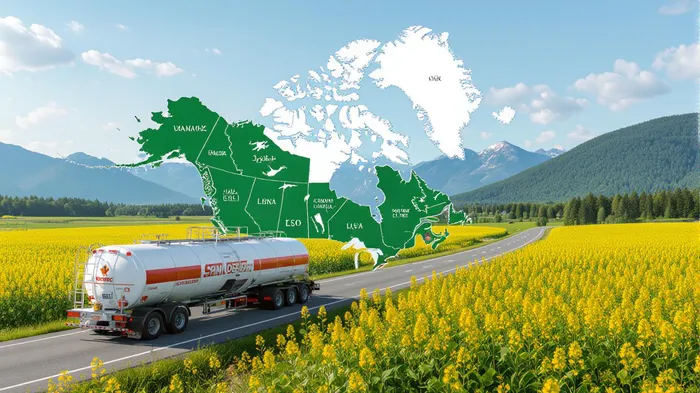
In the ever-shifting geopolitical chessboard of 2025, Canada finds itself in a precarious position—sandwiched between the U.S.-China trade war and its own economic vulnerabilities. With Prime Minister Mark Carney's pro-trade, pro-China pivot, the country is recalibrating its trade strategy to avoid becoming collateral damage in the superpower showdown. But for investors, this crossfire isn't just a risk—it's an opportunity. By dissecting Canada's realignment with China and identifying underappreciated sectors and provinces, we can uncover high-conviction plays in agriculture, energy, and tech. Let's break it down.
Agriculture: Canola's Comeback and the Pork Play
Canada's agricultural sector has been hit hard by China's retaliatory tariffs on canola oil, peas, and pork. Yet, this pain is paving the way for a long-term rebound. Saskatchewan, Canada's top canola producer, is leading the charge to reset relations with Beijing. With the federal government beefing up the AgriStability program (doubling payment caps to $6 million and enabling 75% interim payments), farmers are now better shielded from market shocks.
Why this matters: Canola is a $10B+ export to China, and a thaw in trade could unlock pent-up demand. Look for companies like Cargill (which processes 20% of Canada's canola) or regional agribusinesses like Agrium to benefit.
Visual:
Meanwhile, pork producers in Manitoba and Alberta are seeing a silver lining. China's 25% tariff on Canadian pork is a temporary hurdle, but the province's focus on premium, traceable meat exports could position it as a “safe haven” for Chinese buyers wary of U.S. imports.
Energy: LNG's Quiet Revolution in BC
British Columbia's LNG projects are a sleeping giant. The LNG Canada terminal, backed by ShellSHEL--, is set to begin exports in 2025, while the Cedar LNG project (with Sinopec's rumored equity stake) could solidify Canada's role as a direct LNG supplier to China. Unlike U.S. Gulf Coast terminals, Canada's proximity to Asia cuts shipping times by 40%, making it a logistics winner.
Why this matters: China's energy demand is growing by 3% annually, and Canada's LNG could fill a critical gap. For investors, focus on infrastructure plays like Teck Resources (supporting LNG Canada) or Sinopec Canada (if the equity stake materializes).
Visual:
Tech and Critical Minerals: Quebec's Lithium Bonanza
Quebec is the unsung hero of Canada's critical minerals push. With $43.5 million in federal-provincial funding, the province is fast-tracking lithium, nickel, and cobalt projects. Critical Elements Lithium Corporation is building a new electrical station for its Rose Lithium-Tantalum Mine, while Sayona Nord Inc. is advancing a 55-km transmission line for its Moblan lithium project.
Why this matters: Lithium is the new oil, and Quebec's projects are positioned to supply the EV battery boom. With China still dominating 60% of global refining capacity, a trade thaw could open access to Chinese processing facilities, boosting margins. Watch Sayona Nord and Commerce Resources (Ashram rare earths project) for breakout potential.
Visual:
Underappreciated Markets: The Sino-Canadian Sweet Spots
- Saskatchewan's Canola Tech Stack: Beyond the crop itself, Saskatchewan is investing in AI-driven farming solutions to meet Chinese food safety standards. Companies like AgNext Technologies (precision agriculture software) are prime for a trade thaw.
- Manitoba's Pork Infrastructure: The province is upgrading cold storage and logistics hubs to meet Chinese demand for premium pork. Look for regional players like Quality Pork Canada.
- Indigenous-Owned Projects: The Eskan Company's 87-km Renard Mine access road expansion (funded by CMIF) is a model for sustainable, community-led mining. These projects could attract ESG-focused capital if China's green policies gain traction.
The Geopolitical Risk Arbitrage Playbook
The key for investors is to balance risk and reward. While U.S. tariffs and Chinese retaliatory measures pose near-term headwinds, the long-term trend is clear: Canada is diversifying its trade away from the U.S. (which accounts for 75% of exports) and toward Asia.
- Agriculture: Bet on canola and pork producers with strong Chinese partnerships.
- Energy: Position in LNG infrastructure and Sinopec-backed projects.
- Tech: Go all-in on Quebec's critical minerals and lithium processing.
Visual:
Conclusion: The Crossfire is the Opportunity
Canada's trade dilemma isn't a dead end—it's a catalyst for innovation and diversification. By backing the right provinces and sectors, investors can ride the wave of a Sino-Canadian thaw. The winners won't be the obvious multinationals but the regional players and niche innovators positioned at the intersection of geopolitics and emerging markets. Time to get bullish on Canada's quiet revolution.
Final Call:







Comentarios
Aún no hay comentarios