
Canada Reviews US Fighter Jet Deal but Alternatives Look Costly
Generado por agente de IACyrus Cole
lunes, 17 de marzo de 2025, 12:47 pm ET3 min de lectura
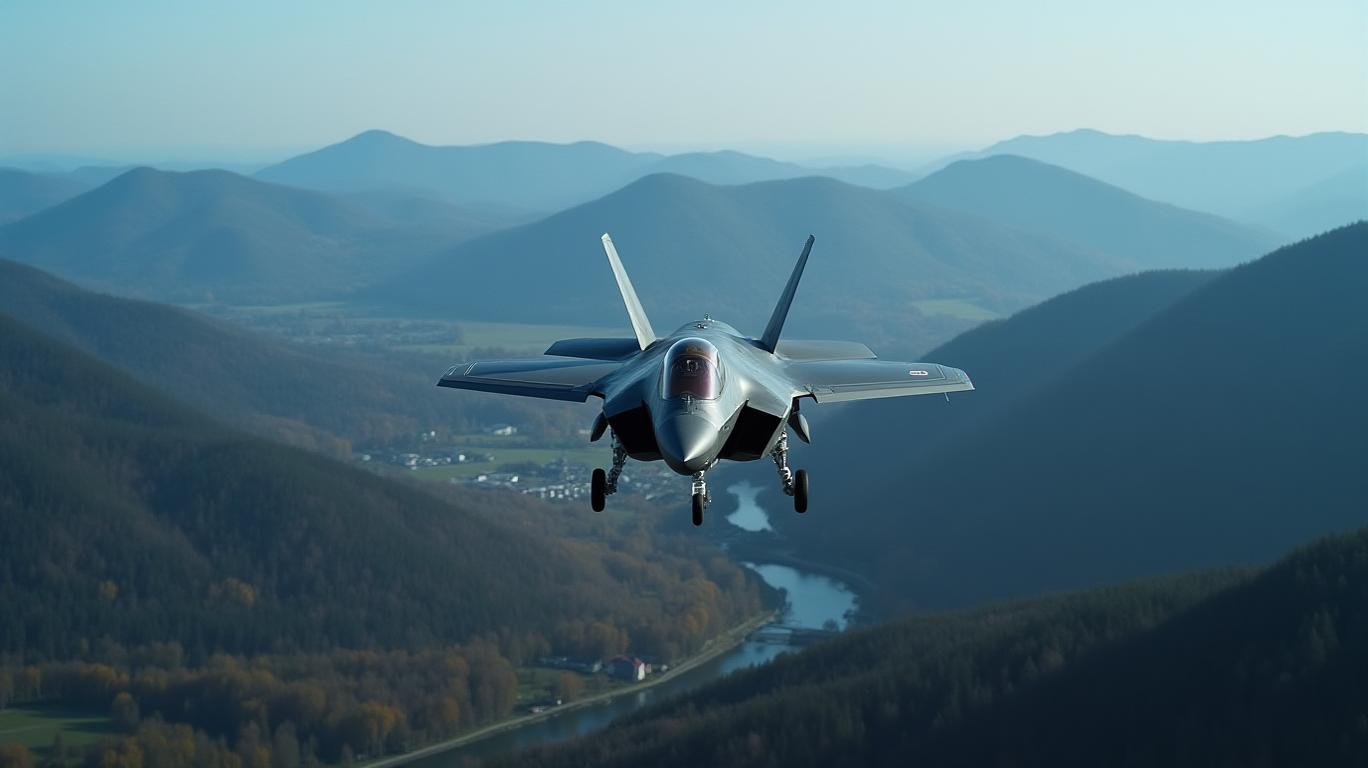
Canada's new Prime Minister Mark Carney has asked his defense minister to review the purchase of America’s F-35 fighter jet, citing a "changing environment" that includes a trade war with the United States and threats of economic coercion from U.S. President Donald Trump. The review comes as Canada faces significant economic and geopolitical pressures, prompting a reassessment of its defense procurement strategy.
The F-35 deal, valued at approximately $19 billion Canadian dollars, involves the purchase of 88 aircraft to modernize the Royal Canadian Air Force. The contract, finalized in 2023, was intended to replace Canada’s aging fleet of CF-18 Hornets with a state-of-the-art, stealth-capable aircraft designed to enhance interoperability with allies in NATO and NORAD. However, recent developments, including a burgeoning trade war and provocative rhetoric from U.S. President Donald Trump, have prompted the Canadian government to reconsider this commitment.
The primary economic factor driving Canada's reconsideration is the trade war initiated by U.S. President Donald Trump, which has imposed a 25 percent tariff on Canadian steel and aluminum, with broader tariffs looming. This economic pressure has strained bilateral relations and has led to a groundswell of support among Canadians to reevaluate the $19 billion purchase of F-35 jets. As Laurent deDE-- Casanove, Defense Minister Bill Blair’s press secretary, stated, "We need to do our homework given the changing environment, and make sure that the contract in its current form is in the best interests of Canadians and the Canadian Armed Forces." This sentiment reflects the broader economic concerns that have arisen due to the trade tensions.
Geopolitically, the unpredictability of U.S. foreign policy under the Trump administration has raised concerns about the reliability of the U.S. as an ally. Portugal’s outgoing defense minister, Nuno Melo, highlighted this issue, stating that "recent positions" taken by the U.S. have compelled a rethink about the purchase of F-35s because the U.S. has become unpredictable. Melo noted that the U.S. could in the future impose limits on the planes’ use, their maintenance, or their components, which could affect the operational readiness of the F-35s. This geopolitical uncertainty has led Canada to explore alternatives that might offer greater control over its defense strategy and autonomy in procurement.
The F-35's heavy reliance on U.S.-controlled systems is another critical factor. Lockheed Martin has refused to share the aircraft’s full source code with foreign buyers, including close allies like Canada. This means that critical mission data must be processed through U.S.-based facilities, raising concerns about operational autonomy. As Minister Blair indicated, "The prime minister has instructed me to examine all possibilities to ensure we’re making the right call for Canada." This includes discussions with European manufacturers, such as the Swedish-built Saab Gripen, which offers the promise of assembly and maintenance in Canada, thereby reducing dependency on the U.S. military-industrial complex.
The potential alternatives to the F-35, such as the Swedish Saab Gripen, present several key differences in terms of cost, capability, and strategic benefits, which have significant implications for Canada's defense strategy. The F-35 program is one of the most expensive military procurement projects in history. The total life cycle cost of the F-35 program for Canada is expected to be around $70 billion Canadian dollars. In contrast, the Saab Gripen is generally considered to be a more cost-effective option. The Gripen's lower cost is partly due to its simpler design and lower operational costs. For instance, the Gripen's maintenance and support infrastructure can be more easily managed domestically, which could reduce long-term costs for Canada.
The F-35 is a highly advanced stealth fighter jet with cutting-edge technology, including advanced sensors and stealth capabilities. It is designed to be a multirole fighter, capable of both air-to-air and air-to-ground missions. The Gripen, on the other hand, is a lighter and less expensive fighter with a strong reputation for adaptability. While it lacks the stealth capabilities of the F-35, the Gripen is known for its maneuverability and versatility. The Gripen's design allows for easier maintenance and upgrades, which could be a strategic advantage for Canada.
One of the key strategic benefits of the Gripen is the potential for domestic assembly and maintenance. Saab has offered to assemble the Gripen in Canada and transfer intellectual property, allowing for domestic maintenance and upgrades. This would align with Prime Minister Mark Carney's stated goal of redirecting defense spending to bolster the Canadian industry rather than funneling billions into the U.S. economy. In contrast, the F-35's heavy reliance on U.S.-controlled systems and maintenance infrastructure could leave Canada vulnerable to shifts in U.S. policy.
The implications of choosing the Gripen over the F-35 are significant. Militarily, the F-35's advanced capabilities are unmatched by most alternatives, making it a cornerstone of NORAD’s modernization efforts against emerging threats like hypersonic weapons and cyberattacks. Walking away from the F-35 could strain Canada’s security partnership with the U.S., particularly within NORAD, where interoperability is paramount. Economically, the decision risks disrupting contracts worth hundreds of millions for Canadian firms involved in F-35 production, though proponents of cancellation argue that redirecting funds to domestic or European options could offset these losses. Politically, it’s a bold move that could either assert Canada’s independence or provoke retaliatory measures from a Trump administration already flexing its economic muscle.
In summary, while the F-35 offers unparalleled capabilities and interoperability with U.S. and NATO forces, the Gripen presents a more cost-effective and strategically independent option. The choice between these alternatives will have far-reaching implications for Canada's defense strategy, economic interests, and geopolitical relationships.



Divulgación editorial y transparencia de la IA: Ainvest News utiliza tecnología avanzada de Modelos de Lenguaje Largo (LLM) para sintetizar y analizar datos de mercado en tiempo real. Para garantizar los más altos estándares de integridad, cada artículo se somete a un riguroso proceso de verificación con participación humana.
Mientras la IA asiste en el procesamiento de datos y la redacción inicial, un miembro editorial profesional de Ainvest revisa, verifica y aprueba de forma independiente todo el contenido para garantizar su precisión y cumplimiento con los estándares editoriales de Ainvest Fintech Inc. Esta supervisión humana está diseñada para mitigar las alucinaciones de la IA y garantizar el contexto financiero.
Advertencia sobre inversiones: Este contenido se proporciona únicamente con fines informativos y no constituye asesoramiento profesional de inversión, legal o financiero. Los mercados conllevan riesgos inherentes. Se recomienda a los usuarios que realicen una investigación independiente o consulten a un asesor financiero certificado antes de tomar cualquier decisión. Ainvest Fintech Inc. se exime de toda responsabilidad por las acciones tomadas con base en esta información. ¿Encontró un error? Reportar un problema


SOBRE NOSOTROS
Nuestra historiaAutores de noticiasBase de conocimientosPolítica de privacidadTérmino de usoDescargo de responsabilidad de corretaje de tercerosTérminos de uso de AIMEDivulgaciones de riesgos de AInvest AICarrerasCONTÁCTENOS
Email: support@ainvest.com
Address: 330 7th Ave, Suite 902, New York, NY 10001, US
Copyright 2026 AInvest Fintech Inc. All rights reserved.


Comentarios
Aún no hay comentarios