
Canada's Private Sector Downturn: Implications for Investors in a Slowing Economy
Canada's private sector is facing its most prolonged contraction in years, as evidenced by the September 2025 S&P Global Canada Manufacturing PMI of 47.7-a decline from 48.3 in August and the eighth consecutive month below the 50 contraction threshold, according to the 2025 manufacturing report. This deepening downturn, driven by U.S. tariffs, supply chain bottlenecks, and geopolitical uncertainty, has forced investors to reassess their strategies. For those navigating this volatile landscape, strategic sector reallocation and robust risk mitigation are no longer optional but imperative.
The Contraction: A Sectoral Breakdown
The manufacturing sector, a cornerstone of Canada's economy, has been hit hardest. Output and new orders indices fell to 46.4 and 46.1, respectively, in September 2025, reflecting weak domestic and export demand, as noted in the manufacturing report. Key industries such as steel, aluminum, and automotive have seen sales plummet due to U.S. tariffs, with the petroleum and coal sector declining by 10.9% and motor vehicles by 8.3% in April 2025, according to a sector analysis. Meanwhile, the services sector, though less discussed, remains in contraction, with its PMI at 41.5 in April 2025, underscoring broader economic fragility according to services PMI data.
Government Interventions: A New Economic Playbook
In response, the Canadian government has unveiled a suite of measures to stabilize strategic industries. A $5 billion Strategic Response Fund aims to help manufacturers retool and diversify, while the Buy Canadian Policy mandates federal procurement of domestic goods, according to a government news release. Additionally, a reskilling initiative targeting 50,000 workers and automated job-matching platforms seek to address labor shortages. These steps signal a shift toward economic nationalism, prioritizing self-reliance over export dependency.
Resilient Sectors: Where Growth Persists
Amid the downturn, certain sectors have shown resilience. Agriculture and forestry are being repositioned through innovations like AI-guided crop monitoring and mass timber construction, as described in the manufacturing report. The energy sector, leveraging Canada's hydroelectricity and critical minerals, is attracting investment in geothermal and small modular reactors. Technology and healthcare have also emerged as bright spots, with tech hubs in Toronto and Vancouver seeing a 50% stock surge for firms like Shopify, while healthcare innovation in diagnostics and pharmaceuticals draws both public and private funding.
Investor Reallocation: Shifting Priorities
Investors are increasingly reallocating capital to these resilient sectors. The industrial real estate sector, for instance, saw regional disparities in 2024, with Montreal and Ottawa outperforming Toronto and Vancouver, per the services PMI coverage. Meanwhile, multifamily and hotel sectors gained traction, with hotel investment sales rising 48% year-over-year. In equities, energy firms like Suncor Energy and TC Energy are favored for their dividend yields, while consumer staples and utilities are seen as defensive plays.
Risk Mitigation: Navigating Uncertainty
To hedge against further volatility, investors are adopting diversified strategies. Financial forecasting is being prioritized to anticipate cash flow challenges, while hedging tools like structured notes and U.S. equity ETFs are gaining popularity. Defensive sectors such as utilities and insurers are also being favored for their stable returns. Additionally, supply chain diversification and automation investments-highlighted in the 2025 Advanced Manufacturing Outlook Report-are being scaled to offset labor and input cost pressures.
Conclusion: A Path Forward
Canada's private sector downturn, while severe, presents opportunities for investors willing to adapt. By reallocating to resilient sectors like technology, energy, and agriculture, and employing risk mitigation strategies such as diversification and financial forecasting, investors can navigate the current slowdown. However, success will depend on agility-both in responding to policy shifts and in leveraging emerging trends like Industry 4.0 adoption. As the government's focus on self-reliance gains momentum, those who align with this vision may find themselves well-positioned for the next phase of Canada's economic evolution. 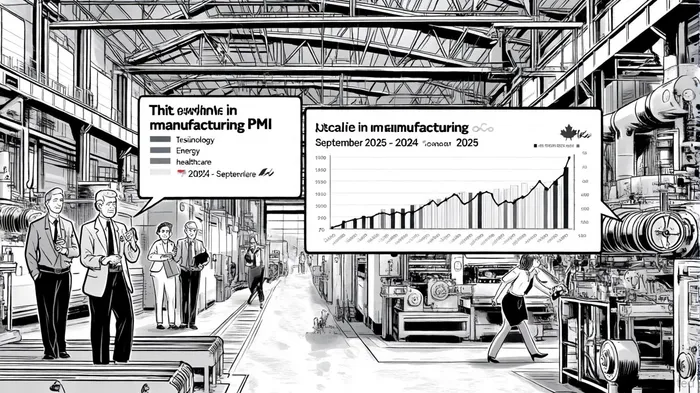







Comentarios
Aún no hay comentarios