
Cambria Large Cap Shareholder Yield ETF: A Strategic Play for Income-Focused Investors in a High-Yield Era
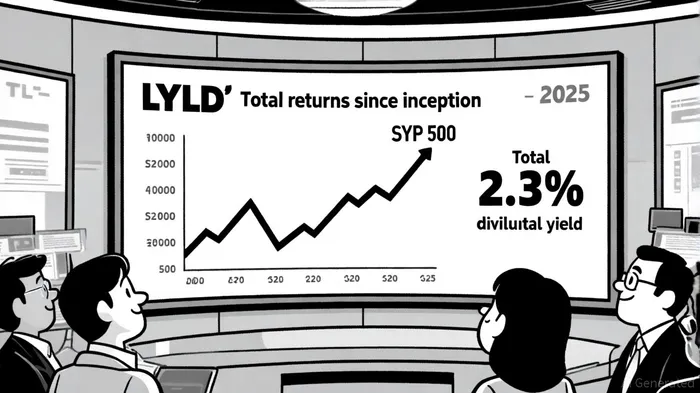
The Cambria Large Cap Shareholder Yield ETF (LYLD) has emerged as a compelling vehicle for income-focused investors navigating a landscape where traditional yield sources remain scarce. Designed to target large-cap U.S. companies that return capital to shareholders through dividends, buybacks, and debt reduction, LYLD's strategy is rooted in the premise that firms with disciplined capital allocation generate sustainable long-term value. As of September 2025, the fund has delivered a total return of 10.2% since inception, with a dividend yield of 2.3%[4], outperforming many broad-market benchmarks during periods of volatility. But does this strategy hold broader strategic value, particularly in an era where sustainability and market cycles increasingly shape investment outcomes?
The Sustainability of Shareholder Yield: Beyond ESG Metrics
While LYLDLYLD-- lacks a formal ESG rating from Morningstar[2], academic analysis suggests that shareholder yield strategies—when evaluated through a non-ESG lens—can exhibit resilience across market cycles. A 2025 study by MorningstarMORN-- found that companies prioritizing total shareholder yield (combining dividends, buybacks, and debt reduction) outperformed peers in 81% of rolling three-year periods over 80 years[1]. This durability stems from the flexibility of such strategies: buybacks, for instance, allow firms to return capital without the long-term obligations tied to dividends, while debt reduction can enhance financial stability during downturns[5].
Critically, the sustainability of these strategies is not solely tied to ESG criteria. Research from the London Company notes that buybacks have become the dominant capital-return tool, with U.S. firms repurchasing over $1 trillion annually in recent years[2]. This trend reflects a shift toward tax-efficient returns and operational efficiency, which can bolster earnings per share and investor confidence. For LYLD, which holds an equal-weight portfolio of 50 large-cap companies with market caps exceeding $10 billion[1], this approach mitigates sectoral concentration risks while capturing firms with consistent cash-flow generation.
Performance in Varying Market Conditions
LYLD's performance underscores its adaptability. During the 2022 market downturn, dividend-focused portfolios outperformed buyback-centric ones, offering a downside cushion[1]. Conversely, in early 2023, buyback-driven strategies surged as companies capitalized on undervalued stock prices[1]. LYLD's balanced approach—targeting total shareholder yield—has allowed it to navigate these shifts. As of September 2025, the fund's year-to-date return stands at 8.29%, with a 6.57% total return in the past 12 months[6], reflecting its ability to capitalize on both defensive and growth-oriented market phases.
The fund's top holdings, including JabilJBL-- (3.37%), eBayEBAY-- (3.16%), and AT&T (2.81%)[2], further illustrate its focus on firms with robust balance sheets and consistent capital-return histories. AT&T, for example, has maintained a dividend for over a century while also repurchasing shares aggressively in recent years[1]. Such companies form the backbone of LYLD's portfolio, aligning with its mandate to prioritize firms that demonstrate both financial discipline and shareholder-centric policies.
Strategic Value in a High-Yield Era
For income-focused investors, LYLD's 0.59% expense ratio[2]—below the Morningstar Large-Cap Value category average—adds to its appeal. In a low-yield environment, the fund's 2.3% dividend yield[4] provides a tangible income stream, while its active management model ensures exposure to companies that adapt to changing economic conditions. This is particularly relevant in 2025, where concerns about corporate profitability and interest-rate volatility persist[3].
However, the fund's sustainability profile remains a gray area. While it avoids explicit ESG criteria, its focus on financially resilient firms indirectly aligns with long-term value creation. As noted in a 2024 study, ESG performance is increasingly reflected in stock prices, suggesting that traditional financial metrics—like shareholder yield—remain critical for assessing risk and return[2]. LYLD's lack of ESG scrutiny may appeal to investors prioritizing income over sustainability, but it also highlights the need for due diligence on individual holdings.
Conclusion
The Cambria Large Cap Shareholder Yield ETF represents a strategic play for investors seeking income and capital appreciation in a high-yield era. By focusing on large-cap firms with disciplined capital allocation, LYLD leverages the proven resilience of shareholder yield strategies across market cycles. While its sustainability profile remains untested under ESG frameworks, its financial metrics and performance track record position it as a viable option for those prioritizing income and long-term growth. As the market navigates the complexities of 2025, LYLD's balanced approach offers a compelling case for income-focused portfolios.





Comentarios
Aún no hay comentarios