
California's Wildfires: A $10 Trillion Property Market Threat
Generado por agente de IAWesley Park
sábado, 11 de enero de 2025, 3:13 pm ET2 min de lectura
CB--
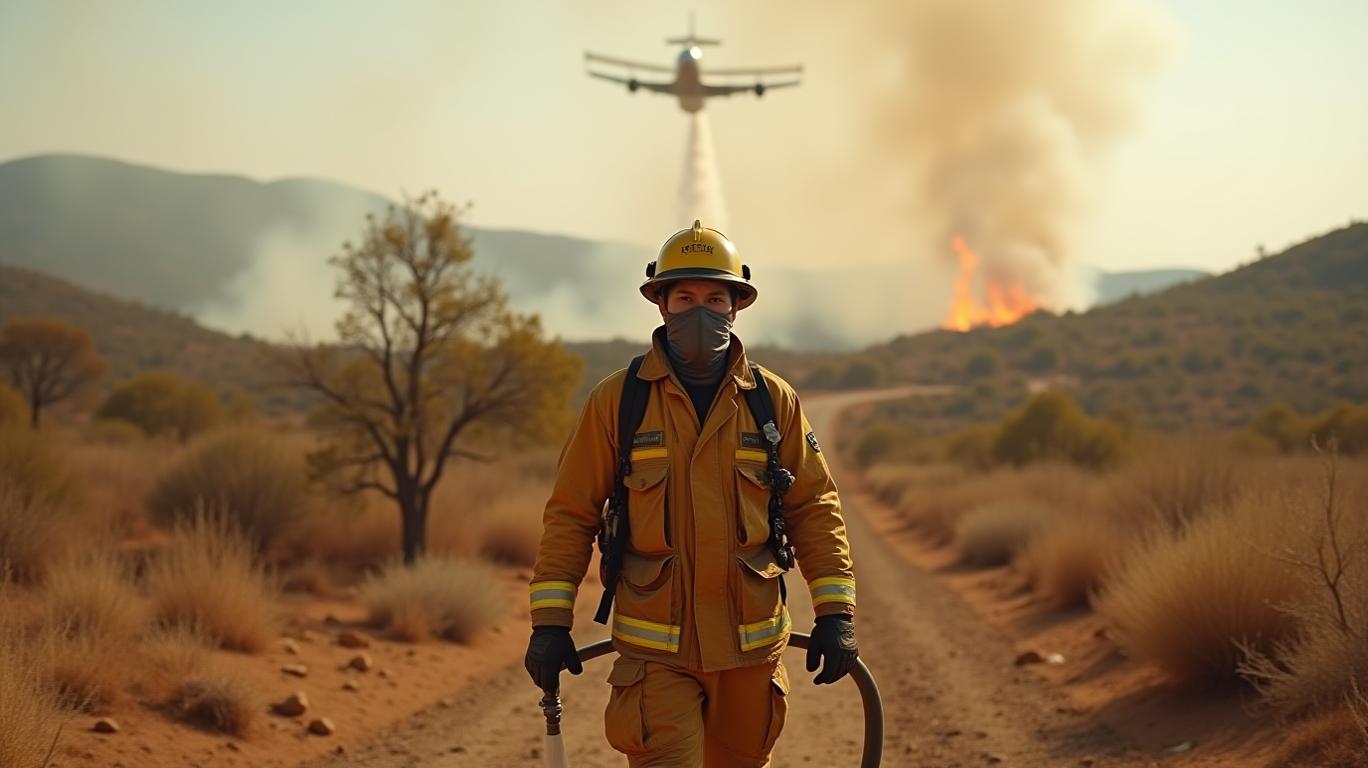
The recent wildfires in California, particularly the ones that have devastated the Los Angeles area, have brought an unprecedented threat to the state's $10 trillion property market. The vast property damage in a disaster-prone state with high real estate prices and an uncertain insurance landscape could make coverage more expensive and even harder to find. One area likely to feel the impact — and encounter challenges rebuilding — is Pacific Palisades, an affluent community sandwiched between the Pacific Ocean and the Santa Monica Mountains. This week's wildfire there has been named as the most destructive in the modern history of the city of Los Angeles. Flames destroyed businesses, a library, cultural landmarks as well as houses.
The wind-driven blazes that started Tuesday roared through neighborhoods from the Pacific Coast inland to Pasadena and the Hollywood Hills. The vast property damage in a disaster-prone state with high real estate prices and an uncertain insurance landscape could make coverage more expensive and even harder to find. One area likely to feel the impact — and encounter challenges rebuilding — is Pacific Palisades, an affluent community sandwiched between the Pacific Ocean and the Santa Monica Mountains. This week's wildfire there has been named as the most destructive in the modern history of the city of Los Angeles. Flames destroyed businesses, a library, cultural landmarks as well as houses.
The wildfires have sparked concerns about the future of insurance for homes in one of the world’s most valuable property markets. "This sustainable insurance strategy is built for events like this," Michael Soller, deputy commissioner of the Department of Insurance said. "It is intended to stabilize the insurance market for the long term." Daniel Swain, a climatologist at the University of California, Los Angeles, said, “Could a single event cause insurers to become insolvent? That’s the great fear.”
The escalating departure of private insurers has left the state-backed insurer of last resort, the California FAIR Plan, in a precarious position. The FAIR Plan could be on the hook for billions, as it estimated its own exposure in the larger Pacific Palisades area at nearly $6 billion. According to the report, the State Farm, California's largest insurer, reduced nearly 70% of its policies in a Pacific Palisades ZIP code last year, while FAIR saw its policy count in the same area surge by 85%.
This shift has left FAIR potentially liable for billions. As of September, the plan estimated its exposure in the broader Pacific Palisades region at nearly $6 billion. However, its most recent public financial report from spring of last year revealed just $200 million in surplus cash reserves and $2.5 billion in reinsurance—coverage designed to protect insurers in catastrophic scenarios—leaving a significant gap in resources. Insurers with significant exposure to California’s homeowners' market faced sharp declines on Friday, as the devastation caused by the Los Angeles wildfires escalated. Allstate Corp. ALL shares plunged 6%, while Chubb Ltd. CB and Travelers Companies Inc. TRV both dropped more than 3%, ranking among the biggest losers in the S&P 500. Meanwhile, American International Group Inc. AIG and Progressive Corp. PGR saw declines exceeding 1%.
The current wildfires and the looming insurance crisis underscore the increasing threat of climate change. With the fires continuing largely unchecked, many are left pondering if this event will permanently alter the relationship between climate risk and homes in California. The escalating crisis not only threatens the property market but also poses a significant risk to the state’s economy.
TRV--
The recent wildfires in California, particularly the ones that have devastated the Los Angeles area, have brought an unprecedented threat to the state's $10 trillion property market. The vast property damage in a disaster-prone state with high real estate prices and an uncertain insurance landscape could make coverage more expensive and even harder to find. One area likely to feel the impact — and encounter challenges rebuilding — is Pacific Palisades, an affluent community sandwiched between the Pacific Ocean and the Santa Monica Mountains. This week's wildfire there has been named as the most destructive in the modern history of the city of Los Angeles. Flames destroyed businesses, a library, cultural landmarks as well as houses.
The wind-driven blazes that started Tuesday roared through neighborhoods from the Pacific Coast inland to Pasadena and the Hollywood Hills. The vast property damage in a disaster-prone state with high real estate prices and an uncertain insurance landscape could make coverage more expensive and even harder to find. One area likely to feel the impact — and encounter challenges rebuilding — is Pacific Palisades, an affluent community sandwiched between the Pacific Ocean and the Santa Monica Mountains. This week's wildfire there has been named as the most destructive in the modern history of the city of Los Angeles. Flames destroyed businesses, a library, cultural landmarks as well as houses.
The wildfires have sparked concerns about the future of insurance for homes in one of the world’s most valuable property markets. "This sustainable insurance strategy is built for events like this," Michael Soller, deputy commissioner of the Department of Insurance said. "It is intended to stabilize the insurance market for the long term." Daniel Swain, a climatologist at the University of California, Los Angeles, said, “Could a single event cause insurers to become insolvent? That’s the great fear.”
The escalating departure of private insurers has left the state-backed insurer of last resort, the California FAIR Plan, in a precarious position. The FAIR Plan could be on the hook for billions, as it estimated its own exposure in the larger Pacific Palisades area at nearly $6 billion. According to the report, the State Farm, California's largest insurer, reduced nearly 70% of its policies in a Pacific Palisades ZIP code last year, while FAIR saw its policy count in the same area surge by 85%.
This shift has left FAIR potentially liable for billions. As of September, the plan estimated its exposure in the broader Pacific Palisades region at nearly $6 billion. However, its most recent public financial report from spring of last year revealed just $200 million in surplus cash reserves and $2.5 billion in reinsurance—coverage designed to protect insurers in catastrophic scenarios—leaving a significant gap in resources. Insurers with significant exposure to California’s homeowners' market faced sharp declines on Friday, as the devastation caused by the Los Angeles wildfires escalated. Allstate Corp. ALL shares plunged 6%, while Chubb Ltd. CB and Travelers Companies Inc. TRV both dropped more than 3%, ranking among the biggest losers in the S&P 500. Meanwhile, American International Group Inc. AIG and Progressive Corp. PGR saw declines exceeding 1%.
The current wildfires and the looming insurance crisis underscore the increasing threat of climate change. With the fires continuing largely unchecked, many are left pondering if this event will permanently alter the relationship between climate risk and homes in California. The escalating crisis not only threatens the property market but also poses a significant risk to the state’s economy.

Divulgación editorial y transparencia de la IA: Ainvest News utiliza tecnología avanzada de Modelos de Lenguaje Largo (LLM) para sintetizar y analizar datos de mercado en tiempo real. Para garantizar los más altos estándares de integridad, cada artículo se somete a un riguroso proceso de verificación con participación humana.
Mientras la IA asiste en el procesamiento de datos y la redacción inicial, un miembro editorial profesional de Ainvest revisa, verifica y aprueba de forma independiente todo el contenido para garantizar su precisión y cumplimiento con los estándares editoriales de Ainvest Fintech Inc. Esta supervisión humana está diseñada para mitigar las alucinaciones de la IA y garantizar el contexto financiero.
Advertencia sobre inversiones: Este contenido se proporciona únicamente con fines informativos y no constituye asesoramiento profesional de inversión, legal o financiero. Los mercados conllevan riesgos inherentes. Se recomienda a los usuarios que realicen una investigación independiente o consulten a un asesor financiero certificado antes de tomar cualquier decisión. Ainvest Fintech Inc. se exime de toda responsabilidad por las acciones tomadas con base en esta información. ¿Encontró un error? Reportar un problema


SOBRE NOSOTROS
Nuestra historiaAutores de noticiasBase de conocimientosPolítica de privacidadTérmino de usoDescargo de responsabilidad de corretaje de tercerosTérminos de uso de AIMEDivulgaciones de riesgos de AInvest AICarrerasCONTÁCTENOS
Email: support@ainvest.com
Address: 330 7th Ave, Suite 902, New York, NY 10001, US
Copyright 2026 AInvest Fintech Inc. All rights reserved.


Comentarios
Aún no hay comentarios