
California Resources' $400 Million Debt Offering: A Strategic Play in the Energy Transition
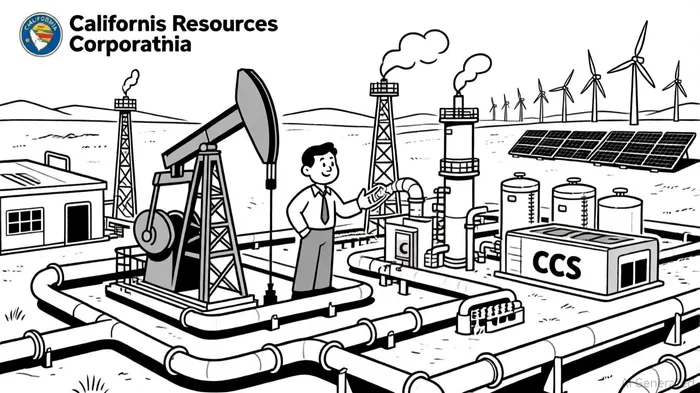
The energy sector is at a crossroads. With peak oil demand debates intensifying and capital flows shifting toward decarbonization, companies must balance short-term profitability with long-term sustainability. California Resources CorporationCRC-- (NYSE: CRC) is navigating this tightrope with its $400 million private debt offering—a move that signals both caution and ambition. For investors, this offering is more than a financing tool; it's a window into how traditional energy firms are adapting to a post-peak oil world.
Strategic Capital Deployment: Funding the BerryBRY-- Merger and Beyond
CRC's debt offering, announced on September 24, 2025, is a senior unsecured note due 2034, guaranteed by existing and future subsidiaries. The proceeds will repay Berry Corporation's existing debt as part of the pending Berry Merger, a transaction critical to CRC's growth strategy [1]. This merger isn't just about scale—it's about positioning CRCCRC-- to leverage Berry's assets in a market where consolidation is king.
But the offering's terms reveal a calculated risk. If the merger fails to close by March 14, 2026, the notes will trigger a mandatory redemption at par plus accrued interest [1]. This clause underscores the high stakes: CRC is betting that the merger will unlock synergies that justify the debt load. For investors, this means monitoring the merger's progress is as important as tracking CRC's operational performance.
Energy Transition: A Dual-Track Approach
CRC's strategy isn't solely about traditional energy. The company is doubling down on carbon capture and storage (CCS) through its Carbon TerraVault subsidiary, with its Elk Hills project set to capture 100,000 metric tons of CO₂ annually by early 2026 [2]. This aligns with California's aggressive climate policies, including the extension of its cap-and-trade program through 2045 [3]. By investing in CCS, CRC is hedging against regulatory tailwinds while maintaining its core oil and gas operations.
Moreover, CRC's $200 million Energy Saving Performance Contract with Ameresco to retrofit U.S. Army housing isn't just a revenue stream—it's a strategic move to diversify cash flows in an era of energy volatility [2]. This kind of infrastructure play is becoming a hallmark of energy companies seeking stability amid the transition.
Investor Implications in a Post-Peak Oil World
The energy sector in 2025 is defined by duality: oil prices remain volatile (WTI projected between $53–$56/bbl through 2026 [4]), while natural gas and renewables gain traction. CRC's debt offering reflects this duality. By using the proceeds to retire higher-cost debt, the company is improving its leverage profile, which is critical as interest rates remain elevated.
However, the offering also raises questions. With the energy transition progressing slower than expected, CRC's reliance on the Berry Merger to fund its green initiatives could strain its balance sheet if the deal falters. Additionally, while CCS is a promising technology, its scalability and profitability remain unproven at scale.
The Bottom Line: A Calculated Gamble
CRC's $400 million offering is a textbook example of strategic capital deployment in a transitional market. It funds immediate obligations while laying the groundwork for long-term decarbonization. For investors, the key takeaway is that CRC is neither fully retreating from fossil fuels nor blindly chasing renewables—it's striking a balance.
But this balance comes with risks. The success of the Berry Merger, the viability of CCS, and the pace of California's energy transition will all determine whether this debt is a masterstroke or a misstep. In a sector where adaptability is survival, CRC's approach is bold—and worth watching.





Comentarios
Aún no hay comentarios