
California's Post-Disaster Housing Renaissance: Investment Opportunities in a Fractured Market
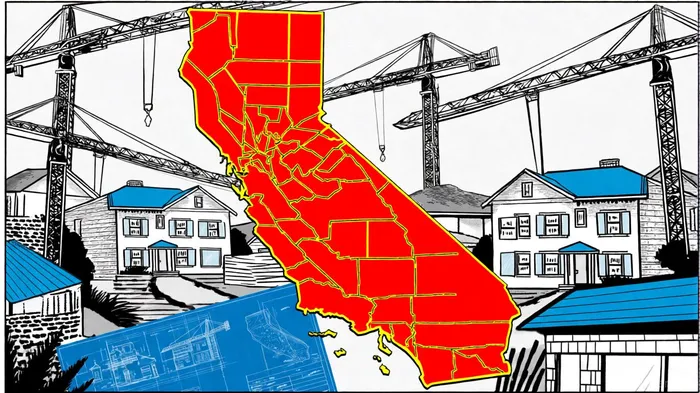
The California housing market is undergoing a seismic shift—both literally and figuratively. In 2025, the state faces a dual crisis: the aftermath of catastrophic wildfires that destroyed over 16,000 structures and a growing awareness of earthquake risks that could further destabilize an already fragile housing landscape. Yet within this turmoil lies a paradox: a market constrained by chronic shortages and regulatory bottlenecks, yet primed for reinvention. For investors, the question is not whether to act, but how to navigate the complexities of a sector where disaster and opportunity collide.
The Home-Building Sector: A Race Against Time and Red Tape
The scale of destruction from the 2025 wildfires has created an urgent demand for reconstruction. Los Angeles County's LA County Forward initiative, launched in Q3 2025, aims to streamline permitting and promote fire-resistant construction, but progress remains glacial. As of July 2025, only 200 of 800 rebuilding permits had been approved, with an average processing time of 55 days [4]. Governor Gavin Newsom's executive orders suspending CEQA requirements in affected areas and Senate Bill 140's provisions for expedited permitting and fire-resistant materials offer a lifeline to developers [3]. However, environmental hazards like asbestos and lead in over 1,300 properties complicate rebuilding, necessitating specialized contractors and materials suppliers [4].
Investors should focus on firms adept at navigating regulatory gray zones and supplying resilient infrastructure. Companies like those producing fire-resistant materials or modular housing solutions stand to benefit from SB 140's incentives. Yet challenges persist: California's existing housing deficit of 3.5 million units [2] means reconstruction must compete with broader demand, while local resistance to increased density threatens to stall projects. The key for builders is to balance speed with sustainability—a formula that could redefine post-disaster urban development.
The Insurance Dilemma: Pricing Risk in an Era of Uncertainty
The insurance sector faces its own reckoning. Standard policies exclude earthquake coverage, forcing homeowners to purchase separate policies through the California Earthquake Authority (CEA). With scientists warning of “supershear” earthquakes capable of causing $30,000+ in repairs per home [1], insurers must recalibrate risk models. The CEA's role will expand, but its solvency hinges on accurate catastrophe modeling and premium adjustments—a balancing act that could create volatility for investors.
Meanwhile, wildfire recovery has exposed gaps in coverage. Many homeowners are underinsured, and delays in insurance claims processing (often extending 12–24 months [2]) have left residents in limbo. Insurers that integrate parametric insurance—policies triggered by disaster metrics rather than individual claims—could gain an edge. Similarly, reinsurance firms with exposure to California's high-risk zones may see increased demand, though rising loss ratios could pressure profit margins.
Affordability and Policy: A Ticking Clock for Reform
California's housing affordability crisis adds another layer of complexity. Despite a projected 16% of households being able to afford a median-priced home in 2025 [3], the state's Regional Housing Needs Assessment (RHNA) mandates Los Angeles to build 450,000 units by 2029, including affordable housing. This creates opportunities for developers specializing in mixed-income communities, though NIMBYism and permitting delays remain obstacles.
For investors, the interplay between policy and market forces is critical. The suspension of CEQA in disaster zones offers short-term gains but raises long-term questions about environmental accountability. Similarly, mortgage rate declines from 6.6% to 5.9% in 2025 [3] may spur home sales, but affordability constraints will limit their impact.
Risks and Rewards: A Calculated Approach
Investing in California's post-disaster housing market is not without peril. Earthquake preparedness lags behind wildfire recovery, and the state's permitting bureaucracy remains a drag on efficiency. Yet for those willing to navigate these challenges, the rewards are substantial. The home-building sector could see a surge in demand for resilient construction, while insurers that innovate in risk modeling and parametric products may capture market share.
The path forward requires a blend of patience and agility. As California rebuilds, it is not merely reconstructing homes but redefining its approach to housing—a process that will shape the state's economic landscape for decades. For investors, the lesson is clear: opportunity thrives where others see chaos, but only for those who can turn risk into resilience.







Comentarios
Aún no hay comentarios