
California’s High-Speed Rail Milestone: Electrification and the Path Forward
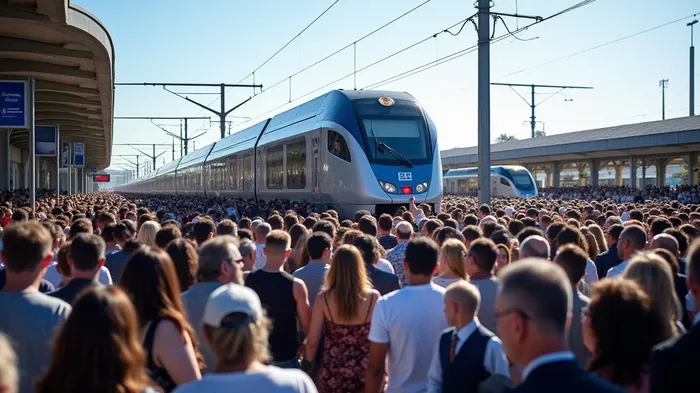
On a crisp May day in 2025, over 5,000 rail enthusiasts gathered at Caltrain’s San Carlos station to celebrate its 160th anniversary—a historic milestone for the oldest continuously operating railroad west of the Mississippi. The event, part celebration and part vision-building exercise, showcased Caltrain’s new Stadler KISS electric trains and marked a pivotal step toward integrating high-speed rail into the Bay Area’s transportation network.
The Event That Ignited Momentum
The anniversary celebration, while rooted in tradition, was forward-looking. Attendees toured the new electric trains set to debut later in 2025, which promise faster speeds and reduced emissions. Assemblymember Marc Berman, representing the region, emphasized the project’s role in sustainable transit: “This isn’t just about trains—it’s about reimagining how California moves.” The California High-Speed Rail Authority (Authority) underscored its $714 million investment in Caltrain’s electrification, a critical piece of its broader plan to connect the Bay Area with Central Valley cities by 2030–2033.
Progress Amid Persistent Challenges
1. Infrastructure Milestones
The Authority has made tangible strides. In January 2025, Governor Newsom launched the Railhead Project in Kern County, a $10 billion initiative to begin laying tracks on a 22-mile segment between Wasco and the Tulare/Kern County line. This phase, which includes 11 civil structures like overpasses and viaducts, has already generated over 3,200 jobs—primarily in the Central Valley.
2. Partnerships and Global Comparisons
Collaboration with Brightline West and the High-Desert Corridor Joint Powers Agency aims to create a unified network linking Las Vegas to California’s rail system. Meanwhile, India’s Mumbai-Ahmedabad bullet train—scheduled to debut in mid-2027—provides a blueprint for sustainability, featuring 100% green stations with solar panels and wildlife corridors. California’s project, however, faces hurdles: its $100 billion price tag (triple the 2008 estimate) and reliance on private investment to secure the Central Valley segment’s financing by mid-2026.
3. Community Engagement and Criticism
While the Authority hosts public meetings and apprenticeship programs—graduating 223 trainees since 2020—critics argue progress is too slow. Republican Senator Tony Strickland has called the project “a boondoggle” due to delays and cost overruns. Environmentalists, however, praise efforts like the 3D public art installation visualizing the SalesforceCRM-- Transit Center’s future rail connections.
The Road Ahead: Risks and Opportunities
The Caltrain anniversary event underscores both the promise and pitfalls of high-speed rail in California. On one hand, electrification and blended corridors (shared with Caltrain) represent a path to reduced congestion and emissions. On the other, the project’s $100 billion price tag and dependency on private funding remain existential risks.
CEO Ian Choudri’s push for state-backed guarantees to attract investors is a critical pivot. If successful, this could unlock the $3 billion needed annually to meet deadlines. The Authority’s updated timeline, due by summer 2025, will test its ability to balance ambition with fiscal realism.
Conclusion: A Blueprint for Resilience
California’s high-speed rail project is at a crossroads. The San Carlos celebration highlighted its potential to transform transit while underscoring the need for urgency. With $714 million already committed to electrification and partnerships like Brightline West on board, the Authority has a foundation to build on. However, securing private investment—and proving it can deliver on time—will be the ultimate test.
As India’s bullet train proves that sustainability and speed can coexist, California’s next move could redefine its legacy in transportation. The question remains: Can it convert symbolism into steel?
JR Research’s final take: Watch for the Authority’s summer 2025 timeline update—a litmus test for whether this visionary project can stay on track.







Comentarios
Aún no hay comentarios