
California's Billionaire Tax: A Threat to Silicon Valley's $100B+ Innovation Engine
The proposed billionaire tax isn't just a revenue grab; it's a direct assault on the capital formation engine that powers Silicon Valley. By targeting a concentrated pool of wealth, the measure threatens to erode the state's competitive dominance in scaling high-growth companies. The core risk is that it pressures the very wealth that fuels the venture capital cycle, from initial funding to eventual exits.
The tax would hit approximately 200 billionaires, a group whose financial muscle is critical for funding and liquidating the startups that define the region's economy. Its structure, taxing unrealized gains from private company holdings, mirrors the policy that drove a wave of entrepreneur departures from Norway. As venture capitalist Ben Horowitz noted, Norway's unrealized capital gains tax caused entrepreneurs to flee because they couldn't pay the tax without selling their private company stakes. This dynamic directly threatens the wealth of California's tech founders, who often hold the majority of their net worth in illiquid, privately-held equity.
The scale of the proposed tax underscores the magnitude of capital at risk. Proponents estimate it could generate roughly $100 billion in revenue, a potential windfall that could be lost to capital flight. The aggressive timeline, applying the tax to those residing in California as of January 1, 2026, leaves little time to establish residency elsewhere, but it also invites legal challenges and may accelerate moves by the wealthy. Already, figures like Peter Thiel have announced establishing a significant presence in Miami, while others are making plans to relocate. This exodus could break the network effects that have made Silicon Valley a global innovation hub, as the loss of capital and talent weakens the ecosystem's ability to attract and support new ventures.
Scalability and Market Penetration Under Siege
The proposed billionaire tax is not just a headline-grabbing policy debate; it is a direct threat to the capital infrastructure that allows early-stage startups to scale and achieve market dominance. The flight of high-profile founders and investors could shrink the local pool of patient capital, slowing innovation cycles and making it harder for new companies to grow.
This isn't theoretical. The exodus has already begun. Google cofounder Larry Page, whose net worth has ballooned to an estimated $260 billion, has spent over $170 million on homes in Miami and incorporated Florida entities. His co-founder, Sergey Brin, is also reportedly considering a move. Similarly, venture capitalist Peter Thiel is exploring opening an office in another state and spending more time outside California. These are not minor adjustments; they are strategic relocations by individuals whose financial networks and investment decisions are central to the venture capital ecosystem.
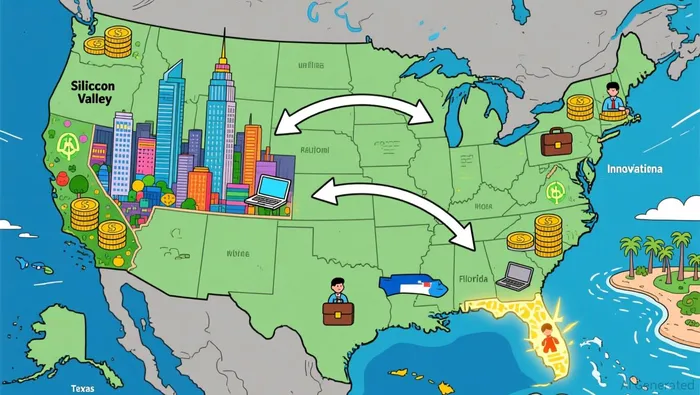
The consequence is a potential drying up of the local capital that fuels the earliest, riskiest bets. When billionaire founders and investors reduce their ties to the state, they also reduce their ability to provide follow-on funding, mentorship, and introductions to other investors. This shrinks the pool of patient capital essential for early-stage startups to survive their long, capital-intensive ramp-up phases. As venture capitalist Ben Horowitz has argued, this policy directly attacks the network effect that makes Silicon Valley unique. The region's strength lies in its dense web of interconnected founders, investors, and talent. When key nodes like Page and Thiel pull away, that web weakens.
The bottom line is that scalability itself is at risk. A startup's path to market dominance often depends on securing rapid, large-scale funding rounds. If the local venture capital ecosystem contracts due to capital flight, the pipeline for that funding dries up. This could force startups to seek capital elsewhere, diluting the concentration of innovation in California and making it harder for the region to maintain its global lead in scaling high-growth companies. The tax, by targeting the wealth that funds the next generation of giants, threatens to break the very engine of growth.
Forward-Looking Metrics and Catalysts to Watch
The coming months will be decisive in determining whether this tax becomes a reality or a political dead end. The first major catalyst is the signature-gathering phase for the November 2026 ballot. The initiative must collect 874,641 signatures to qualify. Its progress will signal the political momentum behind the measure and the level of organized opposition it faces. Given the early opposition from Governor Newsom and the California Chamber of Commerce, the path to the ballot is far from guaranteed.
The second, and more immediate, catalyst is the legal battle. The initiative's retroactive provision, applying the tax to those residing in California as of January 1, 2026, is a legal minefield. As noted, attorneys say the aggressive timeline will likely invite legal challenges. The outcome of these lawsuits will test the tax's enforceability and, more critically, the speed of capital flight. If courts strike down the retroactive clause, it could delay the tax's implementation and reduce the urgency for billionaires to move. If upheld, it validates the strategy of targeting wealth before it can be relocated, accelerating the exodus.
Watch for shifts in venture capital fund formation and investment patterns as leading indicators of competitive erosion. The flight of founders and investors like Peter Thiel is already a signal. The next phase will be measurable changes in where new funds are established and where capital is deployed. A sustained outflow of venture capital dollars from California to states with more favorable tax climates would be a clear sign that the state's innovation ecosystem is losing its competitive edge. This would directly impact the scalability and market penetration of the startups that rely on that local capital. The bottom line is that the venture capital landscape will be the canary in the coal mine, with investment flows providing the first concrete data on whether the billionaire tax is successfully draining the innovation engine.







Comentarios
Aún no hay comentarios