
Caliber's IPO: A Strategic Play in a Disrupted Auto Repair Market
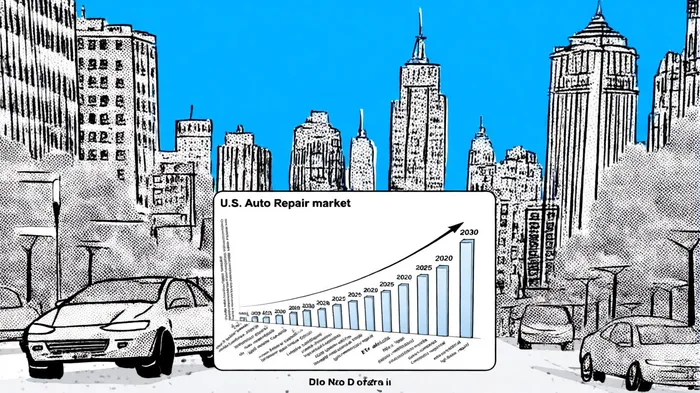
The U.S. auto repair industry is undergoing a seismic shift, driven by a confluence of aging vehicles, surging electric vehicle (EV) adoption, and the logistical demands of e-commerce. According to a report by Mordor Intelligence, the market size is projected to grow from $199.38 billion in 2025 to $266.56 billion by 2030, with a compound annual growth rate (CAGR) of 5.98% [1]. This expansion is fueled by vehicles averaging over 12.6 years in age, post-pandemic rebounds in vehicle miles traveled (VMT), and the rise of hybrid and EVs, which, despite requiring fewer routine services, demand specialized and costly repairs for battery and electronic systems [1].
Amid this transformation, Caliber Collision, the largest collision repair company in the U.S., has positioned itself as a strategic consolidator. Backed by private equity giants Hellman & Friedman (H&F), Leonard Green & Partners, and OMERS Private Equity, Caliber operates over 1,700 locations across 41 states and employs 30,000 workers [3]. Its recent confidential IPO filing signals a pivotal moment for the company, which has leveraged H&F's capital and operational expertise to scale rapidly. Since its 2019 merger with ABRA Auto Body & Glass—a deal orchestrated by H&F—Caliber has become a dominant force in a fragmented industry, with a 15% increase in shops adopting EV servicing equipment since 2020 [2].
Strategic Positioning and Financial Performance
Caliber's financial trajectory reflects both the opportunities and challenges of this evolving market. In Q1 2025, the company reported $251.6 million in revenue, with adjusted EBITDA growing 6% to $99.1 million, representing a 39% margin [6]. However, net losses widened to $17.4 million, attributed to macroeconomic headwinds like inflation and tariffs, which impact claims volumes (20% of revenue) [6]. This duality—strong EBITDA margins versus net losses—highlights the capital intensity of scaling a collision repair network.
H&F's strategic interventions have been critical. The firm's 2019 acquisition of Caliber and its integration with ABRA created a national footprint, while leadership changes, such as Mark Sanders' 2020 promotion to CEO, underscored a focus on operational efficiency [4]. Additionally, Caliber's partnership with CCC IntelligentCCCS-- Solutions—a leader in digital estimating tools—has enhanced its technological edge, aligning with industry trends toward AI-driven scheduling and data analytics [3].
IPO Implications and Investment Risks
The IPO, expected to fund debt repayment and general corporate purposes [5], could accelerate Caliber's dominance. However, investors must weigh several factors:
1. Market Dynamics: Light commercial vehicles, driven by e-commerce, are growing at 8.92% CAGR, a segment where Caliber's expertise in collision repair could expand [1].
2. EV Transition: While EV repair complexity offers higher-margin opportunities, the industry's shift to electric infrastructure may require significant capital reinvestment.
3. Profitability Concerns: Despite revenue growth, Caliber's net losses in 2023–2025 raise questions about its ability to convert scale into consistent profitability [6].
Conclusion: A High-Stakes Bet on Industry Consolidation
Caliber's IPO represents a high-conviction play on the auto repair sector's structural growth. With H&F's backing and a strategic focus on EV readiness and digital integration, the company is well-positioned to capitalize on a $266.56 billion market by 2030. However, its success hinges on navigating macroeconomic pressures and demonstrating that its scale can drive sustainable margins. For investors, the IPO offers exposure to a fragmented industry undergoing rapid consolidation—a trend that could redefine the competitive landscape.







Comentarios
Aún no hay comentarios