
CaixaBank's 1.25 Billion Share Buyback and Its Implications for Investor Value
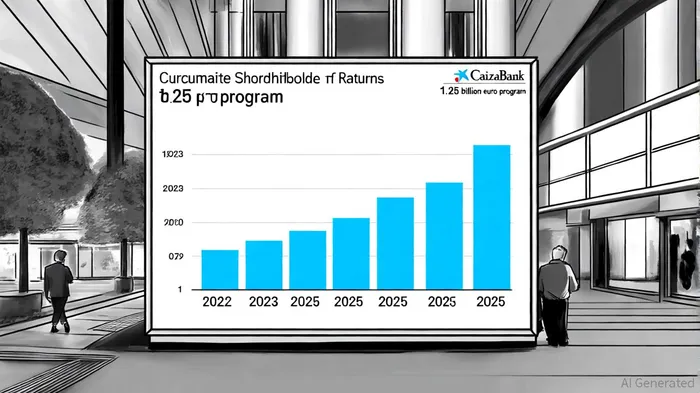
The European banking sector is undergoing a transformation, driven by a confluence of higher interest rates, improved capital positions, and a renewed focus on shareholder returns. At the forefront of this movement is CaixaBank, whose 1.25 billion euro share buyback program—executed through three separate 500 million euro initiatives—has become a case study in capital efficiency and strategic value creation. As the bank navigates a complex macroeconomic landscape, its actions reflect both the opportunities and challenges facing European financial institutions in 2025.
Capital Efficiency in a High-Rate Environment
CaixaBank's buyback program, announced in late 2024 and finalized by November 19, 2024, underscores its commitment to optimizing capital allocation. By reducing its share capital by approximately 1.28% through the redemption of treasury shares, the bank has demonstrated confidence in its balance sheet strength while signaling to investors that excess capital can be deployed more effectively than reinvestment in low-yielding assets [1]. This approach aligns with broader trends in the sector: European banks are returning nearly €123 billion to shareholders in 2024–2025, leveraging higher net interest margins and robust liquidity positions to fund these initiatives [2].
The decision to prioritize buybacks over dividends is particularly telling. Share repurchases offer a tax-efficient way to return capital, especially in markets where dividend taxes remain a drag on net returns. For CaixaBank, this strategy also mitigates the dilution of earnings per share (EPS) as it executes its 2022–2024 strategic plan, which targets a total shareholder payout of 12 billion euros [3]. According to a report by The Corner, the bank's board has consistently framed these buybacks as a means to enhance shareholder value while maintaining flexibility to respond to economic uncertainties [4].
Strategic Alignment with Sector-Wide Trends
The European banking sector's shift toward aggressive capital returns is not arbitrary. Higher interest rates, sustained by central bank policies, have bolstered net interest margins, enabling banks to generate stronger profits. As noted by the European Banking Authority, institutions are now in a stronger position to distribute returns, supported by solid capital ratios confirmed through the ECB's Supervisory Review and Evaluation Process (SREP) [5]. However, this optimism is tempered by structural challenges.
For instance, CaixaBank's lending income has been hit by lower rates in certain segments, a reminder that the benefits of a high-rate environment are unevenly distributed [6]. Meanwhile, the sector faces headwinds such as narrowing margins as monetary policy evolves and rising funding costs. These pressures are compounded by non-traditional competitors in digital payments and embedded finance, forcing banks to innovate or risk obsolescence [7].
Implications for Investor Value
From an investor perspective, CaixaBank's buyback program offers a dual benefit: immediate value creation through share price support and long-term confidence in management's ability to allocate capital. By December 12, 2024, the bank had already repurchased 35.47% of its 500 million euro target, indicating strong execution discipline [8]. This pace suggests a commitment to meeting—or exceeding—its 12 billion euro distribution goal, which could translate into a total return of over 10% for shareholders during the 2022–2024 period [9].
Yet, the broader sector context cautions against complacency. While AI-driven operational efficiency and diversification into fee-based income streams are promising, they remain works in progress. For example, the integration of AI to reduce costs and enhance customer experiences is still in early stages for many European banks [10]. Additionally, the risks of over-reliance on interest income persist, as highlighted by the ECB's warnings about credit quality in consumer and commercial real estate sectors [11].
The Road Ahead
CaixaBank's buyback program is a microcosm of the European banking sector's balancing act: capitalizing on favorable conditions while preparing for a potential slowdown. The bank's ability to maintain its capital return momentum will depend on its agility in addressing margin pressures and technological disruption. For investors, the key question is whether these initiatives will be sustained in a lower-growth environment or if they represent a temporary response to cyclical tailwinds.
In the short term, the 1.25 billion euro program is a vote of confidence in CaixaBank's resilience. But as the ECBXEC-- and other regulators emphasize, the path to long-term value creation requires more than just buybacks—it demands strategic reinvention.







Comentarios
Aún no hay comentarios