
The C3.ai Scandal: CEO Health, Market Manipulation, and Investor Losses
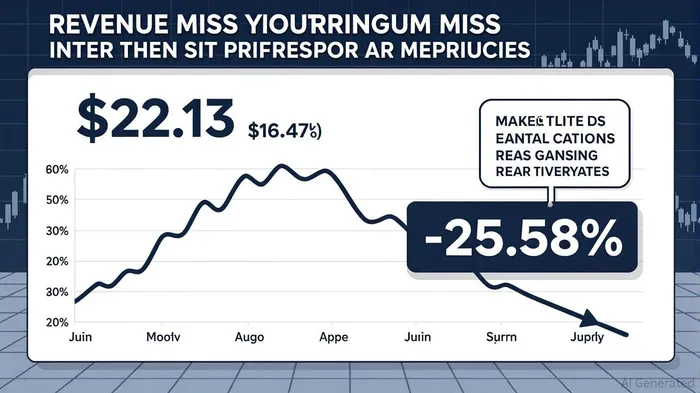
The recent turmoil at C3.ai, Inc. (NYSE: AI) has sparked a firestorm of legal and governance scrutiny, centering on CEO health disclosures, alleged securities fraud, and a 25.58% stock price collapse. Investors and regulators are now dissecting whether the company's leadership failures and opaque financial reporting contributed to systemic investor losses. This analysis delves into the interplay of corporate governance breakdowns, securities litigation, and the broader implications for AI-driven enterprises.
CEO Health and Corporate Governance Failures
C3.ai's CEO, Thomas M. Siebel, disclosed in Q1 2026 that unanticipated health issues during the fiscal first quarter limited his active participation in the sales process, which he admitted had a “greater impact on the business than previously realized”[1]. This revelation came after the company announced a $70.3 million revenue miss against a $100–$109 million guidance range[2], triggering a 25.58% stock price plunge[3]. The situation raises critical questions about corporate transparency: Did the board adequately assess the CEO's health risks to operations? And how did leadership transitions—Stephen Ehigian took over in early 2025—exacerbate organizational instability?
The governance failures extend beyond health disclosures. A 2025 securities class action lawsuit alleges that C3.ai and its executives concealed material information about the CEO's health and its operational impact during the class period (February 26, 2025, to August 8, 2025)[4]. The lawsuit claims these omissions violated the Securities Exchange Act of 1934, as the company attributed poor performance to “reorganization with new leadership” while downplaying health-related disruptions[5]. Such opacity eroded investor trust, particularly as the CEO's role in sales—a core function for a high-growth tech firm—was previously understated.
Securities Litigation and Investor Losses
The fallout has led to multiple securities class-action lawsuits, with investors seeking redress for losses tied to allegedly misleading statements. According to a report by Hagens Berman, the lawsuits assert that C3.ai “exaggerated its partnerships, overstated technological investments, and misrepresented market growth”[6]. These claims align with broader allegations of “AI washing”—a trend where companies inflate AI capabilities to attract investors[7].
The legal battles are further complicated by C3.ai's history of governance issues. A 2022 lawsuit highlighted flawed accounting methods and overstated partnerships with Baker HughesBKR--, which deteriorated without public disclosure[8]. The current litigation builds on this legacy, with plaintiffs arguing that the CEO's health issues and leadership transition were similarly masked. Shareholders now face a critical deadline: October 21, 2025, to request lead plaintiff status in the case Liggett v. C3.ai, Inc.[9].
Market Manipulation and AI Sector Risks
While no direct evidence of market manipulation has emerged, the lawsuits imply systemic risks in AI sector reporting. As stated by law firm Pomerantz LLP, C3.ai's case reflects a 2025 trend where courts are less likely to dismiss AI-related securities claims compared to traditional cases[10]. This is partly due to the complexity of AI technologies, which makes it harder to prove or disprove claims of overstatement.
The company's strategic shifts—such as introducing a software OEM licensing program for its Agentic AI platform—have also drawn skepticism. Critics argue these moves may be attempts to rebrand amid declining performance, rather than genuine growth strategies[11]. For investors, the challenge lies in distinguishing between legitimate innovation and defensive maneuvering.
Conclusion
The C3.ai scandal underscores the fragility of corporate governance in high-growth tech firms. While CEO health issues and leadership transitions are not uncommon, the lack of transparency in disclosing their operational impact has left investors vulnerable. The ongoing litigation highlights the need for stricter disclosure standards in AI sectors, where hype often outpaces reality. For C3.ai, the path forward hinges on resolving these legal challenges while rebuilding credibility—a daunting task in an industry where trust is as critical as code.







Comentarios
Aún no hay comentarios