
BYD's Strategic Expansion in European EV Battery Manufacturing: Geopolitical and Supply-Chain-Driven Investment Opportunities
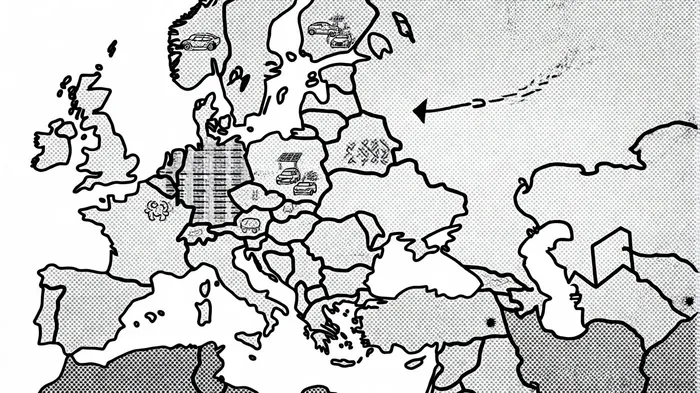
The global energy transition is accelerating, and BYD's strategic expansion into European EV battery manufacturing positions the Chinese automaker as a pivotal player in this transformation. As geopolitical tensions reshape supply chains and the EU tightens its grip on clean energy policies, BYD's localized production strategies and technological innovations—particularly its Blade Battery—present compelling investment opportunities. This analysis explores how BYD is navigating geopolitical risks, leveraging supply-chain resilience, and capitalizing on Europe's renewable energy boom.
Technological Edge: Blade Battery and e-Platform 3.0
BYD's Blade Battery technology, known for its safety and efficiency, has already gained traction in DIY and off-grid solar systems. A 7.066 kWh DIY pack using these cells costs approximately $1,220, including BMS and shipping, underscoring their cost-effectiveness [2]. Coupled with the e-Platform 3.0, which enhances vehicle performance and safety, BYD is addressing Europe's demand for zero-emission solutions. These technologies align with the EU's Green Deal objectives, which prioritize decarbonization and energy independence [2].
Supply-Chain Localization: Partnerships and Raw Material Sourcing
BYD's European strategy hinges on localizing its supply chain to mitigate geopolitical risks. While direct 2025 EU partnerships remain unspecified, the company's compatibility with inverters like Deye's SUN-20K-SG01HP3-EU-AM2 and Fronius Primo 6.0 Gen24 suggests strategic integration with European energy infrastructure [1][4]. Additionally, BYD's blade cells, sourced from Shenzhen-based manufacturers, are being adapted for European markets, reducing reliance on volatile global shipping routes [2].
However, challenges persist. The lack of publicly available CAN protocol data for BYD's BMS complicates integration with third-party systems, highlighting the need for standardization [1]. This technical barrier could slow adoption unless BYD collaborates with European tech firms to streamline compatibility.
Geopolitical Considerations: EU Trade Policies and Regional Stability
The EU's evolving trade policies, including tariffs on Chinese EVs and stringent sustainability standards, are reshaping the competitive landscape. BYD's localization efforts—such as establishing battery production in Europe—could help it bypass these hurdles. For instance, the EU's Critical Raw Materials Act emphasizes securing domestic supplies of lithium and cobalt, materials critical for BYD's batteries. Partnering with European mining firms or recycling startups could further insulate BYD from geopolitical shocks [4].
Regional stability also plays a role. Eastern Europe, with its proximity to resource-rich regions and lower labor costs, may become a focal point for BYD's manufacturing hubs. However, political instability in some areas necessitates cautious investment planning.
Investment Opportunities and Risks
BYD's expansion taps into Europe's surging demand for EVs and energy storage. The EU aims to install 1,800 GW of renewable capacity by 2030, creating a fertile market for BYD's hybrid off-grid systems [1]. Moreover, its pre-built battery units, such as those from TechDirect, demonstrate scalability for residential and commercial applications [4].
Risks include regulatory scrutiny over China-EU trade tensions and technical integration challenges. Yet, BYD's global footprint—spanning 70 countries and 400 cities—positions it to pivot quickly in response to geopolitical shifts [2].
Conclusion
BYD's European battery manufacturing push is a masterclass in aligning technological innovation with geopolitical pragmatism. By localizing supply chains, securing raw material partnerships, and adapting to EU policies, the company is not only mitigating risks but also capturing a significant share of the clean energy infrastructure boom. For investors, this represents a high-conviction opportunity in a sector poised for exponential growth.







Comentarios
Aún no hay comentarios