
BYD's Price Cut Strategy: A Double-Edged Sword in China's EV Market
Generado por agente de IAWesley Park
viernes, 29 de noviembre de 2024, 2:02 am ET1 min de lectura
BYD--
In China's competitive electric vehicle (EV) market, leading manufacturer BYD has requested price cuts from its suppliers, with Yicai reporting the move. This strategic shift could significantly impact the dynamics of the EV market, with both potential benefits and challenges. Let's delve into the implications of BYD's cost-cutting strategy.
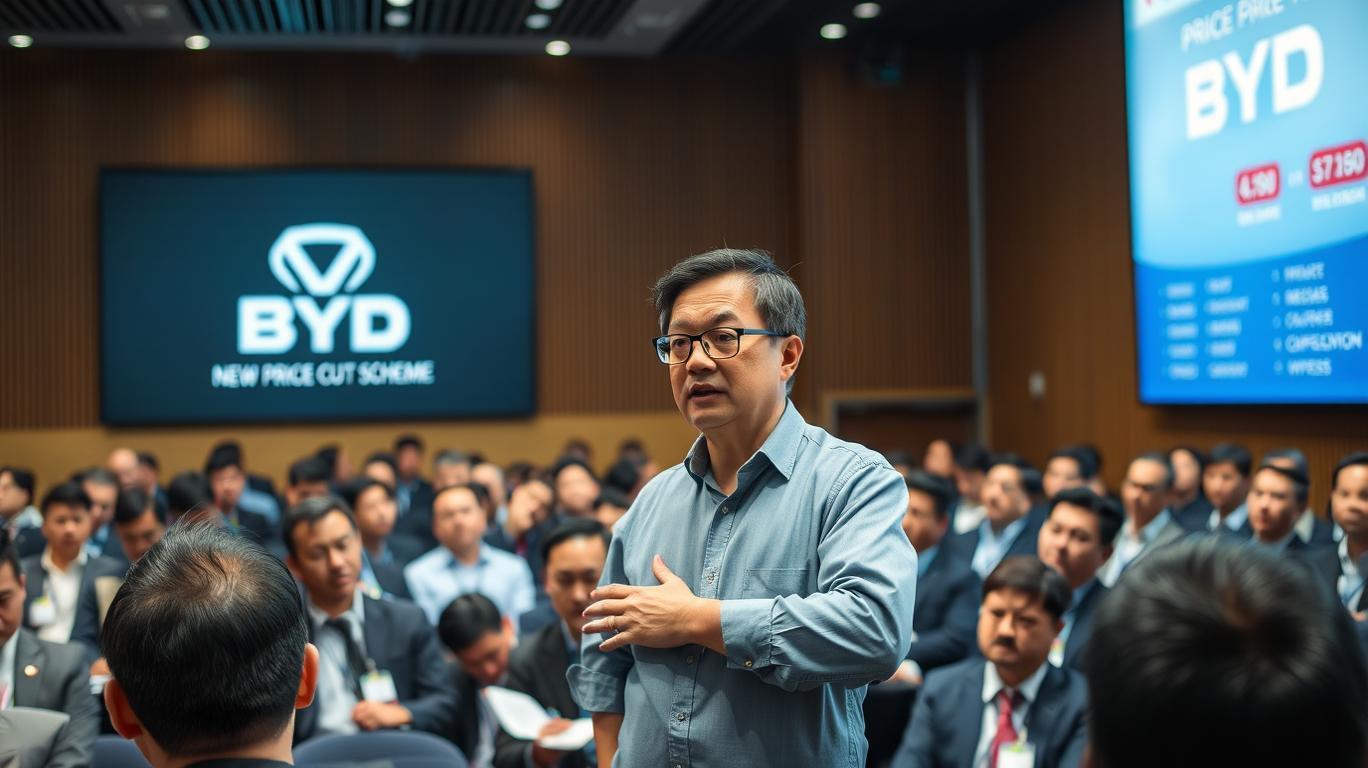
The EV market in China is a high-stakes game, with fierce competition and vast potential for growth. BYD, commanding a substantial market share, aims to maintain its edge by driving down costs. Its request for a 10% price cut from suppliers could help the company offer more affordable EVs, making them more attractive to consumers. This move may also strengthen BYD's financial health by reducing production costs.
However, the potential risks and challenges are significant. Suppliers, often smaller and less capitalized, may struggle to absorb the price cut without compromising quality or pushing up costs elsewhere in the supply chain. This could lead to wage cuts, job losses, or reduced investment in research and development, potentially hindering the broader EV market's technological advancements.
Moreover, the ongoing price war in the Chinese EV market, driven by BYD's aggressive strategy, may discourage smaller players from investing in innovation, further consolidating the market and reducing overall industry innovation.
As an investor, one must consider both the short-term benefits and long-term implications of BYD's cost-cutting strategy. While the move may offer a competitive edge in the near term, it could also exacerbate market volatility and impact the company's financial performance if suppliers struggle to meet demands without compromising quality. The current global trade tensions and competition in the EV market add another layer of uncertainty.
In conclusion, BYD's price cut strategy could be a double-edged sword in China's EV market. While it may help the company maintain its competitive edge in the short term, it also presents significant challenges and risks that could potentially hinder the industry's long-term growth and sustainability. Investors should monitor the situation closely, considering both the immediate benefits and the potential long-term implications of BYD's cost-cutting strategy.
The EV market in China is a high-stakes game, with fierce competition and vast potential for growth. BYD, commanding a substantial market share, aims to maintain its edge by driving down costs. Its request for a 10% price cut from suppliers could help the company offer more affordable EVs, making them more attractive to consumers. This move may also strengthen BYD's financial health by reducing production costs.
However, the potential risks and challenges are significant. Suppliers, often smaller and less capitalized, may struggle to absorb the price cut without compromising quality or pushing up costs elsewhere in the supply chain. This could lead to wage cuts, job losses, or reduced investment in research and development, potentially hindering the broader EV market's technological advancements.
Moreover, the ongoing price war in the Chinese EV market, driven by BYD's aggressive strategy, may discourage smaller players from investing in innovation, further consolidating the market and reducing overall industry innovation.
As an investor, one must consider both the short-term benefits and long-term implications of BYD's cost-cutting strategy. While the move may offer a competitive edge in the near term, it could also exacerbate market volatility and impact the company's financial performance if suppliers struggle to meet demands without compromising quality. The current global trade tensions and competition in the EV market add another layer of uncertainty.
In conclusion, BYD's price cut strategy could be a double-edged sword in China's EV market. While it may help the company maintain its competitive edge in the short term, it also presents significant challenges and risks that could potentially hinder the industry's long-term growth and sustainability. Investors should monitor the situation closely, considering both the immediate benefits and the potential long-term implications of BYD's cost-cutting strategy.

Divulgación editorial y transparencia de la IA: Ainvest News utiliza tecnología avanzada de Modelos de Lenguaje Largo (LLM) para sintetizar y analizar datos de mercado en tiempo real. Para garantizar los más altos estándares de integridad, cada artículo se somete a un riguroso proceso de verificación con participación humana.
Mientras la IA asiste en el procesamiento de datos y la redacción inicial, un miembro editorial profesional de Ainvest revisa, verifica y aprueba de forma independiente todo el contenido para garantizar su precisión y cumplimiento con los estándares editoriales de Ainvest Fintech Inc. Esta supervisión humana está diseñada para mitigar las alucinaciones de la IA y garantizar el contexto financiero.
Advertencia sobre inversiones: Este contenido se proporciona únicamente con fines informativos y no constituye asesoramiento profesional de inversión, legal o financiero. Los mercados conllevan riesgos inherentes. Se recomienda a los usuarios que realicen una investigación independiente o consulten a un asesor financiero certificado antes de tomar cualquier decisión. Ainvest Fintech Inc. se exime de toda responsabilidad por las acciones tomadas con base en esta información. ¿Encontró un error? Reportar un problema


SOBRE NOSOTROS
Nuestra historiaAutores de noticiasBase de conocimientosPolítica de privacidadTérmino de usoDescargo de responsabilidad de corretaje de tercerosTérminos de uso de AIMEDivulgaciones de riesgos de AInvest AICarrerasCONTÁCTENOS
Email: support@ainvest.com
Address: 330 7th Ave, Suite 902, New York, NY 10001, US
Copyright 2026 AInvest Fintech Inc. All rights reserved.


Comentarios
Aún no hay comentarios