
BYD and Chinese EV Peers: Record Sales in December
Generado por agente de IAWesley Park
viernes, 3 de enero de 2025, 1:03 am ET2 min de lectura
BYD--
As the year 2024 comes to a close, Chinese electric vehicle (EV) manufacturers have been making headlines with their record-breaking sales figures. BYD, the country's leading NEV maker, has once again proven its dominance in the market, while its competitors have also shown impressive growth. Let's dive into the details and explore the strategies that have contributed to these remarkable sales performances.
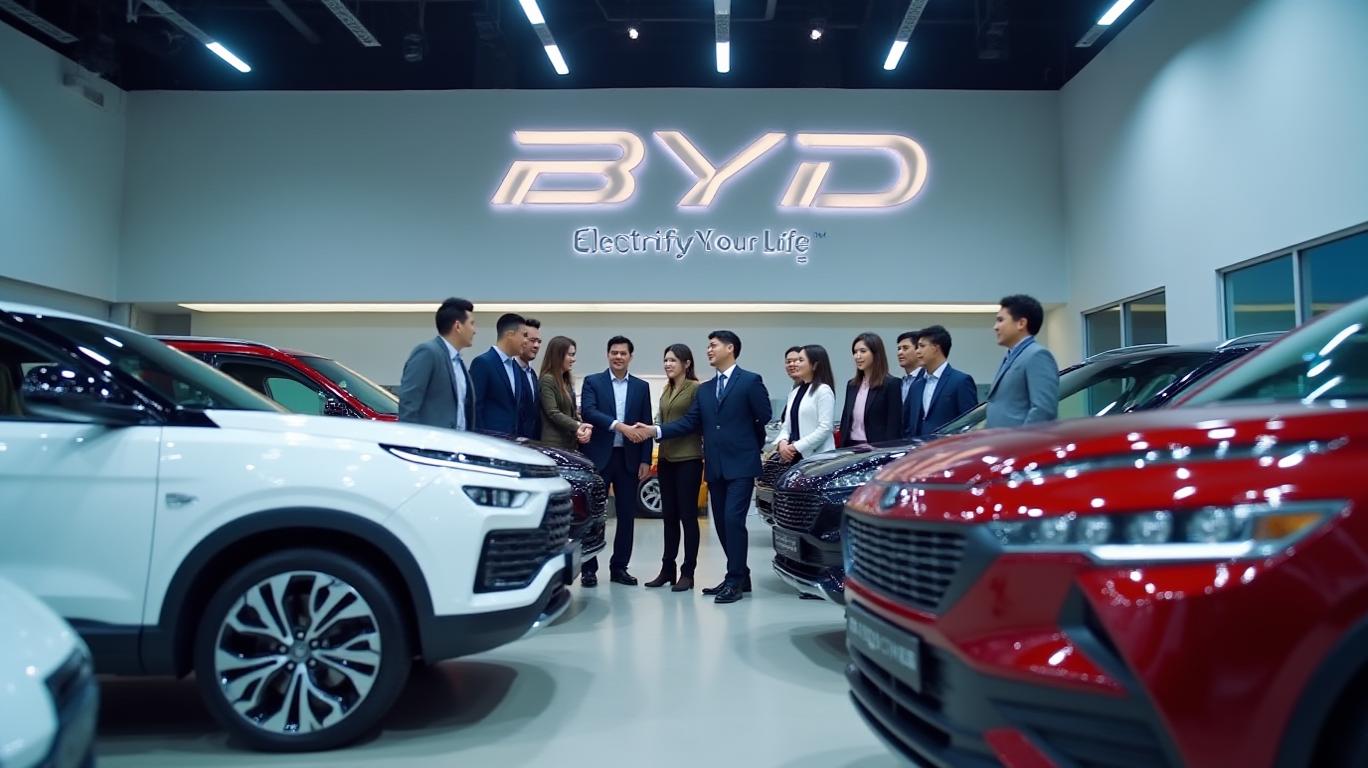
BYD, the world's largest NEV manufacturer, sold a staggering 514,809 vehicles in December 2024, marking a new monthly sales record and a 51% increase year-on-year. This impressive figure was driven by the company's aggressive pricing strategy and diverse product offerings. BYD slashed prices on several models, including the Sealion hybrid-electric SUV and the Song and Qin electric vehicles, to attract more customers ahead of the Lunar New Year holiday. This move, combined with the company's focus on both battery electric vehicles (BEVs) and plug-in hybrid electric vehicles (PHEVs), helped BYD achieve this remarkable sales performance.
BYD's competitors have also reported strong sales figures for December 2024:
* Li Auto sold 58,513 NEVs, up 33.1% year-on-year, marking the first time an EV startup has exceeded 500,000 annual sales.
* Xpeng delivered 36,695 EVs, up 34.2% year-over-year, driven by the success of its new P7+ and Mona M03 models.
* Nio sold 31,138 NEVs, up 38.7% year-over-year, with the Onvo L60 model contributing significantly to its sales growth.
* Zeekr reported record sales of 27,190 NEVs in December, marking its fourth consecutive record month.
These impressive sales figures demonstrate the growing demand for electric vehicles in the Chinese market and the increasing competition among EV manufacturers. As the Chinese government's EV subsidies expire, companies are aggressively cutting prices to maintain market share and attract new customers.

To maintain or improve their market positions, BYD's competitors have implemented various strategies:
1. Price Wars: Companies like Xpeng, Li Auto, and Nio have also been offering discounts and promotions to attract customers and boost sales, joining the intense price war in the Chinese EV market.
2. Expansion and Innovation: Manufacturers like Xpeng, Nio, and Zeekr have been expanding their product portfolios and introducing new models to cater to different market segments. For instance, Xpeng launched the P7+ and the subbrand Mona M03, while Nio introduced the Onvo L60, a Tesla Model Y rival.
3. Investment in Technology and R&D: Many competitors are investing heavily in research and development to improve their vehicles' performance, range, and features. For example, Tesla has been working on improving its battery technology and Autopilot system, while companies like Xpeng and Nio have been focusing on developing advanced driver-assistance systems (ADAS) and autonomous driving capabilities.
4. Partnerships and Collaborations: Some competitors have formed partnerships or collaborations to strengthen their market positions. For instance, Huawei's electric vehicle alliance, HIMA, includes brands like Aito, Luxeed, Stelato, and Maextro. Additionally, Stellantis-backed Leapmotor and Volkswagen-backed Xpeng have been gaining traction in the market.
As the Chinese EV market continues to grow and evolve, companies like BYD and its competitors will need to adapt and innovate to maintain their market positions. With the expiry of Chinese government EV subsidies and the intensifying price war, smaller and unprofitable players may be squeezed out, leaving room for the most competitive and innovative manufacturers to thrive.
LI--
NIO--
XPEV--
ZK--
As the year 2024 comes to a close, Chinese electric vehicle (EV) manufacturers have been making headlines with their record-breaking sales figures. BYD, the country's leading NEV maker, has once again proven its dominance in the market, while its competitors have also shown impressive growth. Let's dive into the details and explore the strategies that have contributed to these remarkable sales performances.
BYD, the world's largest NEV manufacturer, sold a staggering 514,809 vehicles in December 2024, marking a new monthly sales record and a 51% increase year-on-year. This impressive figure was driven by the company's aggressive pricing strategy and diverse product offerings. BYD slashed prices on several models, including the Sealion hybrid-electric SUV and the Song and Qin electric vehicles, to attract more customers ahead of the Lunar New Year holiday. This move, combined with the company's focus on both battery electric vehicles (BEVs) and plug-in hybrid electric vehicles (PHEVs), helped BYD achieve this remarkable sales performance.
BYD's competitors have also reported strong sales figures for December 2024:
* Li Auto sold 58,513 NEVs, up 33.1% year-on-year, marking the first time an EV startup has exceeded 500,000 annual sales.
* Xpeng delivered 36,695 EVs, up 34.2% year-over-year, driven by the success of its new P7+ and Mona M03 models.
* Nio sold 31,138 NEVs, up 38.7% year-over-year, with the Onvo L60 model contributing significantly to its sales growth.
* Zeekr reported record sales of 27,190 NEVs in December, marking its fourth consecutive record month.
These impressive sales figures demonstrate the growing demand for electric vehicles in the Chinese market and the increasing competition among EV manufacturers. As the Chinese government's EV subsidies expire, companies are aggressively cutting prices to maintain market share and attract new customers.
To maintain or improve their market positions, BYD's competitors have implemented various strategies:
1. Price Wars: Companies like Xpeng, Li Auto, and Nio have also been offering discounts and promotions to attract customers and boost sales, joining the intense price war in the Chinese EV market.
2. Expansion and Innovation: Manufacturers like Xpeng, Nio, and Zeekr have been expanding their product portfolios and introducing new models to cater to different market segments. For instance, Xpeng launched the P7+ and the subbrand Mona M03, while Nio introduced the Onvo L60, a Tesla Model Y rival.
3. Investment in Technology and R&D: Many competitors are investing heavily in research and development to improve their vehicles' performance, range, and features. For example, Tesla has been working on improving its battery technology and Autopilot system, while companies like Xpeng and Nio have been focusing on developing advanced driver-assistance systems (ADAS) and autonomous driving capabilities.
4. Partnerships and Collaborations: Some competitors have formed partnerships or collaborations to strengthen their market positions. For instance, Huawei's electric vehicle alliance, HIMA, includes brands like Aito, Luxeed, Stelato, and Maextro. Additionally, Stellantis-backed Leapmotor and Volkswagen-backed Xpeng have been gaining traction in the market.
As the Chinese EV market continues to grow and evolve, companies like BYD and its competitors will need to adapt and innovate to maintain their market positions. With the expiry of Chinese government EV subsidies and the intensifying price war, smaller and unprofitable players may be squeezed out, leaving room for the most competitive and innovative manufacturers to thrive.

Divulgación editorial y transparencia de la IA: Ainvest News utiliza tecnología avanzada de Modelos de Lenguaje Largo (LLM) para sintetizar y analizar datos de mercado en tiempo real. Para garantizar los más altos estándares de integridad, cada artículo se somete a un riguroso proceso de verificación con participación humana.
Mientras la IA asiste en el procesamiento de datos y la redacción inicial, un miembro editorial profesional de Ainvest revisa, verifica y aprueba de forma independiente todo el contenido para garantizar su precisión y cumplimiento con los estándares editoriales de Ainvest Fintech Inc. Esta supervisión humana está diseñada para mitigar las alucinaciones de la IA y garantizar el contexto financiero.
Advertencia sobre inversiones: Este contenido se proporciona únicamente con fines informativos y no constituye asesoramiento profesional de inversión, legal o financiero. Los mercados conllevan riesgos inherentes. Se recomienda a los usuarios que realicen una investigación independiente o consulten a un asesor financiero certificado antes de tomar cualquier decisión. Ainvest Fintech Inc. se exime de toda responsabilidad por las acciones tomadas con base en esta información. ¿Encontró un error? Reportar un problema




Comentarios
Aún no hay comentarios