
Bybit's ZEREBROUSDT Max Open Interest Adjustment: A Deep Dive into Liquidity and Volatility Risk
Bybit's Strategic Move: Balancing Risk and Liquidity in the ZEREBROUSDT Market
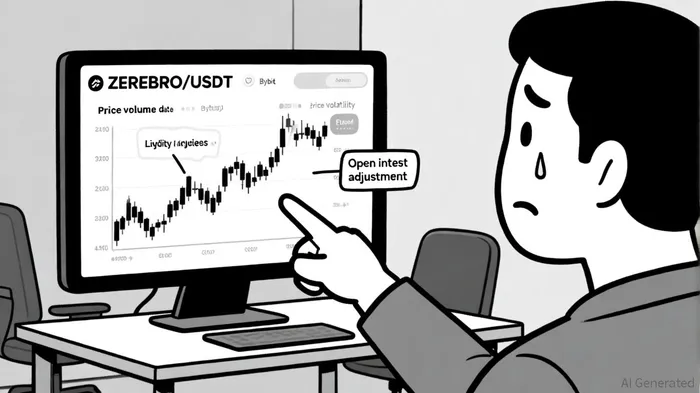
On October 11, 2025, Bybit announced an adjustment to the maximum open interest (OI) for the ZEREBRO/USDT perpetual contract, a move framed as part of its broader risk management and user protection strategies, according to a Kanalcoin report. While the exact numerical thresholds for the previous and new limits remain undisclosed, the platform's general policy restricts individual traders to holding no more than 10% of the total open interest for USDT perpetual contracts, per Bybit's open interest limit. This adjustment, consistent with Bybit's historical approach to stabilizing volatile markets as noted in Dapp.Expert coverage, raises critical questions about its implications for liquidity and volatility risk.
The Mechanics of Open Interest Management
Bybit's tiered system for managing open interest is designed to prevent excessive risk concentration and potential market manipulation, per Bybit's open interest limit. For instance, if a contract's total open interest falls within the first tier (e.g., under $5 million), individual traders may hold up to 20% of the total OI. However, as open interest grows, the permissible percentage decreases, capping at 10% for larger contracts. This dynamic framework ensures that no single participant can dominate the market, thereby mitigating systemic risks.
The ZEREBRO/USDT perpetual contract, which had seen significant trading activity in October 2025 according to Cryptometer data, likely triggered this adjustment due to its growing open interest. On October 11 alone, buy and sell volumes reached $41.7 million and $37.7 million, respectively, indicating a highly liquid but volatile market. Bybit's decision to adjust the max OI aligns with its mandate to maintain equilibrium between fostering liquidity and curbing destabilizing speculation.
Liquidity and Volatility: A Delicate Trade-Off
The adjustment's impact on liquidity and volatility is nuanced. While Bybit's announcement emphasized "enhancing trading stability," the absence of disclosed numerical limits complicates direct assessment. However, market data from October 11–12, 2025, offers indirect insights. On October 12, ZEREBRO's price fluctuated between $0.0079 and $0.0553, with a 24-hour trading volume of $250.9 million (Cryptometer data). Such volatility-amplified by the asset's relatively small market cap of $51.1 million (Cryptometer data)-suggests that unmanaged open interest could exacerbate price swings.
Bybit's 10% cap on individual positions likely reduces the risk of large players cornering the market, which could otherwise trigger cascading liquidations and liquidity crunches. For example, if a single trader held 10% of a $50 million OI contract, their exit could destabilize the order book. By limiting exposure, Bybit aims to prevent such scenarios while preserving sufficient liquidity for organic trading activity, as discussed in the Kanalcoin report.
Market Reactions and Strategic Implications
Crucially, the adjustment appears to have been implemented without immediate disruptions. According to the Kanalcoin report, there were no observable shifts in funding rates or collateral requirements post-adjustment. This suggests that the platform's risk management tools-such as automated leverage reductions and margin adjustments on Bybit risk limits-effectively cushioned the transition.
For traders, the adjustment signals a more regulated environment for ZEREBRO/USDT. While this may deter speculative bets, it could attract institutional participants seeking stable, transparent markets. Conversely, retail traders might face tighter position limits, potentially reducing their ability to capitalize on short-term volatility per Bybit's open interest limit.
Conclusion: A Prudent Step in a High-Risk Ecosystem
Bybit's adjustment to ZEREBRO/USDT's max open interest reflects a calculated effort to balance innovation with risk mitigation. In a market characterized by extreme liquidity swings and price volatility (Cryptometer data), such measures are essential to prevent systemic shocks. While the lack of specific numerical thresholds limits granular analysis, the platform's tiered approach and historical consistency, as noted in Dapp.Expert coverage, provide a robust framework for assessing its intent.
For investors, the key takeaway is clear: platforms like Bybit are increasingly prioritizing stability over unbridled liquidity, a trend likely to shape the future of crypto derivatives trading. As ZEREBRO's market matures, further adjustments may follow, underscoring the need for traders to adapt to evolving risk parameters.






Comentarios
Aún no hay comentarios