
Why Buy-and-Hold ETFs Alone May Not Build Wealth: A Risk-First Analysis
Building on earlier market observations, . . equity ETFs managed to outpace that benchmark according to analysis. This stark contrast highlights a growing divergence between elite performers and the broader market.
Top-tier ETFs stood out as statistical anomalies. . Meanwhile, according to Morningstar data exemplified broad-market exposure capturing steady momentum.
While these outliers demonstrate outsized potential, their rarity warrants caution. Historical dominance rarely predicts future results, and replicating such performance faces structural barriers like valuation premiums and diminishing capacity. Investors eyeing these leaders should weigh entry timing and concentration risk-past success alone doesn't guarantee sustained outperformance.
Regulatory & : The Fragility of Passive Portfolios
While passive ETFs have attracted record capital, their structural vulnerabilities are surfacing amid shifting policy landscapes. The ongoing Medicaid restructuring threatens to destabilize healthcare-focused funds like the iShares Health Care ETF according to CFR research, as regulatory changes could reconfigure provider reimbursement models and hospital profitability. Similarly, the iShares BitcoinBTC-- Trust operates in a regulatory gray area, exempt from Investment Company Act safeguards that govern traditional funds according to IShares insights, exposing investors to custody and transparency risks.
Sector-specific ETFs are particularly susceptible to political swings. , reflecting how policy shifts-whether tax credits expansion or trade tariffs-can abruptly alter industry fundamentals. These volatility spikes underscore a broader tension: while passive strategies capture broad market trends, they offer little protection against sector-destroying regulatory changes.
according to ICI data, revealing how policy-driven sectoral rotations can undermine static portfolios. Renewable energy funds, for instance, face dual pressures from subsidy withdrawals and trade disputes, while cryptocurrency ETFs grapple with evolving tax and custody regulations. Investors relying on passive exposure must now factor in non-diversifiable policy risks-such as Medicaid restructuring or Bitcoin custody rules-that static strategies cannot hedge.
The regulatory arbitrage embedded in some ETF structures creates another layer of uncertainty. Funds operating outside traditional frameworks, like Bitcoin trusts, may offer yield advantages but lack the oversight that could prevent liquidity crunches or asset seizures. As policymakers increasingly target "synthetic" investment vehicles, these products face potential redesign or delisting-risks that passive investors often overlook in pursuit of benchmark replication.
Liquidity & Flow Dynamics: The Hidden Drain on Long-Term Returns
Beyond policy shocks, liquidity imbalances quietly erode passive returns, creating unseen pressure on portfolios. according to ICI data, yet this surge masks a critical problem-capital is fleeing key commodity sectors, a red flag signaling potential weakness ahead. This imbalance isn't just about numbers; it's about the friction it creates. When markets turn stressful, those heavy equity positions suddenly face competition for buyers, while commodity assets risk becoming "stranded"-assets that are hard to sell quickly without significant price concessions. 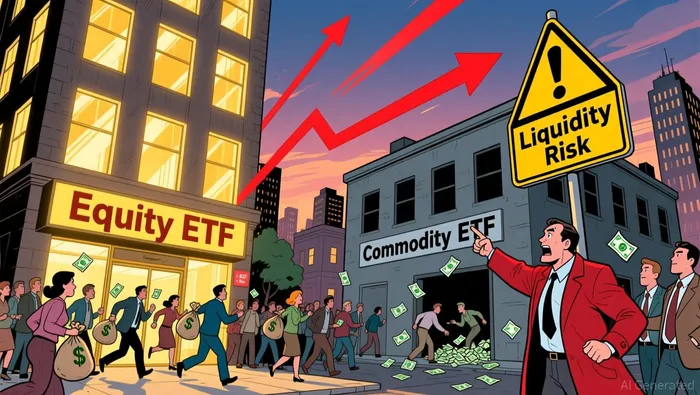 The volatility spike in the solar ETF, according to CFR research, demonstrates how sector-specific liquidity crunches can trigger violent price swings, trapping holders. This exit barrier dynamic means even solid long-term investments can suffer unintended short-term pain when liquidity dries up, forcing premature sales or widening bid-ask spreads. While the overall ETF influx suggests broad market confidence, the divergent flows across sectors reveal growing frictions that could amplify losses in a risk-off scenario, making exit timing crucial for maintaining portfolio stability.
Risk-First Guardrails: When Passive Holding Becomes Dangerous
The liquidity window remains open, but volatility has amplified the need for disciplined risk controls. When markets shift from uncertainty to outright crisis, passive strategies can become dangerous if they ignore structural vulnerabilities. Three guardrails emerge as critical adaptations:
First, immediate exposure reduction during policy shocks is non-negotiable. Sudden regulatory reversals-like Medicaid restructuring or solar ETF volatility spikes-can trigger cascading de-ratings. Investors must preemptively trim positions when policy signals turn hostile according to CFR research.
Second, liquidity metrics demand vigilant monitoring. When cash flow degradation begins stranding assets, passive holdings risk becoming frozen capital. This isn't about timing tops-but avoiding positions that lose marketability during stress according to ICI data.
Third, structurally vulnerable ETFs require avoidance. Products like Bitcoin trusts operating outside regulatory frameworks create hidden leverage effects. Their dislocations can reverberate through correlated assets when custody or clearing mechanisms fail according to IShares insights.
These guardrails preserve capital without sacrificing long-term positioning. As ETFs evolve toward greater regulatory scrutiny, the market will reward those who blend growth conviction with structural resilience. The next phase favors investors who treat volatility not as noise-but as a stress test for portfolio design.






Comentarios
Aún no hay comentarios