
First Busey's Strategic Refinancing and Preferred Offering: A Blueprint for Regional Banking Dominance
In a landscape where regional banks are increasingly scrutinized for their capital discipline and growth acumenABOS--, First Busey Corporation (NASDAQ: BUSE) has emerged as a standout player. Its recent issuance of $25 million in 8.25% non-cumulative preferred stock and strategic refinancing of higher-cost debt mark a masterclass in capital optimization. This move not only lowers borrowing costs but also fuels liquidity for its high-stakes acquisition of CrossFirst Bank, positioning Busey to dominate the Midwest-Southwest corridor. Let’s dissect why investors should take notice.
Capital Optimization Through Debt Refinancing
Busey’s refinancing of its 5.25% subordinated notes due 2028 with lower-cost, longer-dated debt is a tactical win. By replacing $110 million of existing notes with new 5.125% subordinated notes maturing in 2031, the bank extends its debt maturity profile while reducing annual interest expenses by $112,500. This shift aligns with its broader strategy to minimize near-term repayment pressure and bolster liquidity—a critical buffer as it integrates CrossFirst.
The 8.25% preferred stock offering adds further flexibility. With a perpetual structure and optional redemption starting in 2025, Busey can defer dividend payments without penalty, offering operational agility in volatile markets. The non-cumulative feature means missed dividends don’t compound, shielding shareholders from dilution. Meanwhile, the proceeds are earmarked to refinance higher-cost debt, further lowering its blended interest rate and improving net interest margin.
Fueling Growth with CrossFirst Integration
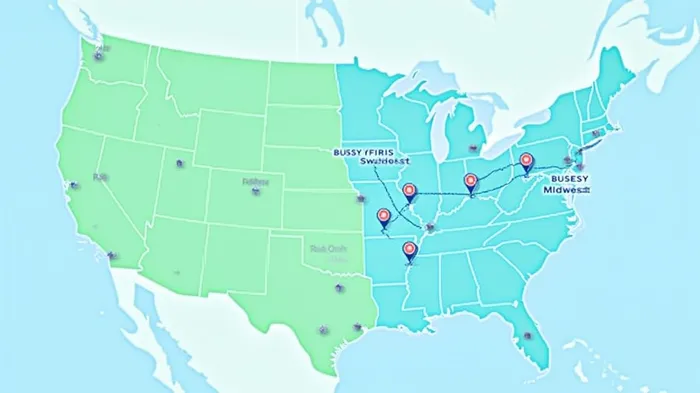
The $1.3 billion acquisition of CrossFirst Bank isn’t just about scale—it’s about geographic synergy. CrossFirst’s strong presence in Texas and Oklahoma complements Busey’s Midwest footprint, creating a coast-to-coast regional banking platform. The preferred stock issuance and refinancing provide $25 million in dry powder to absorb CrossFirst’s operations, from IT systems to branch rebranding.
Busey’s 14.10% CET1 capital ratio—well above the 10.5% regulatory minimum—provides a safety cushion to absorb integration costs while pursuing accretive deals. The cross-selling potential is immense: CrossFirst’s 1,200% YoY growth in digital banking users aligns with Busey’s tech-forward strategy, while Busey’s robust $9.8 billion in deposits can fuel CrossFirst’s loan book expansion.
Low-Risk Profile of the Preferred Stock
Investors often shy away from preferred stock due to dividend risks. But Busey’s offering is a standout:
- Non-cumulative dividends mean no penalty for missed payments, reducing issuer risk.
- Perpetual tenure with a 2025 call option allows Busey to retire the shares if rates drop further.
- 25.8% yield protection: Even if interest rates rise, the 8.25% coupon provides a buffer against inflation.
Strategic Expansion and Synergies
The Midwest-Southwest expansion isn’t just about geography—it’s about diversifying revenue streams. CrossFirst’s energy sector exposure complements Busey’s agribusiness focus, creating cross-selling opportunities in commercial lending. Busey’s $12.4 million Q4 2023 net income—up 7% YoY—hints at the operational efficiency gains already materializing.
Risks to Consider
- Interest Rate Volatility: While Busey’s preferred stock is fixed-rate, its variable-rate refinanced debt (e.g., SOFR + 491 bps) exposes it to rising rates.
- Integration Execution: CrossFirst’s Texas branches must be assimilated without disrupting customer relationships or incurring cost overruns.
Conclusion: A Compelling Play for Regional Banking Dominance
First Busey’s strategic refinancing and preferred stock offering are more than financial engineering—they’re a blueprint for consolidation leadership. With a fortress balance sheet, low-risk preferred terms, and a merger that unlocks $7.2 billion in combined assets, Busey is primed to capitalize on its Midwest-Southwest footprint.
Investors seeking steady dividends (via the preferred stock) or high-growth exposure (via common shares) should act now. The preferred stock’s 8.25% yield offers a compelling entry point, while the common stock’s 14.3% total risk-based capital ratio signals growth resilience.
This isn’t just a refinancing—it’s the first step toward Busey becoming the go-to regional bank for the next decade.







Comentarios
Aún no hay comentarios