
Burry's $1 Trillion Nuclear Bet: A Tactical Catalyst for Energy Stocks
The specific catalyst is clear. On January 9, Michael Burry took to X to call for a $1 trillion federal investment to fast-track small nuclear reactors and grid upgrades. His message was a direct response to the explosive electricity demand fueled by artificial intelligence. Burry framed this as a strategic imperative, arguing that energy shortages could soon become a major constraint on American innovation and economic growth.
The demand driver is quantifiable and accelerating. U.S. data center power demand is forecast to grow from 61.8 GW in 2025 to 134.4 GW in 2030, a 116% increase. More broadly, global data center electricity use is projected to double by 2030. A key engine within this growth is the rise of AI-optimized servers, which are expected to account for 44% of data center power consumption by 2030. This isn't just incremental growth; it's a fundamental shift in the load profile of the power grid.
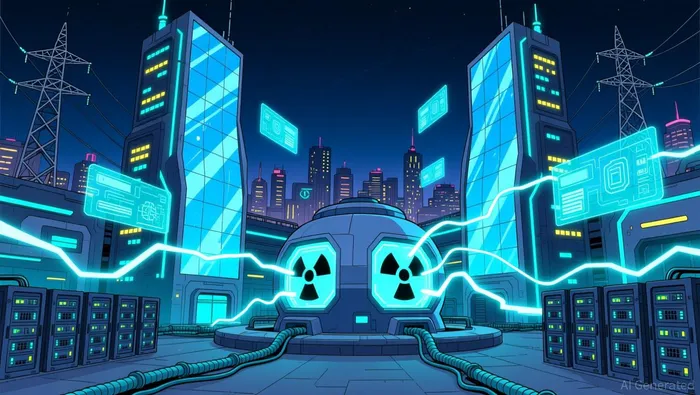
For a tactical investor, Burry's post acts as a high-conviction catalyst. It crystallizes a multi-year infrastructure build-out narrative, highlighting nuclear and grid modernization as the most viable solutions to meet this surge. The setup is a classic event-driven rotation: a prominent, high-conviction call backed by massive, structural demand. Yet this is also a high-risk, multi-year play. The $1 trillion plan faces immense political and regulatory hurdles, and the actual build-out timeline is uncertain. The immediate market impact may be a speculative pop in relevant stocks, but the real payoff depends on policy execution over the next decade.
The Mechanics: From Proposal to Market Impact
The immediate market impact hinges on political momentum, not the long-term merits of the plan. Burry's call is a tactical catalyst that highlights a bottleneck, but the $1 trillion proposal faces immense execution risk. It requires bypassing the very regulatory delays it seeks to avoid-a monumental task for a project of this scale. The real catalyst for stocks is the shift in sentiment, not the likelihood of the plan passing in its current form.
This sets up a clear trading opportunity. The primary beneficiaries of any positive sentiment shift are pre-revenue nuclear developers and established fuel players. Companies like NuScale Power (SMR) and Cameco (CCJ) are the most direct beneficiaries. NuScaleSMR--, a pure-play small modular reactor developer, saw its stock give back more than 18% over the past month after a massive run-up. Any renewed focus on fast-tracking SMRs would directly address its core business. Cameco, a major uranium producer, benefits from the broader narrative of nuclear expansion as a baseload power source for data centers.
The mechanics of the market move are straightforward. Burry's post acts as a narrative reset, shifting the conversation from long-term potential to near-term policy catalysts. This can trigger a speculative pop in these high-beta names, especially if other tech leaders echo his call. However, the setup is fragile. The recent sell-off in nuclear stocks shows how quickly sentiment can reverse when broader market fears-like an AI bubble-take hold. The trade is a bet on political momentum outweighing market volatility, not on the immediate feasibility of a trillion-dollar build-out.
Valuation and Risk: Separating Signal from Noise
The tactical signal here is clear, but the noise is loud. Michael Burry's recent puts on NVIDIA and Palantir target the frothy valuations of leading AI stocks, not the nuclear sector. Yet his simultaneous call for a $1 trillion nuclear and grid expansion plan provides a powerful thematic tailwind for the entire energy infrastructure story. The market's reaction last week, however, shows how easily this signal can be drowned out.
The core risk is a multi-year timeline. Even if the political momentum builds, the actual build-out of small modular reactors and grid upgrades will take years. Energy stocks may not see material benefit until federal funding and permitting accelerate beyond the current proposal stage. This creates a classic "wait-and-see" period where the stock price is stuck between long-term potential and near-term execution uncertainty.
A more immediate threat is the risk of a broader AI valuation correction. The sell-off triggered by Burry's puts hit not just AI leaders but also ancillary businesses like nuclear. As a result, pre-revenue nuclear companies like Lightbridge and Oklo took sizable hits. This demonstrates the fragility of the sentiment-driven rally. If concerns about an AI bubble intensify further, it could dampen all related sector sentiment, overshadowing the nuclear catalyst entirely.
The bottom line for a tactical investor is to separate the event from the noise. Burry's post is a catalyst that crystallizes a multi-year narrative, but it is not a near-term earnings report. The trade hinges on political momentum outweighing market volatility. For now, the setup remains a high-conviction, high-risk bet on a policy shift that could take a decade to materialize.
Catalysts and What to Watch
For a tactical investor, the Burry catalyst is a starting gun, not a finish line. The immediate setup is to watch for political and market signals that confirm the narrative shift. The first and most direct catalyst is any official response. Monitor for statements from the White House or key Congressional leaders like Senator John Thune, who was specifically named by Burry. A positive echo from a Republican leader could provide immediate political momentum, while silence or skepticism would be a red flag.
Second, look for concrete spending announcements. The $1 trillion proposal is a starting point, but the market needs to see specific funding allocations. Watch for infrastructure bills or budget proposals that explicitly include nuclear or grid modernization line items. Any mention of fast-tracking permits for small modular reactors would be a major positive signal for developers like NuScale.
Finally, track the performance of the key stocks for breakout signals. The recent sell-off has reset sentiment, but a true reversal would show on volume and price. For NuScale PowerSMR-- (SMR), a break above its recent trading range with heavy volume would signal renewed institutional interest. For Cameco (CCJ), watch for a sustained move above its recent highs, which would confirm the uranium price story is gaining traction independent of the nuclear build-out narrative.
The watchlist is clear: Burry's call is the catalyst, but the trade depends on what happens next. Keep an eye on political echoes, spending details, and the technical charts of SMRSMR-- and CCJ.







Comentarios
Aún no hay comentarios