
Burnout in Healthcare: The Silent Epidemic Undermining Equity Markets
The healthcare sector is in crisis—and it's not just about rising costs or aging populations. Beneath the surface, a hidden epidemic is eroding the stability of critical industries, with profound implications for equity investors. Burnout among healthcare professionals isn't just a human tragedy; it's a microcosm of systemic risk spreading through high-stress sectors, threatening the foundations of global equity markets. Here's why investors must heed these warning signs—and act now to protect their portfolios.
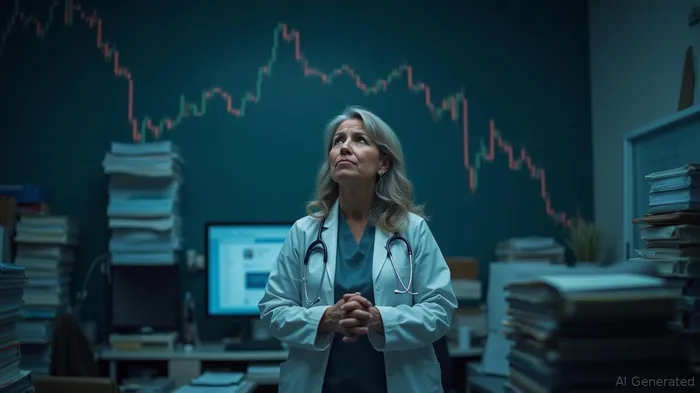
The Burnout-Breakdown Cycle: A Microcosm of Systemic Risk
Healthcare burnout isn't confined to tired nurses or overworked doctors. The data tells a grimmer story:
- 35.4% of U.S. healthcare workers reported burnout in 2023, down from pandemic peaks but still 50% higher than pre-2020 levels.
- Primary care physicians face the worst crisis, with burnout rates hitting 57.6% in 2022, exacerbating workforce shortages.
This isn't just a staffing issue. Burnout triggers decision fatigue, reducing error margins in high-stakes environments. In healthcare, this means delayed diagnoses and mismanaged care. In equity markets, it's analogous: overstretched executives, traders, and policymakers make flawed decisions under chronic stress, amplifying volatility and mispricing risks.
Why Healthcare's Crisis Spells Trouble for Equity Investors
When critical industries falter, entire economies teeter—and equity markets follow. Healthcare's burnout crisis mirrors the systemic vulnerabilities in other high-stress sectors like finance, energy, and tech. Overworked professionals can't innovate, adapt, or manage risks effectively. The result? Lower productivity, higher costs, and prolonged stagnation—all of which undermine equity valuations.
Take Japan's “Lost Decades” (1990s–2000s) as a cautionary tale. Equity markets there collapsed alongside a healthcare system buckling under aging populations and underfunded infrastructure. The Nikkei 225 took 35 years to recover its 1989 peak, while real estate values dropped 70% by 2001.
Stress-Testing Equity Bets: The PPFAS FC Example
The ProShares UltraPro Short Healthcare ETF (PPFAS) is a stark case study. Designed to profit from healthcare sector declines, PPFAS has surged as burnout and underinvestment plague hospitals and clinics. But this isn't just a short-term trade—it's a stress test for concentrated equity bets.
- In Japan's Lost Decades, investors who bet against overvalued sectors (e.g., real estate-linked equities) thrived, while long-only portfolios languished.
- Today, sectors like healthcare are vulnerable to systemic breakdowns. Workforce shortages could trigger a “death spiral”: rising costs → reduced access → eroded profits → plummeting stock prices.
Hedging with Tangible Assets: The Japan Paradox
To survive prolonged volatility, investors must diversify beyond equities. Japan's Lost Decades offer a blueprint:
- Real Estate: While urban land prices cratered, rural and industrial properties often stabilized, offering physical anchors against financial instability.
- Commodities: Gold and energy stocks outperformed equities during deflationary periods, acting as “crisis ballast.”
The parallel today is clear:
- Healthcare burnout and systemic risks in other sectors could spark a global “Lost Decade” scenario, with equities stagnating or declining.
- Tangible assets—real estate, infrastructure, and commodities—will thrive as equity valuations come under pressure.
The Call to Action: Diversify or Perish
The writing is on the wall. Healthcare's burnout crisis is a canary in the coal mine for systemic risks across industries. Equity investors face a stark choice:
1. Concentrate on volatile sectors, gambling that burnout won't spread to finance, tech, or energy.
2. Diversify into tangible assets, using real estate, commodities, and defensive sectors to weather stagnation.
History favors the latter. In Japan's Lost Decades, the Nikkei's decline wasn't inevitable—but it was predictable for those watching systemic stress signals. Today, the same logic applies: hedge with tangibles, or risk being erased by the next “Lost Decade.”
The market's next chapter won't be written by equities alone. It's time to armor your portfolio.
Act now—before burnout becomes the new normal.







Comentarios
Aún no hay comentarios