
Burning Tensions: How Iran-Israel Conflict Ignites Energy Markets and Shapes Investment Strategy
The simmering conflict between Iran and Israel has erupted into a full-blown geopolitical crisis, with profound implications for global energy markets. As military strikes and retaliatory attacks dominate headlines, the ripple effects are already reshaping oil prices, equity valuations, and investment strategies. For investors, this is a moment to dissect the risks and opportunities hidden in the volatility.
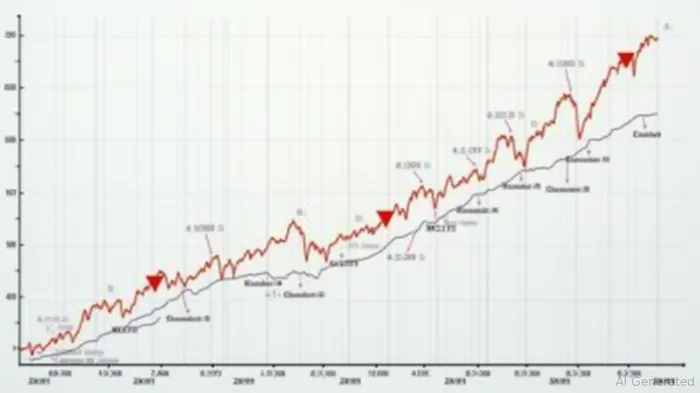
Geopolitical Escalation and Oil Market Dynamics
The stakes are monumental: Iran's nuclear ambitions and Israel's preemptive strikes have created a tinderbox scenario. With Iran's retaliation escalating—hundreds of ballistic missiles targeting Israeli assets—the risk of supply chain disruption looms large. The Strait of Hormuz, through which 20% of global oil flows (18–20 million barrels per day), is now a focal point. Analysts warn that a full blockage could push oil prices to $120 per barrel, while even minor disruptions have already injected a geopolitical risk premium into prices.
Current prices hover near $78 per barrel, but the market remains hypersensitive. J.P. Morgan's $120 forecast hinges on whether the conflict spills into infrastructure sabotage or broader military engagement. For investors, the question is: Is this a short-term spike or a new baseline?
Impact on Energy Equities
The energy sector is bifurcating. Oil majors like ExxonMobil (XOM) and Chevron (CVX) stand to benefit from higher crude prices, but their stocks are also tied to broader economic risks. Meanwhile, companies exposed to Middle East operations face direct risks.
Conversely, energy infrastructure firms (e.g., pipeline operators) and defense contractors (Lockheed Martin (LMT), General Dynamics (GD)) are gaining traction. The latter surged 5–8% last week as investors priced in elevated military spending.
Central Banks and Inflation: A Delicate Balance
Higher oil prices are reigniting inflationary pressures. The Federal Reserve's path to rate cuts now faces uncertainty, with Goldman Sachs downgrading its 2025 GDP growth forecast to 1.5% from 2.0%. The ECB is equally constrained: European airlines (Lufthansa, Air France) have already seen 5–7% declines, while energy-driven inflation could stall the eurozone's fragile recovery.
For investors, this creates a yield squeeze: lower bond returns and equity volatility. The Fed's delayed easing could prolong market instability, favoring defensive plays and commodities.
Investment Strategy: Navigating the Crossfire
- Go Long on Energy Exposure:
- ETFs: Consider XLE (Energy Select Sector SPDR Fund) or USO (United States Oil Fund) for direct oil price exposure.
Oil Services: Companies like Schlumberger (SLB) and Baker Hughes (BKR) often outperform during price rallies, insulated from geopolitical risks.
Defense and Security Plays:
Lockheed Martin (LMT) and Northrop Grumman (NOC) are beneficiaries of defense budgets. Their stable cash flows and geopolitical tailwinds justify a buy rating.
Avoid Middle East-Linked Assets:
Oil explorers with direct operations in conflict zones (e.g., Apache Corp (APA)) face elevated operational risks.
Hedge with Alternatives:
- Gold (GLD) and Treasuries (TLT) remain critical for portfolio stability. Gold's 2% rise last week underscores its safe-haven role.
Final Analysis: A Volatile Landscape Demands Prudence
The Iran-Israel conflict has reset the energy market's risk calculus. While oil prices may retreat if tensions de-escalate, the geopolitical risk premium is here to stay. Investors must balance exposure to energy gains with protection against broader economic slowdowns.
A diversified strategy—mixing energy ETFs, defense stocks, and safe-haven assets—is the safest path. Monitor the Strait of Hormuz closely; if supply fears abate, rotate into cyclicals. But if the conflict widens, brace for prices hitting $100 and beyond.
The Middle East is burning, but for shrewd investors, the flames may illuminate opportunities in the ashes.
Data as of June 6, 2025. Past performance does not guarantee future results. Consult a financial advisor before making investment decisions.





Comentarios
Aún no hay comentarios