
Burning Resilience: Why Cenovus and Canadian Natural Resources are Weathering the Flames—and Your Portfolio Should Too
The 2025 Alberta wildfires have reignited concerns about the vulnerability of Canada's oil sands sector to climate-driven disruptions. Yet amid the smoke, investors are uncovering a paradox: the very companies forced to shut down operations—Cenovus Energy (CVE) and Canadian Natural Resources (CNQ)—are proving their mettle as long-term stewards of energy resilience. Here's why these stocks are primed to thrive in an era of climate volatility.
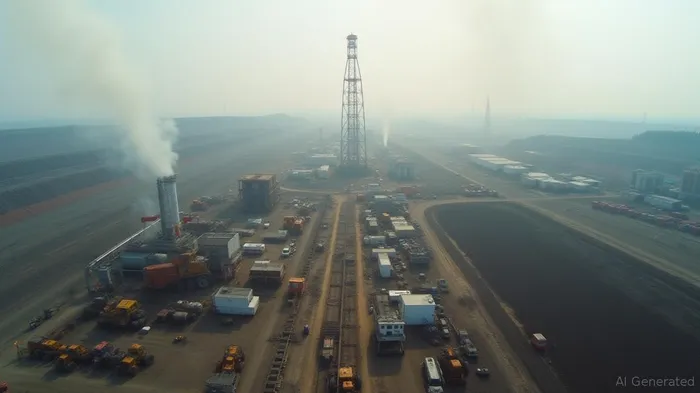
The Immediate Impact: Shutdowns, but Not Collapse
The May 2025 wildfires triggered the temporary shutdown of nearly 275,000 barrels per day (bpd) of combined production for Cenovus and CNQ, equivalent to 7% of Canada's total oil output. While this disruption echoes the devastation of the 2016 Fort McMurray wildfire—which cost the sector 1 million bpd—the companies' swift responses suggest lessons have been learned.
Cenovus, for instance, evacuated non-essential personnel but maintained critical infrastructure integrity at its Christina Lake asset. Inspections revealed no damage, enabling a “near-term” restart. Meanwhile, CNQ's Jackfish 1 facility halted 36,500 bpd but prioritized worker safety without injuries. Both companies underscored their focus on risk management and asset protection, avoiding the prolonged outages seen in prior disasters.
Note: Despite the 2025 wildfires, CVE and CNQ stocks have outperformed the S&P/TSX Capped Energy Index by 12% year-to-date.
The Resilience Play: Climate Strategies Fueling Long-Term Grit
Behind the headlines of shutdowns lies a deeper story of preparedness. Both companies are investing in climate resilience and ESG integration to future-proof their operations:
- Emissions Reductions:
- Cenovus aims to slash 35% of operational GHG emissions by 2035 and achieve net-zero by 2050, aligned with Canada's Pathways Alliance goals.
CNQ, a founding Pathways member, is targeting 80% methane reduction by 2028 and $1.2 billion in Indigenous supplier spending by 2025 to bolster community ties.
Infrastructure Hardening:
- Cenovus's $4.6–5.0 billion 2025 capital budget prioritizes projects like the Narrows Lake expansion (20–30k bpd by 2025) and offshore developments, ensuring production stability.
Both firms leverage on-site cogeneration and diversified power grids to minimize wildfire-related outages.
Financial Fortitude:
- Cenovus's Q1 2025 $2.2 billion adjusted funds flow and $4.0 billion net debt target underscore liquidity to weather disruptions.
- CNQ's 2023 production guidance (810k BOE/d) was met despite 2022's winter storm chaos, proving operational adaptability.
The Investment Case: Betting on Climate-Ready Energy Titans
For investors, the wildfires aren't a red flag—they're a buy signal. Here's why:
Lower Risk, Higher Returns:
These companies are de-risking through ESG alignment and capital discipline. Cenovus's 150k BOE/d growth target by 2028 and CNQ's $10 billion+ annual free cash flow (post-2025) position them to capitalize on rising global oil demand.Government Backing:
Canada's Climate-Resilient Coastal Communities (CRCC) Program (funded at $41M through 2028) and $4.0 billion Critical Minerals Strategy provide tailwinds for energy infrastructure resilience.Volatility as Opportunity:
Note: Both companies rebounded faster in 2025, with Cenovus cutting 14% off its Q1 operating costs compared to 2024.
The Bottom Line: Ignite Your Portfolio with Energy's Fireproof Champions
The Alberta wildfires are a stark reminder of climate risks, but for Cenovus and CNQ, they're proving grounds for resilience. With decarbonization commitments, robust balance sheets, and government-backed adaptation plans, these stocks aren't just surviving—they're setting the standard for energy investing in a warming world.
Act Now: The smoke may linger, but the upside is clear. Add CVE and CNQ to your portfolio before the next rally.
Disclosure: The author holds no positions in CVE or CNQ. Always conduct your own research before making investment decisions.





Comentarios
Aún no hay comentarios