
Burlington Stores: Why Cramer Labels It the Weakest Off-Price Retailer and What It Means for Investors
Competitive Positioning: A Tale of Two Growth Trajectories
Burlington Stores' first-half 2025 performance, , has left much to be desired compared to the broader sector's momentum. By contrast, TJXTJX-- Companies has consistently outperformed, . Ross StoresROST--, meanwhile, has shown resilience, year-over-year, driven by a focus on branded merchandise and aggressive marketing.
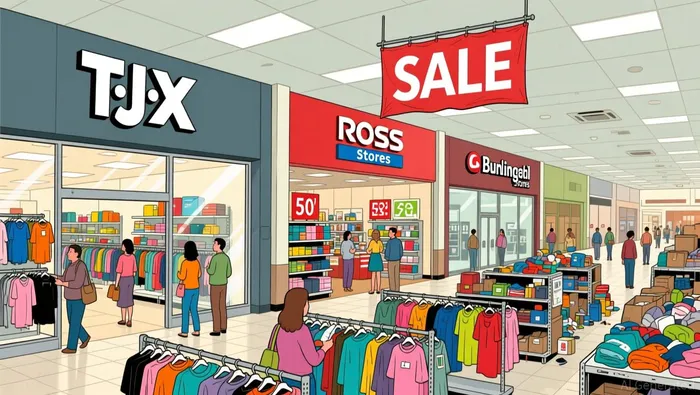
The disparity in execution is stark. TJX's Marmaxx division, which includes T.J. Maxx and Marshalls, , reflecting its ability to capitalize on shifting consumer preferences. Ross Stores, despite facing tariff-related headwinds, managed to offset costs through operational efficiency and strategic pricing according to its earnings release. BurlingtonBURL--, however, has struggled to replicate this agility. While . , .
Valuation Realism: Overpriced Optimism?
, suggesting investors are paying a premium for its growth prospects. This contrasts sharply with Ross Stores, according to analyst commentary. TJX, despite its stellar performance, , which some analysts argue signals overvaluation.
The disconnect is particularly evident when comparing forward-looking guidance. Burlington's management projected FY2025 EPS , , hinting at skepticism about the sustainability of its growth. Ross Stores, by contrast, raised its FY2025 EPS guidance , , yet still commands a "Moderate Buy" consensus rating. TJX's ability to consistently exceed expectations-such as its Q3 EPS of $1.28 vs. , even as its valuation stretches according to market analysis.
Implications for Investors: Balancing Risk and Reward
For investors, the key takeaway is that valuation realism matters. While Burlington's recent earnings beat and institutional buying (e.g., , the stock's lofty multiples may not justify its growth trajectory. In contrast, Ross Stores' combination of strong comp sales, operational efficiency, and a more attractive valuation offers a compelling alternative. TJX's dominance in the sector is undeniable, but its elevated PEG ratio raises questions about whether its current price reflects future potential or overhyped momentum.
Burlington's challenges are not insurmountable. Its recent share repurchases and dividend payouts signal management's commitment to shareholder returns. However, in a sector where is king, the company's inability to match the comp sales growth of its peers-particularly in apparel and home goods-casts a long shadow.
Conclusion
The off-price retail sector remains a fertile ground for value hunters, but not all players are created equal. Burlington Stores' struggles to keep pace with TJX and Ross Stores, both in terms of sales execution and valuation discipline, underscore why it's often labeled the weakest link. For investors, the lesson is clear: while short-term earnings beats can dazzle, long-term success in this sector hinges on sustainable growth and realistic pricing. As the holiday season approaches, the real test will be whether Burlington can close the gap-or if its peers will continue to outshine it.







Comentarios
Aún no hay comentarios