
Bunker Hill's Strategic Mine Restart in Idaho: A Nexus of Resource Nationalism and Commodity Supply Chain Resilience
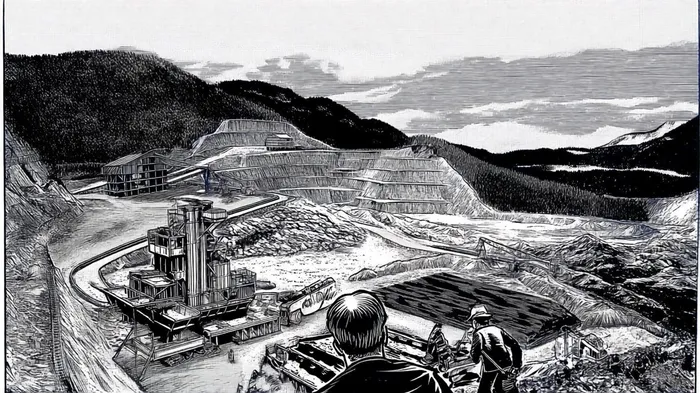
The restart of Bunker Hill Mining Corp.'s historic zinc-lead-silver mine in Idaho has emerged as a pivotal case study in the intersection of resource nationalism and commodity supply chain resilience. As of October 2025, the project is 74% complete, with its processing plant at 83% construction and procurement activities nearing full completion, according to Bunker Hill's October project update. Originally slated for a Q2 2025 restart, the project has been delayed to H1 2026 due to inflationary pressures, cost overruns, and a revised capital budget of $103 million-up from the initial $55 million, per Bunker Hill's updated forecast. Despite these challenges, the mine's strategic alignment with U.S. national security priorities and its role in reducing reliance on foreign critical mineral supplies make it a compelling investment story.
Strategic Importance in U.S. Supply Chain Resilience
The U.S. has increasingly prioritized domestic mineral production to counter geopolitical vulnerabilities, particularly China's dominance in processing and refining critical materials. Zinc and silver, produced by Bunker Hill, are essential for infrastructure, solar panel manufacturing, and battery technologies, according to the U.S. Geological Survey. A CSIS analysis notes that 54 minerals are now classified as critical to national security, with supply chains vulnerable to disruption. Bunker Hill's restart directly addresses this gap by providing a domestic source of zinc and silver, metals with applications in both civilian and defense sectors.
President Donald J. Trump's March 2025 executive order to accelerate domestic mineral production underscores this urgency, as described in a White House fact sheet. The order streamlines permitting for federal mining projects and invokes emergency powers under the Clean Water Act and Endangered Species Act to fast-track approvals. Bunker Hill's project, located in a Superfund site-a first in U.S. history-demonstrates how modern environmental remediation can coexist with resource extraction, aligning with the administration's dual goals of economic growth and ecological responsibility, as shown in a B-TV feature.
Financing and Partnerships: Mitigating Risk, Securing Resilience
The mine's restart has been bolstered by a $60 million capital restructuring led by Teck ResourcesTECK--, including a $40 million equity investment and a $10 million standby facility, according to a Mining Weekly report. This partnership ensures that 100% of Bunker Hill's zinc and silver-lead concentrate will be processed at Teck's Trail Smelter in British Columbia, as detailed in a Bunker Hill project update. Additionally, Bunker Hill secured $31 million through equity financing and debt restructuring in July 2025, reducing operational risk and improving financial stability, per the company's equity financing announcement.
The project's alignment with U.S. strategic goals has also attracted federal attention. Bunker Hill is in line for a potential $150 million loan from the U.S. Export-Import Bank to expand processing capacity to 2,500 tons per day by 2026, according to a Northern Miner report. This financing, coupled with the mine's designation under the Justice40 Initiative-a Biden-era program targeting economic development in disadvantaged communities-highlights its dual role as an industrial and social infrastructure project, as noted in a Bunker Hill news release. Analysts at Burgex also emphasize that Shoshone County, where the mine operates, is expected to gain 250 long-term jobs, a critical boost for a region historically reliant on mining.
Environmental and Geopolitical Considerations
Bunker Hill's restart also navigates complex environmental legacies. The mine operated in a Superfund site-a designation for areas requiring long-term cleanup due to hazardous waste-yet the company has leveraged modern remediation techniques to ensure responsible extraction, according to a company press release. This approach aligns with the U.S. government's emphasis on sustainable resource development, as outlined in the U.S.-Australia framework.
Geopolitically, the mine's output reduces U.S. dependence on foreign sources of zinc and silver, which are critical for defense applications such as missile guidance systems and advanced computing, according to a Carnegie Endowment report. The Trump administration's Section 232 investigation into processed mineral imports further underscores the strategic imperative to localize supply chains. While domestic production alone cannot fully replace imports by 2035, a Carnegie Endowment analysis argues that projects like Bunker Hill's serve as foundational pillars for a diversified, resilient network.
Conclusion: A Model for Future Projects
Bunker Hill's mine restart exemplifies how private-sector innovation, strategic partnerships, and government policy can converge to address supply chain vulnerabilities. While challenges such as permitting delays and processing capacity constraints persist, the project's alignment with U.S. national security objectives and its role in creating a domestic critical mineral base make it a linchpin in the broader effort to secure economic and industrial independence. For investors, the mine represents not just a bet on commodity prices, but a stake in the geopolitical and technological future of the U.S.





Comentarios
Aún no hay comentarios