
Bulgaria's Energy Crisis and Geopolitical Vulnerability: Implications for Emerging Market Energy Stocks
Bulgaria's Precarious Balancing Act
Bulgaria's energy sector is a microcosm of the challenges facing smaller economies caught between Western sanctions and Russian energy dominance. The U.S. sanctions on Lukoil, which operates the Burgas refinery-the country's largest-and controls half of its wholesale fuel market, have forced the Bulgarian government to take drastic measures. In November 2025, the country temporarily banned fuel exports to the EU and NATO to prioritize domestic stability, according to a Reuters report. Energy Minister Zhecho Stankov has publicly assured citizens of uninterrupted supply until year-end, but the government has also passed a law granting itself sweeping powers to nationalize Lukoil's assets if necessary, as noted in a Politico report.
The stakes are high. Lukoil's Burgas refinery is not just an economic lifeline but a political flashpoint. With the U.S. Treasury rejecting a potential buyer for Lukoil's international assets, Bulgaria faces a dual threat: a potential fuel shortage and the collapse of a key economic partner. The government's emergency measures, including security checks at the refinery and stockpile monitoring, underscore the fragility of its energy security.
Regional and Global Implications
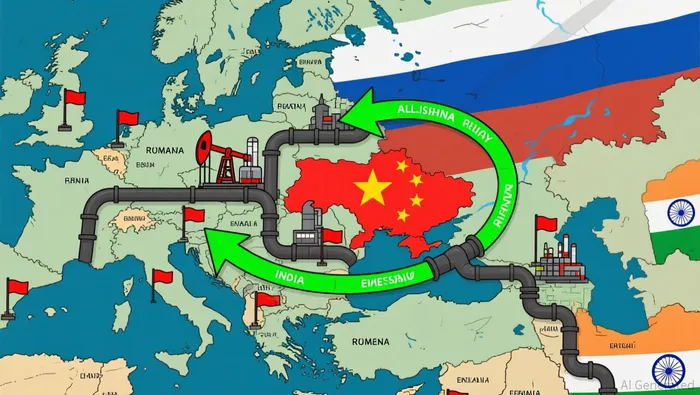
Bulgaria's predicament is part of a larger pattern. Neighboring Romania, which relies on Lukoil's Petrotel refinery for 20% of its fuel supply, is also scrambling to secure exemptions from sanctions. Meanwhile, energy-dependent giants like China and India have adapted to U.S. restrictions by deepening their ties with Russia. China, for instance, has imported over 100 million tonnes of Russian crude annually since 2024, according to a China-focused analysis, while India's $140 billion in Russian oil purchases between 2022 and mid-2025, as noted in the same analysis, has allowed it to defy Western pressure and bolster its energy independence.
These dynamics are reshaping global energy markets. As U.S. sanctions force Russia to sell oil at discounts, countries like China and India are leveraging these deals to reduce their reliance on Western systems. This shift has accelerated de-dollarization trends and created a multipolar energy order, as the China-focused analysis observes. For emerging markets, however, the benefits are offset by risks: sanctions-driven volatility, supply chain disruptions, and the potential for retaliatory measures from the U.S.
Investment Risks and Opportunities
The energy sector's response to sanctions has created a volatile investment landscape. Western energy stocks, such as APA and Occidental Petroleum, have surged in the past quarter as Russian exports decline and refining margins expand, according to a Yahoo Finance report. Conversely, emerging market energy stocks tied to Russian operations face headwinds. Lukoil's forced divestments, including its West Qurna-2 oil field in Iraq, have triggered a scramble among buyers like Swiss-based Gunvor Group, as reported in a Gunvor analysis. While these transactions present opportunities for investors seeking exposure to discounted assets, they also highlight the geopolitical fragility of such investments.
For Bulgaria and similar economies, the risks are acute. The country's export ban, as noted in a 1lurer report, and potential nationalization of Lukoil's refinery, as noted in the Politico report, signal a shift toward state intervention-a trend that could deter foreign investment in energy infrastructure. Investors must weigh the short-term stability of government-backed measures against long-term uncertainties, such as the sustainability of subsidies and the risk of asset seizures.
The Path Forward
Bulgaria's energy crisis underscores a broader truth: in an era of geopolitical fragmentation, energy security is inextricably linked to economic and political stability. For emerging markets, the challenge lies in balancing short-term survival with long-term resilience. Diversifying energy sources, investing in renewables, and forging strategic partnerships outside the U.S.-led order are critical steps. Yet, these strategies require capital and political will-resources that are often scarce in energy-dependent economies.
Investors, meanwhile, must navigate a landscape where geopolitical risks and opportunities are intertwined. The key is to identify markets that can adapt to sanctions while avoiding those overly exposed to Russian energy. As the U.S. and its allies continue to tighten the screws on Moscow, the energy sector will remain a battleground for influence-and a source of both peril and profit.







Comentarios
Aún no hay comentarios