
Building the Rails: AI Infrastructure Plays on the Exponential Adoption Curve
The next phase of the AI investment cycle is clear. As adoption enters an exponential growth phase, the winners will be the companies building the fundamental compute and data center rails, not just the application layers. This isn't a speculative bet; it's a structural shift driven by scale, spending patterns, and a fundamental change in how AI workloads are consumed.
The scale of the coming data center supercycle is staggering. Nearly 100 GW of new capacity is anticipated to come online between 2026 and 2030, effectively doubling global capacity. This represents a real estate asset value creation of $1.2 trillion, with an additional $1 to $2 trillion needed for IT equipment fit-out. The sector is projected to expand at a 14% CAGR through 2030, a growth rate powered almost entirely by hyperscalers and AI demand. This isn't incremental growth; it's a paradigm shift in the infrastructure layer.
This growth is already outpacing expectations. Consensus estimates for AI hyperscaler capital expenditure have consistently underestimated spending, with actual capex exceeding 50% growth in both 2024 and 2025. The trend continues, with the consensus 2026 capex estimate now at $527 billion. The market is learning that the AI trade is not just about software; it's about massive, sustained hardware and real estate investment. This divergence is already showing in stock performance, as investors rotate away from infrastructure companies where capex is debt-funded and earnings growth is pressured, and toward those with a clearer link between spending and revenue.
The most critical inflection point is the shift from training to inference. While AI represented only about a quarter of data center workloads in 2025, with training driving demand, a significant change is anticipated in 2027. At that point, inference workloads could overtake training as the dominant AI requirement. This matters because inference is the ongoing, revenue-generating phase of AI deployment. It requires a different kind of compute infrastructure-specialized, efficient, and geographically distributed to reduce latency. This shift will drive demand for the very rails being built today, creating a sustained, exponential demand curve for data centers and their underlying power and cooling systems.
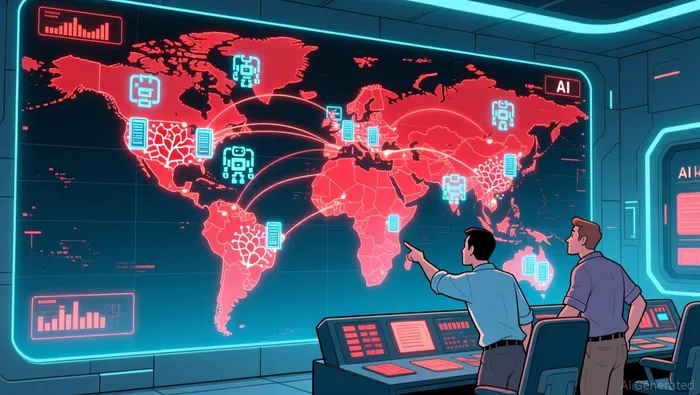
The bottom line is that we are on the steep part of the S-curve. The exponential adoption of AI is being fueled by a massive, underestimated infrastructure build-out, and the next wave of demand will be driven by the operational use of models, not their creation. The companies positioned to supply the fundamental compute and data center capacity are riding this wave.
First Principles Analysis: Where Value is Captured in the AI Stack
The exponential adoption curve of AI is reshaping where value is captured in the technology stack. The infrastructure layer-the compute and data center rails-is where the fundamental value creation is happening, not the application layer. This first-principles view separates companies building the future from those riding its surface.
Nebius Group is a pure-play example of this infrastructure thesis. The company recently secured a new agreement to deliver AI infrastructure to Meta valued at approximately $3 billion over 5 years. This is a direct bet on the coming data center supercycle. Yet its stock performance tells a story of high expectations. Shares have rallied over 80% in the past 120 days, trading at a premium valuation that reflects this growth narrative. The company's move to establish an at-the-market (ATM) equity program for up to 25 million Class A shares is a clear signal. It's preparing to fund its growth, but the program also makes the stock dilution-sensitive. For a pure-play infrastructure provider, this is a necessary trade-off to secure capital for the build-out, but it underscores the pressure to continuously deliver on its exponential promise.
Applied Digital operates in the same foundational layer, but as a data center operator. Its financials show the powerful operational leverage inherent in this phase of the build-out. For its fiscal second quarter, the company reported revenues of $126.6 million, up 250% from the prior year comparable period. More telling is the path to profitability: its net loss attributable to common stockholders was down 76% year-over-year. This dramatic reduction in losses, even as revenue explodes, is the hallmark of a capital-intensive business scaling efficiently. The stock's surge of 15% on the news confirms the market sees this as a high-leverage play on the AI infrastructure build-out. Applied DigitalAPLD-- is capturing value by providing the physical space and power for the compute that Nebius and others supply.
In stark contrast, SoundHound AI operates in the application layer. Its results highlight the challenge of monetizing AI at scale once the initial hype fades. The company posted reported revenue of $42.0 million, an increase of 68% year-over-year. That's strong growth, but it's revenue growth in a business still burning cash. SoundHound reported a GAAP net loss of ($109.3) million for the quarter. While its non-GAAP losses are smaller, the sheer scale of the GAAP loss shows the difficulty of converting voice AI adoption into profitable operations. This is the classic application-layer dilemma: high growth but high burn, with value capture often contested and less certain than in the underlying infrastructure.
The bottom line is a clear divergence. Companies like Nebius and Applied Digital are building the rails for the AI train, capturing value through massive, exponential demand for compute and data center capacity. SoundHound is building a car for that train, facing steeper hurdles to profitability. In the long arc of the S-curve, the infrastructure providers are positioned to capture the most durable value.
Financial Impact and Valuation: From Growth to Profitability on the S-Curve
The explosive growth metrics for AI infrastructure companies are translating into tangible financial implications, but the path to profitability and the sustainability of current valuations tell a nuanced story. The market is pricing in exponential success, but the journey from build-out to steady earnings is where the real test begins.
For pure-play infrastructure providers like Nebius, the key financial metric is utilization and contract backlog. The company has effectively "sold out" all of its available capacity, a clear signal of demand. Its projected annual run rate could reach $7 to $9 billion by year-end, a massive leap from $551 million last quarter. This growth narrative is reflected in its valuation. With a trailing PEG ratio of 0.63, the market appears to be pricing in this high growth, suggesting the stock's premium is justified by its trajectory. Yet, the stock's recent 84% surge over 120 days also shows how quickly expectations can move. The company's ATM equity program is a necessary tool to fund this expansion, but it introduces dilution risk if growth falters.
Applied Digital is demonstrating the financial leverage inherent in scaling a physical infrastructure business. Its fiscal second-quarter results show the transition from pure build-out to operational efficiency. Revenue exploded 250% year-over-year, but the more telling figure is its adjusted EBITDA margin improved to 16%. This marks a significant step toward profitability, as the company moves beyond simply spending capital to generating cash from its operations. The $2.35 billion private offering provides ample fuel for its 400 MW AI Factory campus, but the focus is now on converting that capacity into sustained, profitable earnings. The stock's 15% pop on the earnings beat confirms the market values this operational progress.
In contrast, SoundHound AI's financials highlight the high cost of scaling a software-centric application business. The company shows strong unit economics, with a non-GAAP gross margin of 59.3%. Yet, its adjusted EBITDA loss of ($14.5) million in the third quarter underscores the substantial sales and marketing and R&D investments required to drive its 68% revenue growth. This is the classic profile of a growth-stage software company: profitable at the product level but burning cash to acquire customers and scale. Its valuation must therefore be judged on future path to profitability, not current margins.
The bottom line is a divergence in financial maturity. Nebius and Applied Digital are building the rails and are now in the phase where utilization and margin expansion matter most. SoundHound is still in the high-investment growth phase, where top-line acceleration is the primary focus. On the S-curve, the infrastructure plays are moving toward the steeper part of the profitability cliff, while the application layer is still climbing the early slope of its own adoption curve.
Catalysts and Risks: The Path to Exponential Adoption
The path from today's infrastructure build-out to tomorrow's exponential adoption is paved with specific triggers and fraught with material risks. The near-term catalyst is a fundamental shift in the AI workload itself. The anticipated transition from training to inference as the dominant data center requirement by 2027 is a powerful inflection point. This shift will favor companies with efficient, scalable compute solutions and distributed data center capacity, directly benefiting pure-plays like Nebius and Applied Digital. It moves the demand curve from a capital-intensive build phase into a sustained, operational phase, creating a clear runway for growth.
The primary risk across the board is capital intensity. For infrastructure builders, securing funding without excessive dilution is a constant balancing act. Nebius's ATM equity program for up to 25 million Class A shares is a necessary tool to finance its expansion, but it makes the stock dilution-sensitive. Applied Digital's $2.35 billion private offering provides ample fuel, yet the focus must now be on converting that capacity into profitable earnings. For application-layer companies like SoundHound AI, the risk is different but equally critical. The company must achieve cash flow breakeven, as its GAAP net loss of ($109.3) million in the third quarter shows the substantial burn required to scale its voice AI deployments. The thesis for all three hinges on their ability to manage this capital equation.
The key watchpoint for the broader adoption curve is the rate of AI integration in enterprise verticals. SoundHound's partnerships in automotive and telecom are early indicators of this trend. The company's CEO noted enterprise AI adoption is booming globally, with deployments across millions of endpoints. If this adoption accelerates beyond the current pace, it will validate the long-term demand for both the underlying compute infrastructure and the application layers that sit atop it. A slowdown here would be a major red flag for the entire S-curve.
In reality, the catalysts and risks are intertwined. The inference shift is a powerful growth driver, but it requires the capital to build the efficient infrastructure to support it. The market is betting that companies like Nebius and Applied Digital can navigate the funding challenge to capture this shift, while SoundHound must prove its enterprise traction can eventually fund its own expansion. The next 12 to 24 months will test which companies can turn exponential promise into sustainable reality.





Comentarios
Aún no hay comentarios