
Building the Future: Why Prefabricated Construction is Key to Canada's 500k Housing Target
As Canada grapples with a housing crisis exacerbated by affordability gaps and supply shortages, the federal government's ambitious goal of 500,000 annual housing completions by the end of the decade has become a rallying cry for innovation. While skepticism looms—given the current trajectory of housing starts (projected to drop to 215,000 by 2026)—one solution stands out as a game-changer: prefabricated construction. This technology-driven approach, already backed by $40 billion in federal funding through initiatives like the "Build Canada Homes" (BCH) program, could be the linchpin to achieving the 500k target.
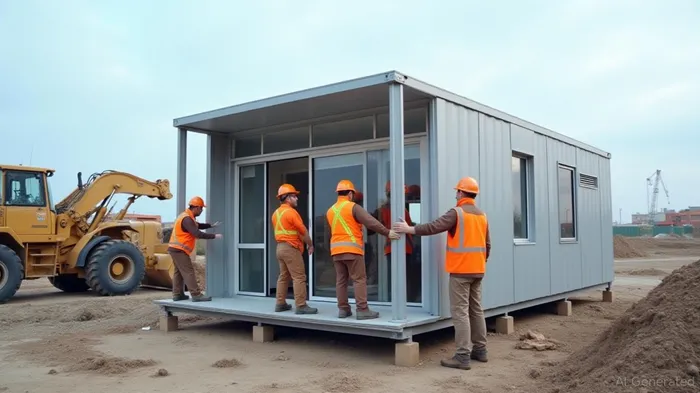
The Challenge: Why Traditional Construction Falls Short
Canada's housing sector faces a perfect storm. A projected 108,000-worker shortage by 2034 due to aging laborers and competing infrastructure projects, coupled with construction costs rising 12% since 2020, has stifled progress. Even the National Housing Strategy (NHS), which has committed over $37 billion since 2017, has fallen short of its 500k annual target—only 309,000 units were funded under federal programs by late 2024.
Traditional construction methods are too slow and too costly to bridge this gap. Delays in permits, labor bottlenecks, and site-specific customization add time and expense. Enter prefabrication: a shift from "bricks and mortar" to "factories and assembly lines."
The Prefab Revolution: How It Works and Why It Succeeds
Prefabricated construction—also known as modular or off-site construction—builds housing units in controlled factory environments, then transports them to sites for assembly. This method:
- Cuts construction time by 50%, reducing project timelines from 24 months to 12 months.
- Reduces costs by 20%, thanks to economies of scale and minimized waste.
- Improves quality control, as factories standardize materials and designs.
The federal BCH initiative aims to replicate the success of nations like Sweden, where 45% of housing is prefab, and Japan, where 15% is modular. Canada's current prefab share hovers at just 4-6%, but the government's $40 billion investment—including the $10 billion Affordable Builders Fund—seeks to catapult adoption.
The Investment Opportunity: Where to Allocate Capital Now
The prefab boomBOOM-- is already attracting investors. Key sectors to watch:
1. Modular Construction Firms
Companies like Modulus Living (a Canadian leader in modular housing) and Modular Group are scaling up production. Their stocks are poised to rise as demand surges.
2. Prefabrication Technology Providers
Firms developing AI-driven design tools (e.g., Buildots, which uses AI to optimize factory layouts) or advanced materials (e.g., CrossLaminated Timber (CLT) producers) will benefit as prefabs become mainstream.
3. Public Land Development Funds
The $500 million Canada Public Lands Acquisition Fund aims to repurpose underused government land for housing. Investors in real estate trusts (REITs) focused on urban infill projects—like RioCan REIT (RYE.TO)—could see gains as land becomes scarce.
4. Prefabricated Housing ETFs
Consider ETFs like iShares Global Timber & Forestry ETF (CUT), which includes CLT producers, or sector-specific ETFs tracking Canadian construction stocks.
Addressing the Risks: Scaling Prefab's Potential
Critics argue that provincial design codes, transportation costs for large modules, and consumer preference for custom homes could hinder adoption. However, federal plans to:
- Launch a National Housing Design Catalogue to standardize designs across provinces.
- Invest in transportation infrastructure to reduce shipping costs.
- Offer tax incentives for prefab developers (e.g., revival of the MURB tax credit) address these concerns.
Moreover, the 500k target's feasibility hinges on productivity gains. Achieving 400,000 units annually—a revised goal the government deems achievable—requires a 50% productivity boost. Prefab is the only scalable solution on the table.
The Bottom Line: Act Now or Miss the Boom
The writing is on the wall: Canada's housing future is prefab. With federal backing, proven international models, and a clear path to overcoming logistical hurdles, investors who act now can secure a piece of this $40 billion opportunity.
Don't wait for the next housing crisis to unfold. Allocate capital to prefab leaders and infrastructure funds today—before the competition catches on. The race to 500,000 units isn't just about bricks and mortar; it's about building the future.
Invest wisely, but invest now.







Comentarios
Aún no hay comentarios