
Buffett's Wisdom in Turbulent Times
Generado por agente de IATheodore Quinn
sábado, 5 de abril de 2025, 2:35 am ET3 min de lectura
UBS--
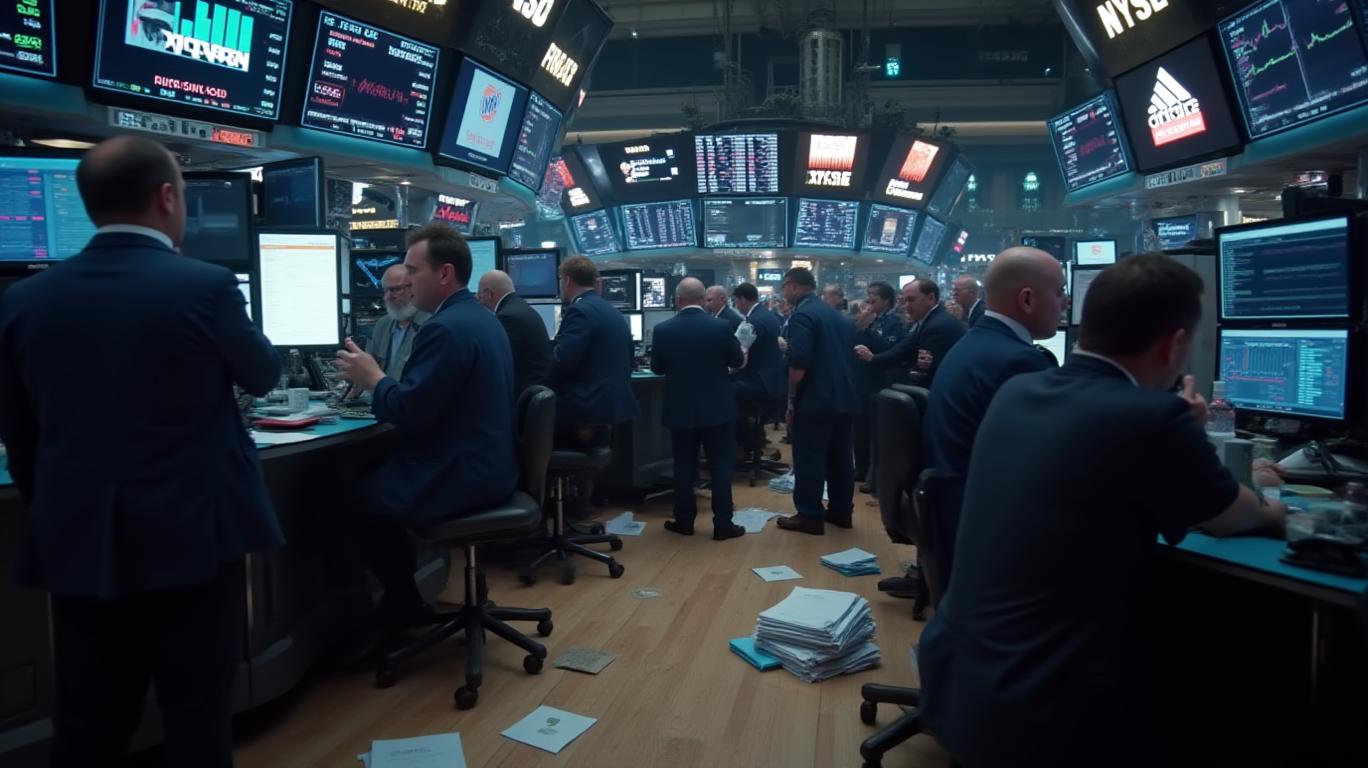
The market's reaction to President Donald Trump's sweeping tariffs has been nothing short of seismic. On April 5, 2025, the S&P 500 plummeted 4.8 percent, marking its worst day since the pandemic-induced crash of 2020. The Dow Jones Industrial Average tumbled 1,679 points, or 4 percent, and the Nasdaq composite plunged 6 percent. The financial world was in shock, and the echoes of Warren Buffett's old warning—"If you're going to do dumb things because your stock goes down, you're going to do dumb things"—resonated louder than ever.
The tariffs, which impose a minimum tax of 10 percent on imports, with higher rates on products from countries like China and the European Union, have sent shockwaves through global markets. The fear is that this could lead to a toxic mix of weakening economic growth and higher inflation, a scenario that could knock down U.S. economic growth by 2 percentage points this year and raise inflation close to 5 percent, according to UBSUBS--.
The market's reaction has been swift and brutal. Everything from crude oil to Big Tech stocks to the value of the U.S. dollar against other currencies has fallen. Even gold, which hit records recently as investors sought safety, pulled lower. The Russell 2000 index of smaller stocks dropped 6.6 percent, pulling more than 20 percent below its record.
Investors worldwide knew Trump was going to announce a sweeping set of tariffs late Wednesday, and fears surrounding it had already pulled Wall Street’s main measure of health, the S&P 500 index, 10 percent below its all-time high. But Trump still managed to surprise them with “the worst case scenario for tariffs,” according to Mary Ann Bartels, chief investment officer at Sanctuary Wealth.
The question on everyone's mind is: How should investors navigate this uncertainty? The answer, it seems, lies in the wisdom of Warren Buffett, who has long advocated for a long-term, fundamentals-based approach to investing.
Buffett's philosophy, rooted in the Benjamin GrahamGHM-- school of value investing, focuses on finding securities with prices that are unjustifiably low based on their intrinsic worth. This approach suggests that investors should look beyond the immediate market fluctuations and instead evaluate companies based on their overall potential as a business.
In the context of the current market volatility, Buffett's advice to "wait...then pounce" is particularly pertinent. He advises taking a deep breath and a step back when finding a company in which to invest, giving the stock time to achieve a reasonable valuation, and then moving when the market corrects. This strategy can help investors avoid the panic selling that often accompanies market downturns, such as the one triggered by Trump's tariffs.
For example, Tesla's stock price has been on a roller coaster ride, falling 1.7% to bring its loss for the year so far to 35.8%. It’s been one of the year’s worst performers in the S&P 500 in large part because of fears that the electric-vehicle maker’s brand has become too intertwined with its CEO, Elon Musk. Musk has been leading U.S. government efforts to cut spending, making him a target of growing political anger, and protests have swarmed TeslaTSLA-- showrooms as a result.
Buffett's philosophy also emphasizes staying the course and resisting the urge to sell holdings when they falter. He suggests that investors should "just keep buying" because "American business is going to do fine over time, so you know the investment universeUPC-- is going to do very well." This long-term perspective can help investors navigate the uncertainty caused by Trump's tariffs, which have led to a plunge in world financial markets and fears of recession.
Investors might adopt several strategies to navigate this uncertainty. First, they could focus on companies with strong fundamentals and a history of generating earnings, as Buffett advises. This approach can help investors identify stocks that are undervalued by the market or that aren't recognized by the majority of other buyers. Second, investors could consider diversifying their portfolios to include a mix of sectors and asset classes, which can help mitigate the impact of market volatility. For example, the energy sector saw substantial gains, while the chemicals sector had more moderate post-event reactions. Third, investors could take advantage of the market corrections caused by Trump's tariffs to buy quality stocks at a discount. This strategy aligns with Buffett's advice to "wait...then pounce" and can help investors build a strong portfolio over the long term.
In conclusion, the market's reaction to Trump's tariffs has been dramatic, but it's not the first time investors have faced such uncertainty. By following Buffett's advice on patience and long-term investment, investors can differentiate between temporary market corrections and more profound shifts in the economic landscape and make informed decisions about their investments. As Buffett himself has said, "It's far better to buy a wonderful company at a fair price than a fair company at a wonderful price." In these turbulent times, that wisdom is more valuable than ever.
The market's reaction to President Donald Trump's sweeping tariffs has been nothing short of seismic. On April 5, 2025, the S&P 500 plummeted 4.8 percent, marking its worst day since the pandemic-induced crash of 2020. The Dow Jones Industrial Average tumbled 1,679 points, or 4 percent, and the Nasdaq composite plunged 6 percent. The financial world was in shock, and the echoes of Warren Buffett's old warning—"If you're going to do dumb things because your stock goes down, you're going to do dumb things"—resonated louder than ever.
The tariffs, which impose a minimum tax of 10 percent on imports, with higher rates on products from countries like China and the European Union, have sent shockwaves through global markets. The fear is that this could lead to a toxic mix of weakening economic growth and higher inflation, a scenario that could knock down U.S. economic growth by 2 percentage points this year and raise inflation close to 5 percent, according to UBSUBS--.
The market's reaction has been swift and brutal. Everything from crude oil to Big Tech stocks to the value of the U.S. dollar against other currencies has fallen. Even gold, which hit records recently as investors sought safety, pulled lower. The Russell 2000 index of smaller stocks dropped 6.6 percent, pulling more than 20 percent below its record.
Investors worldwide knew Trump was going to announce a sweeping set of tariffs late Wednesday, and fears surrounding it had already pulled Wall Street’s main measure of health, the S&P 500 index, 10 percent below its all-time high. But Trump still managed to surprise them with “the worst case scenario for tariffs,” according to Mary Ann Bartels, chief investment officer at Sanctuary Wealth.
The question on everyone's mind is: How should investors navigate this uncertainty? The answer, it seems, lies in the wisdom of Warren Buffett, who has long advocated for a long-term, fundamentals-based approach to investing.
Buffett's philosophy, rooted in the Benjamin GrahamGHM-- school of value investing, focuses on finding securities with prices that are unjustifiably low based on their intrinsic worth. This approach suggests that investors should look beyond the immediate market fluctuations and instead evaluate companies based on their overall potential as a business.
In the context of the current market volatility, Buffett's advice to "wait...then pounce" is particularly pertinent. He advises taking a deep breath and a step back when finding a company in which to invest, giving the stock time to achieve a reasonable valuation, and then moving when the market corrects. This strategy can help investors avoid the panic selling that often accompanies market downturns, such as the one triggered by Trump's tariffs.
For example, Tesla's stock price has been on a roller coaster ride, falling 1.7% to bring its loss for the year so far to 35.8%. It’s been one of the year’s worst performers in the S&P 500 in large part because of fears that the electric-vehicle maker’s brand has become too intertwined with its CEO, Elon Musk. Musk has been leading U.S. government efforts to cut spending, making him a target of growing political anger, and protests have swarmed TeslaTSLA-- showrooms as a result.
Buffett's philosophy also emphasizes staying the course and resisting the urge to sell holdings when they falter. He suggests that investors should "just keep buying" because "American business is going to do fine over time, so you know the investment universeUPC-- is going to do very well." This long-term perspective can help investors navigate the uncertainty caused by Trump's tariffs, which have led to a plunge in world financial markets and fears of recession.
Investors might adopt several strategies to navigate this uncertainty. First, they could focus on companies with strong fundamentals and a history of generating earnings, as Buffett advises. This approach can help investors identify stocks that are undervalued by the market or that aren't recognized by the majority of other buyers. Second, investors could consider diversifying their portfolios to include a mix of sectors and asset classes, which can help mitigate the impact of market volatility. For example, the energy sector saw substantial gains, while the chemicals sector had more moderate post-event reactions. Third, investors could take advantage of the market corrections caused by Trump's tariffs to buy quality stocks at a discount. This strategy aligns with Buffett's advice to "wait...then pounce" and can help investors build a strong portfolio over the long term.
In conclusion, the market's reaction to Trump's tariffs has been dramatic, but it's not the first time investors have faced such uncertainty. By following Buffett's advice on patience and long-term investment, investors can differentiate between temporary market corrections and more profound shifts in the economic landscape and make informed decisions about their investments. As Buffett himself has said, "It's far better to buy a wonderful company at a fair price than a fair company at a wonderful price." In these turbulent times, that wisdom is more valuable than ever.

Divulgación editorial y transparencia de la IA: Ainvest News utiliza tecnología avanzada de Modelos de Lenguaje Largo (LLM) para sintetizar y analizar datos de mercado en tiempo real. Para garantizar los más altos estándares de integridad, cada artículo se somete a un riguroso proceso de verificación con participación humana.
Mientras la IA asiste en el procesamiento de datos y la redacción inicial, un miembro editorial profesional de Ainvest revisa, verifica y aprueba de forma independiente todo el contenido para garantizar su precisión y cumplimiento con los estándares editoriales de Ainvest Fintech Inc. Esta supervisión humana está diseñada para mitigar las alucinaciones de la IA y garantizar el contexto financiero.
Advertencia sobre inversiones: Este contenido se proporciona únicamente con fines informativos y no constituye asesoramiento profesional de inversión, legal o financiero. Los mercados conllevan riesgos inherentes. Se recomienda a los usuarios que realicen una investigación independiente o consulten a un asesor financiero certificado antes de tomar cualquier decisión. Ainvest Fintech Inc. se exime de toda responsabilidad por las acciones tomadas con base en esta información. ¿Encontró un error? Reportar un problema




Comentarios
Aún no hay comentarios