
Buffett Indicator Reaches All-Time High, Suggesting U.S. Stock Market Is Overvalued
Greg Abel, the new chief executive of Berkshire Hathaway, will receive a $25 million salary in 2026, placing him among the highest-paid CEOs in the S&P 500. This marked increase in compensation marks a shift from the company's previous approach under Warren Buffett, who earned just $100,000 per year. The move reflects Berkshire's evolving governance model as it transitions from an iconic, founder-led enterprise to a more conventional corporate structure according to WSJ reporting.
Berkshire's new leadership has also seen a shift in market performance. In early 2026, the S&P 500 outperformed Berkshire shares by roughly one percentage point. Over the past year, the S&P 500 with dividends outperformed Berkshire by 7.0 percentage points, signaling a potential shift in market dynamics under Abel's leadership.
Berkshire's investment portfolio and capital allocation strategy remain a focal point for investors. The company's conservative leverage, massive liquidity buffers, and focus on durable businesses are seen as structural strengths. Despite recent valuation concerns, Berkshire's P/E ratio and enterprise-value metrics remain within historical norms, suggesting long-term stability.
Why Did This Happen?
Greg Abel's high salary reflects a broader trend of normalization at Berkshire Hathaway. After decades of Warren Buffett's modest compensation, the company has adopted a more traditional CEO pay structure. Abel's salary is in line with other S&P 500 CEOs, many of whom receive substantial non-cash compensation and stock awards. This shift is part of Berkshire's broader move toward more conventional corporate governance as CNBC reports.
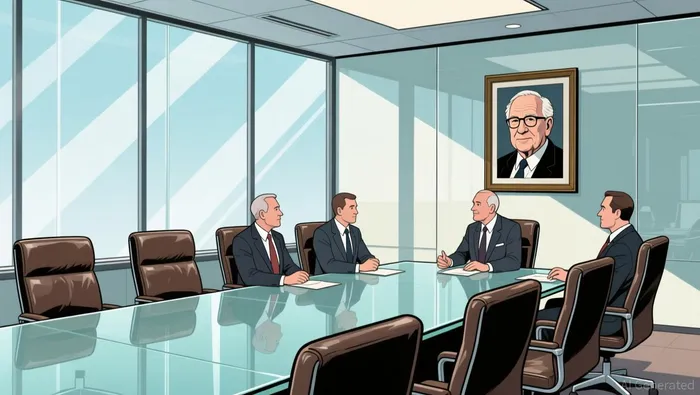
Warren Buffett himself acknowledged this change, noting that Abel is not a "distorted individual" and lives a normal life despite his high salary. However, Buffett also suggested that the true transformation of Berkshire into a "normal" company may not occur until after his passing.
How Did Markets React?
Since taking over as CEO, Greg Abel has led Berkshire through a period of moderate stock performance. Berkshire Hathaway shares have lagged the S&P 500 in early 2026, with the index showing a slight edge in year-to-date returns. This underperformance has raised questions about whether the company can maintain its historical outperformance in a changing market environment.
Meanwhile, BlackRock has advised investors to diversify their portfolios in response to the highly concentrated market. The "Magnificent Seven" stocks now account for over 40% of the S&P 500, a level that BlackRock's head of investing, Rick Jacobs, described as "either a feature or a bug." Many investors are shifting to equal-weight indices or alternative asset classes to manage risk according to CNBC analysis.
What Are Analysts Watching Next?
The valuation of Berkshire Hathaway remains a topic of debate among analysts. At approximately $500.31 per share, the stock trades at 1.5× book value and a P/E in the low-20s. Analysts project adjusted earnings per share of around $24.19 for 2026, implying a fair-value target of about $590 for Berkshire Hathaway BBRK.B-- over the next 18 months according to Investing.com analysis.
Investors are also monitoring the company's large cash and T-bill position, which currently stands at $381.67 billion. This liquidity provides Berkshire with flexibility in a potential distress environment and could generate additional returns if deployed effectively as Investing.com reports.
The broader market outlook suggests a more cautious investment environment. After a decade of strong performance, many analysts expect lower returns from the S&P 500 in the coming years. BlackRock has emphasized the importance of income generation and diversification as central themes for 2026, particularly as interest rates decline according to CNBC analysis.
Berkshire's top shareholders include institutional investors like Vanguard, BlackRock, and State Street, as well as insiders such as Ajit Jain and Susan Buffett. These stakeholders will be watching closely as the company navigates its new leadership and evolving market conditions as Investopedia reports.





Comentarios
Aún no hay comentarios