
Brown & Brown's Shoemaker & Besser Deal: A Tactical Play for Specialty Market Clout
The immediate catalyst is a straightforward asset deal. A subsidiary of BrownBRO-- & Brown, Bridge Specialty Group, has acquired the assets of Shoemaker & Besser Associates, a full-service managing general agent (MGA) and wholesale broker based in York, Pennsylvania. The transaction, announced today, was facilitated by Brown & Brown's chief acquisitions officer, J. Scott Penny. The purchase price remains undisclosed, fitting a pattern of Brown & Brown's recent, smaller-scale M&A.
Strategically, this is a clean fit. Shoemaker & Besser, established in 1959, specializes in niche personal insurance and business owner's policy products. Its addition directly expands Bridge Specialty's Contract Binding and Light Brokerage business with a proven, specialized product suite. The firm's team will continue operating from its York base, reporting to Bridge Specialty's regional leadership, signaling a low-friction integration.
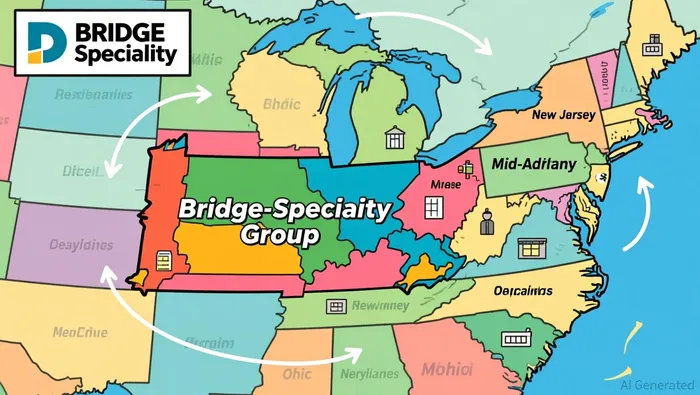
Contextually, the scale is tactical, not transformative. Shoemaker & Besser operates in a key Mid-Atlantic region, adding to Bridge Specialty's existing footprint of 50+ locations and a nearly $7 billion premium book. This move is part of a broader, active dealmaking spree by Brown & Brown, which also recently acquired a Florida workers' compensation specialist. The thesis here is clear: this is a low-risk, opportunistic play to boost market clout in a consolidating niche. It enhances Bridge Specialty's product offerings and geographic reach without materially altering Brown & Brown's core valuation or business model.
The Mechanics: Low-Cost, High-Clout Expansion
The deal's structure is a masterclass in low-risk expansion. It's an asset purchase, not a stock deal, which sidesteps complex integration headaches and keeps the Shoemaker & Besser team in its York, Pennsylvania base. This allows operations to continue seamlessly under the same leadership, reporting to Bridge Specialty's regional president. The mechanics are simple: acquire a proven product suite and distribution network without the overhead of a full corporate merger.
Strategically, the signal is clear. Shoemaker & Besser isn't a startup; it's a seasoned operator with established clout. Its 1997 Agent of the Year award and Top 55 MGA ranking are tangible proof of its strength in the specialty market. This isn't just adding another broker; it's bringing in a firm with a respected brand and a loyal agent network across six Mid-Atlantic states. That distribution muscle directly enhances Bridge Specialty's reach and credibility in a consolidating niche.
This move follows a distinct pattern. It comes just weeks after Brown & Brown completed an asset deal for Florida-based Campbell Agency, a workers' comp specialist. Both transactions share the same playbook: targeted, low-overhead acquisitions of niche specialists. The goal is to rapidly scale product offerings and geographic footprint without overextending capital or management bandwidth. This creates a network effect-each new MGA adds depth to Bridge Specialty's portfolio, making it a more compelling partner for independent agents.
The competitive positioning impact is immediate. By integrating Shoemaker & Besser's specialty personal insurance and niche business owner's policy products, Bridge Specialty strengthens its Contract Binding and Light Brokerage business. In a market where agents seek one-stop solutions, this acquisition closes a gap and boosts the unit's ability to compete for premium. For Brown & Brown, it's a tactical play to gain market share and pricing power in a specific segment, using the Shoemaker & Besser brand as a Trojan horse.
Valuation & Risk: A Minor Catalyst in a Consolidating Market
The financial impact of this deal is expected to be minimal for Brown & Brown's overall results. Shoemaker & Besser is a niche player with a focused product suite, not a major revenue driver for the parent company. The acquisition is a tactical expansion for Bridge Specialty Group, which already manages a nearly $7 billion premium book. Adding Shoemaker & Besser's specialty personal insurance and niche business owner's policy products will enhance a specific business unit, but it won't materially shift Brown & Brown's consolidated financials or growth trajectory.
The primary risk lies in execution. While the asset deal structure minimizes some integration headaches, the success hinges on smoothly blending Shoemaker & Besser's specialized offerings with Bridge Specialty's broader distribution goals. The key is ensuring the MGA's niche products align with and complement the larger unit's strategy, rather than creating friction or diluting focus. The fact that the team will continue operating from York under existing leadership is a positive sign for continuity, but the real test is in how well the combined product suite is marketed and sold through the existing network.
Contextually, this deal capitalizes on a powerful market trend. The global specialty insurance market is projected to grow at a CAGR of 13.1% through 2032, driven by complex risks like cyber threats and climate change. Brown & Besser's role here is that of a consolidator, not a pure-play growth story. Its strategy is to use acquisitions like this one to build scale and market clout within this expanding segment. The Shoemaker & Besser deal is a classic example: a low-cost, high-clout play to gain a foothold in a consolidating niche.
The bottom line is that this is a minor catalyst. It provides a tactical boost to Bridge Specialty's product offerings and regional reach, fitting perfectly into Brown & Brown's active M&A playbook. However, it does not change the company's core valuation or business model. For investors, the event is a positive signal of disciplined, opportunistic growth, but it's not a fundamental re-rating story. The setup remains one of steady consolidation in a high-growth market.
Catalysts & Watchpoints
The tactical thesis here hinges on execution and market timing. For investors, the key is to monitor three near-term signals that will confirm whether this deal is a genuine step toward greater market clout or a minor footnote.
First, watch for financial disclosure. The deal's size remains undisclosed, but its impact on Bridge Specialty's premium growth will likely surface in upcoming earnings reports. The unit's nearly $7 billion premium book is already substantial, but any measurable uptick in the Contract Binding and Light Brokerage segment's growth rate would be a positive confirmation. Conversely, if the integration fails to show traction, it could signal operational friction.
Second, track integration milestones. The promise is seamless continuation, but the real test is in product synergy. Look for updates on the combined team's activities, such as new product launches or expanded market access announcements for Shoemaker & Besser's agents. The owners' statement that agents will enjoy a very broad market reach both in personal and commercial lines is a key deliverable. Any delay or deviation from that promise would challenge the low-friction integration narrative.
Third, monitor the broader M&A landscape. Brown & Brown is a consolidator in a market on fire. The global specialty insurance market is projected to grow at a CAGR of 13.1% through 2032, and we are in a powerful 15-year supercycle with a hard market environment. This creates tailwinds for all players. However, the pace and scale of activity by peers will set the competitive tone. If the sector sees a wave of similar niche acquisitions, it validates Brown & Besser's strategy. If activity stalls, it could signal a cooling in the hard market, pressuring valuations and deal flow.
The bottom line is that this deal is a setup for a specific catalyst: the confirmation of a successful, value-adding integration within a high-growth, consolidating market. The watchpoints are straightforward-look for financial impact, operational synergy, and favorable market conditions. Any deviation from the expected path will quickly reshape the tactical outlook.





Comentarios
Aún no hay comentarios