
Brookfield's Strategic Play in Singapore's Stressed REIT Market: Opportunities and Risks
The Singapore REIT (S-REIT) market is in a state of flux. Amid rising interest rates and geopolitical tensions, the sector’s valuation has plummeted to levels unseen since the 2020 pandemic crash. Yet within this turmoil, Brookfield Asset ManagementBAM-- has emerged as a bold opportunist, acquiring prime industrial assets in Singapore for a reported S$535.3 million. This strategic move highlights a critical question: Are undervalued S-REITs now a buy, or a trap?
A Market in Distress, but Bargains in Sight
The S-REIT sector’s weighted average price-to-net asset value (P/NAV) ratio has collapsed to 0.76, the lowest since March . This undervaluation is starkly evident in REITs like Lippo Malls Indonesia Retail Trust (0.18x P/NAV) and Prime US REIT (0.25x P/NAV), which trade at deep discounts to their underlying asset values. The catalyst? A combination of rising refinancing costs, geopolitical uncertainty, and fears of a prolonged slowdown in global trade.
Brookfield’s Play: Buying Distress at a Premium
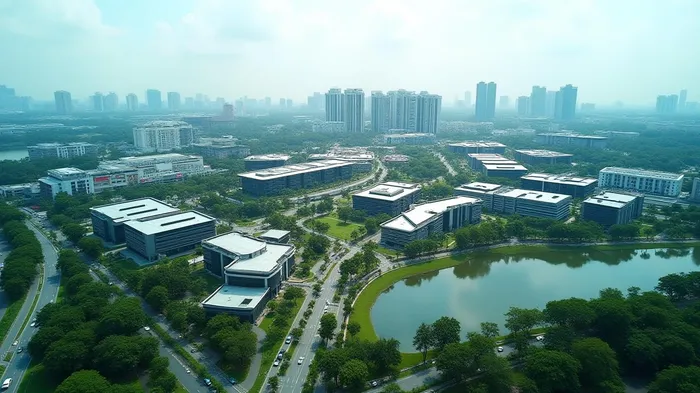
Brookfield’s recent acquisition of three industrial assets—The Strategy, The Synergy, and Woodlands Central—from Mapletree Industrial Trust (MIT) underscores its confidence in Singapore’s long-term growth narrative. These assets, strategically located near transport hubs and tech corridors, are priced at a 2.6% premium to March 2024 valuations. This isn’t a fire-sale; it’s a calculated bet on Singapore’s role as a global manufacturing and R&D hub.
Why Now?
1. Interest Rate Cyclicality: The U.S. Federal Reserve is expected to cut rates by mid-2025, easing refinancing pressures for REITs with floating-rate debt. Brookfield’s focus on fixed-rate hedging (72.8% for its hospitality REIT) further insulates its portfolio.
Geopolitical Resilience: Singapore’s status as a supply chain and tech nexus shields its industrial assets from trade wars. Brookfield’s acquisition targets high-tech business parks, aligning with its mega-themes of decarbonization and digitalization.
Valuation Disparity: While S-REITs overall are undervalued, Brookfield is targeting specific sub-sectors—logistics, data centers, and healthcare—that offer defensive cash flows. ParkwayLife REIT’s 100% occupancy in healthcare assets, for instance, exemplifies this resilience.
The Opportunity: High Yields, Low Risk?
The sector’s weighted average distribution yield of 6.17% offers compelling income potential. However, yields are a double-edged sword: High yields like IREIT Global’s 11.51% signal risk, not reward. Investors must prioritize REITs with low leverage (<40%), strong tenant covenants, and exposure to supply-constrained markets like Singapore’s office and retail core.
Brookfield’s strategy mirrors this discipline. Its acquisitions of MIT’s industrial portfolio—62.8% leased to tech firms—ensure steady income streams. Meanwhile, MIT’s divestment allows it to reduce debt, signaling confidence in its remaining assets.
Risks: The Storm Ahead
- Interest Rate Volatility: The Fed’s path remains uncertain. If rates stay high, REITs with maturing debt (e.g., Manulife US REIT at 59.4% leverage) could face defaults.
- Geopolitical Tailwinds: While Singapore benefits from its neutrality, a China-U.S. trade war could disrupt regional supply chains, hitting logistics REITs.
- Currency Headwinds: The Singapore dollar’s strength against the Australian dollar and yen erodes returns for REITs with offshore exposures.
How to Play the Trade: Brookfield’s Lead and Beyond
Investors can mirror Brookfield’s approach:
- Buy Industrial/Logistics REITs: Focus on names like Keppel DC REIT (9.4% 1-year returns, hyperscale data centers) and Frasers Centrepoint Trust (99.5% occupancy in suburban Singapore).
- Avoid Office REITs: Hybrid work trends and oversupply plague this sector.
- Hedge with Brookfield’s Funds: Consider their Asia-Pacific opportunistic funds, which target stressed assets at discounts.
Conclusion: A Cautionary Optimism
Singapore’s REIT market is a paradox—a sector so undervalued it’s attractive, yet so fragile it’s perilous. Brookfield’s move suggests conviction in a recovery, but investors must remain selective. Those willing to bet on Singapore’s structural strengths, paired with a Fed pivot, could reap outsized rewards. Yet the risks—rising rates, geopolitical shocks—are real. The verdict? Buy selectively, and hedge wisely.
The window for opportunistic investing in S-REITs may be narrowing. As Brookfield’s actions show, now is the time to act—but with eyes wide open.





Comentarios
Aún no hay comentarios