
Brookfield's $1 Billion Mumbai GCC: A Strategic Catalyst for India's Long-Term Real Estate and Talent-Driven Growth
. By developing Asia's largest GCC in Powai, Maharashtra, BrookfieldBN-- is not only capitalizing on the city's strategic advantages but also aligning with a broader, government-backed movement to position India as a global innovation hub. This project, slated for completion by 2029, , . Such commitments underscore the growing synergy between private capital, policy incentives, and India's deep talent pool, all of which are reshaping the nation's real estate and employment dynamics.
A GCC-Driven Real Estate Renaissance
The GCC boom is redefining India's commercial real estate market, with Mumbai emerging as a focal point. further illustrates this trend. The company's existing $4 billion portfolio in Mumbai, , highlights its confidence in the sector. , fueled by sectors like semiconductors, automotive, and life sciences.
The structural nature of this demand is evident in the shift from traditional IT outsourcing to innovation-driven GCCs. These centers now serve as hubs for AI, cybersecurity, and digital product development, requiring modern, flexible office spaces. For instance, , with Bengaluru, Hyderabad, and Pune leading the charge. 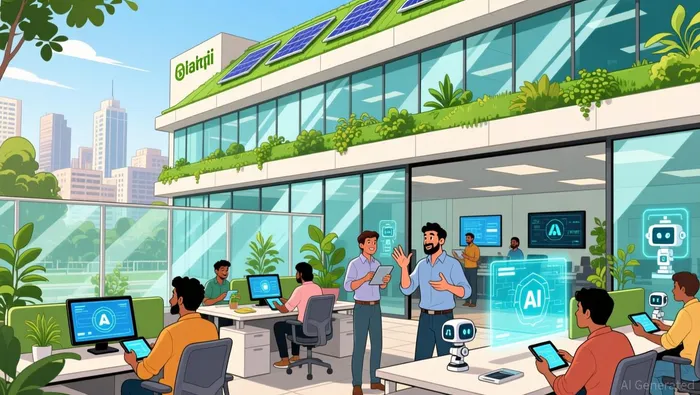 Brookfield's Powai GCC, with its emphasis on green infrastructure and long-term leases, aligns with this evolution, offering a blueprint for sustainable, high-value real estate development.
Employment Trends: High-Skill, High-Impact
The GCC ecosystem is also a catalyst for employment growth, particularly in . India's GCCs are , . , many in AI engineering, cloud architecture, and cybersecurity- than traditional IT positions. This shift is not confined to Tier-I cities: Tier-II and Tier-III locations like Jaipur and Coimbatore are gaining traction as GCC hubs, supported by government incentives and improved digital infrastructure.
The Maharashtra GCC policy, launched in 2025, exemplifies this strategic push. By , the state is leveraging its infrastructure and talent pipeline to attract global firms. Brookfield's collaboration with the Mumbai Metropolitan Region Development Authority (MMRDA) reflects this alignment, ensuring the project meets both economic and environmental benchmarks.
Structural Economic Impact: Beyond Real Estate
The GCC-driven transformation extends beyond office leasing and employment. These centers are fostering , . By 2027, GCCs are in India's top six cities, . Brookfield's investment, with its focus on green energy and long-term operational stability, positions it to benefit from this structural growth while supporting India's net-zero ambitions.
Moreover, GCCs are reshaping urban economies. The integration of industry and academia is producing a pipeline of job-ready professionals, while Tier-II cities are gaining access to high-quality employment opportunities. This decentralization reduces operational risks for global firms and broadens India's economic footprint.
Conclusion: A Strategic Catalyst
, irreversible trend: the convergence of real estate, employment, and innovation in India's GCC ecosystem. By anchoring a multinational bank's operations in a sustainable, high-capacity facility, Brookfield is not only securing long-term returns but also contributing to a structural shift in India's economic trajectory. As GCCs continue to drive demand for modern office spaces and high-skill jobs, investors who align with this trend-like Brookfield-are poised to capitalize on a decade-long growth cycle.





Comentarios
Aún no hay comentarios