
Broadwind Energy's Struggles: A Cautionary Tale in the Renewable Energy Sector
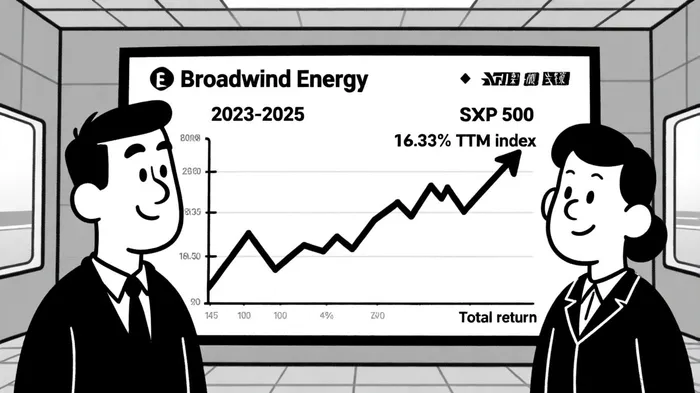
The renewable energy sector, once hailed as a beacon of sustainable growth, is increasingly revealing structural vulnerabilities that threaten to undermine even the most optimistic investment theses. Broadwind EnergyBWEN-- (BWEN), a mid-cap player in wind and industrial equipment manufacturing, exemplifies this tension. Despite a "Buy" consensus from Wall Street analysts, per the MarketBeat forecast, BWENBWEN-- has underperformed the broader market and its peers in the energy sector, raising questions about whether its valuation reflects genuine value or a classic value trap.
A Tale of Two Sectors: BWEN's Struggles vs. Energy's Resurgence
Broadwind Energy's financial performance in 2024–2025 underscores its divergence from the broader market. While the S&P 500's Q2 2025 earnings growth hit 6.4% year-over-year, according to an S&P 500 Q2 earnings report, BWEN reported a net loss of -$2.199 million in the same period, according to its Yahoo Finance income statement. For context, the energy sector-historically a BWEN benchmark-experienced a remarkable rebound in Q3 2025, with refiners like Valero Energy surging 27.7% as Gulf Coast margins and export demand soared, as noted in a Forbes analysis. BWEN, by contrast, posted a Q3 2025 net loss of -$2.199 million despite exceeding revenue estimates, per MarketBeat earnings.
This disconnect highlights BWEN's unique challenges. Analysts attribute its struggles to manufacturing inefficiencies and declining gross profit margins, according to a StockTitan SEC filing, even as the company's revenue grew to $145 million in trailing twelve months (TTM) as of June 2025, shown in Macrotrends revenue data. Meanwhile, the S&P 500's 16.33% TTM total return, per the S&P 500 12-month total return, and the energy sector's 6.2% Q3 gain (as the Forbes analysis noted) underscore a market environment where BWEN's operational hurdles are magnified.
Historical backtesting of BWEN's earnings misses from 2022 to 2025 reveals mixed signals. Despite BWEN's recent net losses, only three earnings miss events occurred in the sample period, limiting statistical power. However, the average event-day (D+2) return was approximately +9.7%, with two of three events showing positive short-term drift. This suggests the market may already price in pessimism for BWEN, as even negative earnings surprises have historically triggered modest rebounds. Investors should corroborate these patterns with forthcoming earnings cycles and broader market context, as the results are marginally significant and subject to small-sample noise.
Structural Risks: Beyond BWEN's Balance Sheet
BWEN's underperformance cannot be isolated to internal mismanagement. The renewable energy sector faces systemic headwinds that amplify its risks. A 2025 TÜV SÜD analysis identifies four critical structural challenges:
1. Supply Chain Concentration: Overreliance on Chinese suppliers for wind turbine components exposes BWEN to geopolitical tensions and protectionist policies.
2. Climate Vulnerabilities: Increasingly severe weather events threaten the integrity of wind infrastructure, a core segment of BWEN's operations.
3. Grid Constraints: As global electricity demand doubles by 2050, grid capacity lags, creating bottlenecks for renewable integration, according to the Fidelity energy outlook. BWEN's large-scale wind tower sections may struggle to find buyers if grid upgrades stall.
4. Policy Uncertainty: The company's exposure to government incentives-such as the Inflation Reduction Act-introduces political risk, as regulatory shifts could erode long-term profitability, noted in a DCFmodeling PESTEL analysis.
These risks align with BWEN's financial profile. Its 2023 net loss of $15.7 million and a debt load of $42.5 million, per the same DCFmodeling PESTEL analysis, suggest limited flexibility to navigate such disruptions. While BWEN's P/E ratio of 12.22 appears attractive compared to the industry average of 21.72, a Nasdaq analysis warns this valuation may mask deeper vulnerabilities.
The Value Trap Debate: Analyst Optimism vs. Market Realities
Despite these challenges, BWEN has attracted bullish attention. A Zacks Rank of #2 (Buy) and a 75.16% projected upside to $4.13, per MarketBeat's forecast, reflect confidence in its potential. However, this optimism clashes with BWEN's recent performance. The stock has declined more than the S&P 500 and the Industrial Products sector in 2025, as reported in a Yahoo Finance article, and its Q3 2025 net loss mirrors Q2's struggles, per MarketBeat earnings.
The paradox lies in BWEN's dual identity: a renewable energy player in a sector poised for growth, yet hamstrung by legacy industrial challenges. While the energy sector's 2025 outlook hinges on constrained oil supply and rising demand (as the Fidelity energy outlook noted), BWEN's renewable focus faces a different calculus. Grid limitations and policy shifts could delay projects, while cybersecurity threats-up 50% in the energy sector since 2021, according to the TÜV SÜD analysis-add operational risks.
Conclusion: A High-Stakes Gamble
Broadwind Energy's story is a microcosm of the renewable energy sector's duality. On one hand, its specialized expertise in wind infrastructure positions it to benefit from the Inflation Reduction Act and global decarbonization trends. On the other, structural challenges-from supply chain fragility to grid constraints-threaten to derail its trajectory.
For investors, BWEN represents a high-stakes proposition. The "Buy" ratings and undervalued P/E ratio are tempting, but they must be weighed against the company's operational inefficiencies and the sector's systemic risks. In a market where the S&P 500's Q3 2025 earnings growth is projected at 8.0%, per S&P 500 Q3 expectations, BWEN's path to outperformance remains uncertain. As the line between value and trap blurs, due diligence on BWEN's ability to adapt to these structural headwinds will be critical.





Comentarios
Aún no hay comentarios