
Broadstone Net Lease: A Strategic Rebalance Positions the REIT for Long-Term Stability and Growth
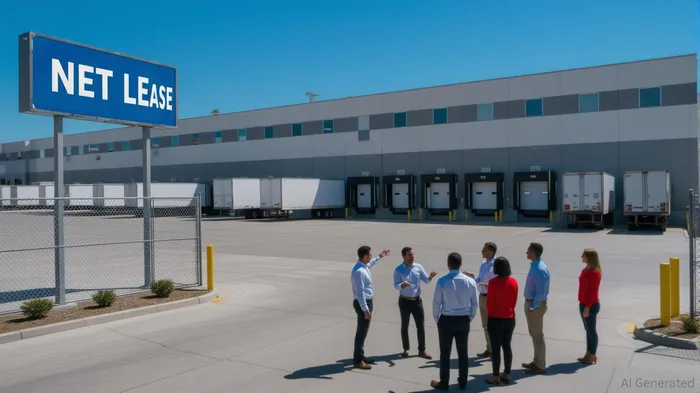
In the ever-shifting landscape of real estate investment trusts (REITs), few stories are as compelling as Broadstone NetBNL-- Lease's (BNL) recent strategic repositioning. The company's decision to exit non-core assets and double down on industrial and retail properties has not only reshaped its portfolio but also earned the endorsement of KeyBanc Capital Markets, which upgraded BNLBNL-- to Overweight with a $20 price target. This move isn't just a ratings call—it's a vote of confidence in BNL's ability to deliver resilient cash flows and long-term value creation. Let's break down why this REIT is worth watching.
A Portfolio Reinvented: From Healthcare to Industrial Powerhouse
BNL's transformation over the past year has been nothing short of surgical. By disposing of $366 million in clinical healthcare properties—reducing that segment's exposure from 9.7% to a mere 2.4% of annual base rent (ABR)—the company has streamlined its focus to high-growth, stable sectors like industrial and retail. Today, 73.1% of BNL's portfolio is industrial, with 6.9% in retail, and the remaining 10% in other diversified assets. This shift aligns perfectly with the current economic climate, where e-commerce-driven demand for industrial space is surging.
The results? A portfolio with 99.1% occupancy, 205 tenants (no single tenant exceeding 4% of ABR), and a weighted average lease term of 9.7 years. These metrics scream stability. But the real magic lies in BNL's build-to-suit pipeline, which includes eight active projects valued at $370 million. These developments, with an average yield of 7.5% and straight-line yield of 8.9%, are expected to add $28 million in incremental ABRABR-- by 2026. For investors, this means a steady stream of future earnings growth, even as the broader market fluctuates.
AFFO Resilience: A Testament to Disciplined Execution
Adjusted funds from operations (AFFO) is the lifeblood of any REIT, and BNL's performance here is nothing short of impressive. In Q2 2025, the company reported $74.3 million in AFFO, or $0.38 per share, a 5.6% year-over-year increase. This growth was driven by disciplined reinvestment of proceeds from asset sales, recoveries of past-due rents, and a focus on high-yield acquisitions.
KeyBanc's upgrade hinges on BNL's ability to maintain this momentum. The firm highlighted a 94.51% gross profit margin and a 5.3x net debt-to-EBITDA ratio, both of which underscore the company's financial discipline. Even with a 44.44% negative EPS surprise in Q2, BNL's revenue beat expectations by 2.02%, and its stock rallied 2.07% post-earnings. This resilience is a direct result of BNL's strategic focus on long-term leases (12.4-year weighted average terms) and annual rent escalations (2.8% average).
Why KeyBanc's Upgrade Matters
Analyst Upal Rana's 66.7% success rate and 5.9% average return over the past year add weight to KeyBanc's upgrade. The firm isn't just betting on BNL's current performance—it's betting on its future. The upgrade reflects confidence in three key areas:
1. Asset Diversification: BNL's shift to industrial and retail reduces exposure to volatile sectors like healthcare.
2. Affordable Debt Structure: With $802.1 million in available credit and a 5.3x net debt-to-EBITDA ratio, BNL has the liquidity to fund growth without overleveraging.
3. Operational Execution: The company's 100%+ lease recapture rate in 2025 and proactive management of tenant credit risks (e.g., At Home, Claire's) demonstrate operational rigor.
The Road Ahead: Buy, Hold, or Wait?
For investors, BNL presents a compelling case. At $15.99 (post-earnings close), the stock trades at a discount to KeyBanc's $20 target, offering a potential 25% upside. The company's raised 2025 AFFO guidance to $1.48–$1.50 per share (4.2% growth at the midpoint) and its commitment to mid-single-digit growth in 2026 further justify optimism.
However, caution is warranted. While industrial demand is robust, rising interest rates could pressure cap-ex heavy sectors. BNL's 7.2% cap rate on new acquisitions is healthy, but investors should monitor how the company navigates a potential slowdown in tenant credit quality.
Final Verdict
Broadstone Net Lease's strategic repositioning has transformed it into a REIT with a best-in-class industrial portfolio, resilient AFFO, and a clear path to long-term growth. KeyBanc's upgrade isn't just a ratings bump—it's a signal that BNL is now a serious contender in the net-lease space. For those seeking a REIT with a balance of stability and upside, BNL deserves a spot on the radar. As the company continues to execute its build-to-suit pipeline and capitalize on industrial demand, the $20 price target could well be conservative.
Actionable Takeaway: Consider adding BNL to a diversified portfolio, especially if you're positioned for a long-term hold. With its strong fundamentals and strategic clarity, this REIT is poised to deliver steady returns in a volatile market.





Comentarios
Aún no hay comentarios