
The Broadening August Rally: From Tech to Small-Cap Rotation and AI-Driven Momentum
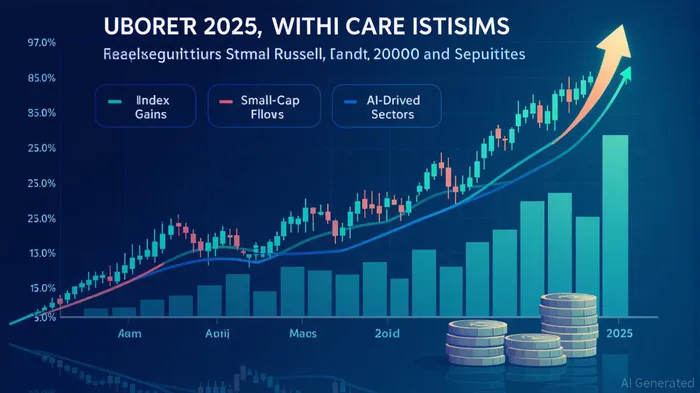
The August 2025 market rally marked a pivotal shift in asset allocation strategies, as investors navigated a maturing market cycle characterized by sector rotation and AI-driven momentum. This broadening rally, which saw small-cap stocks outperform large-cap tech leaders for the first time in years, reflects a recalibration of risk appetite and macroeconomic expectations. Strategic asset allocation in this environment demands a nuanced balance between high-growth AI-centric equities and economically sensitive small-cap rotations, while addressing valuation risks and diversification needs.
The Tech Sector’s AI-Driven Momentum
The "Magnificent 7" tech stocks, long the market’s dominant force, faced profit-taking pressure in August 2025, ceding ground to a more diversified rally. However, AI-driven momentum remained a critical undercurrent. Companies like Nvidia and Snowflake exemplified the sector’s resilience, with Nvidia’s Blackwell platform driving a 56% year-over-year revenue surge to $46.7 billion in Q2 2026 [1]. Similarly, Snowflake’s AI tools contributed to a 32% revenue increase, despite ongoing operating losses [5]. These firms underscore the AI infrastructure boom, which is projected to reach $3–$4 trillion by 2030 [4].
Yet, the S&P 500’s record highs in August were not solely attributable to tech. The index’s 2.6 percentage point gain from NVIDIANVDA-- alone [2] masked a broader reallocation of capital toward sectors perceived as more resilient to macroeconomic headwinds. This "Great Rebalancing" highlights the duality of investor sentiment: optimism about AI’s transformative potential coexists with caution over stretched valuations. The Information Technology sector’s P/E ratio of 37.13 in August 2025, well above its five-year average of 26.70 [2], raises questions about sustainability.
Small-Cap Rotation and Macro Tailwinds
The most striking feature of the August rally was the surge in small-cap equities, led by the Russell 2000’s 5% weekly gain [2]. This rotation was fueled by dovish signals from the Federal Reserve, particularly Fed Chair Jerome Powell’s comments at the Jackson Hole symposium, which hinted at rate cuts starting in September 2025 [1]. Small-cap stocks, which are more sensitive to interest rate changes and consumer spending, benefited from expectations of reduced borrowing costs and economic stimulus.
Data from Schwab’s analysis indicates that the Russell 2000 traded at a 25-year low EV/EBIT ratio relative to the S&P 500 in August 2025, while projecting 22% earnings per share (EPS) growth for the year [1]. This valuation discount, combined with robust demand in sectors like industrials and consumer staples, made small-cap equities an attractive hedge against tech sector concentration risks.
Strategic Asset Allocation in a Maturing Cycle
As market cycles mature, investors must balance AI-driven growth with defensive positioning. LPL Research’s Strategic and Tactical Asset Allocation Committee (STAAC) recommends reducing overall portfolio risk by favoring value stocks and emerging markets over growth-oriented equities [5]. This approach aligns with the broader shift toward sectors like healthcare and utilities, which historically perform well during periods of volatility [6].
For AI-centric exposure, a hedging strategy is essential. Covered calls and protective puts can mitigate near-term risks in high-growth tech stocks while maintaining upside potential [2]. Additionally, diversification into non-traditional assets—such as commodities, global infrastructure, and Treasury Inflation-Protected Securities (TIPS)—can enhance resilience against inflation and geopolitical shocks [5].
Risk Management and AI-Enhanced Frameworks
The integration of AI into risk management frameworks is critical for navigating late-cycle volatility. Advanced models like GPT-4o/5 and Gemini 2.5 enable real-time scenario analysis, while the NIST AI Risk Management Framework (AI RMF) provides guidelines for addressing ethical and operational risks [3]. For small-cap rotations, AI-driven analytics can identify high-potential investments while monitoring liquidity constraints and sector-specific vulnerabilities [6].
However, investors must remain vigilant about model risk and regulatory compliance. The U.S. National Institute of Standards and Technology (NIST) emphasizes transparency and accountability in AI deployment, particularly in markets where misinformation risks are elevated [5]. Balancing AI’s predictive power with traditional risk controls ensures a scalable, explainable approach to portfolio management.
Conclusion
The August 2025 rally underscores the importance of adaptive strategic asset allocation in a maturing market cycle. While AI-driven tech growth remains a cornerstone of long-term innovation, the shift to small-cap equities and value sectors reflects a pragmatic response to macroeconomic uncertainties. By integrating AI-enhanced risk frameworks, diversifying across geographies and sectors, and hedging high-growth exposures, investors can navigate volatility while positioning for sustained growth.
Source:
[1] Stock Rally Broadens in August [https://schwabnetwork.com/articles/stock-rally-broadens-in-august]
[2] Navigating the AI-Driven Bull Run: Why Tech Rotation and ... [https://www.ainvest.com/news/navigating-ai-driven-bull-run-tech-rotation-sector-diversification-key-2025-2509/]
[3] AI Risk Management Framework [https://www.nist.gov/itl/ai-risk-management-framework]
[4] Artificial Intelligence - Worldwide | Market Forecast [https://www.statista.com/outlook/tmo/artificial-intelligence/worldwide]
[5] Strategic Asset Allocation 2025: A 3-to-5-Year Perspective ... [https://www.lpl.com/research/blog/strategic-asset-allocation-2025-a-3-to-5-year-perspective-of-markets.html]
[6] Stock Market Rotation in 2025: What Investors Need to Know [https://www.ebc.com/forex/stock-market-rotation-in--what-investors-need-to-know]







Comentarios
Aún no hay comentarios