
Broadcom's Strategic Vulnerabilities in a Shifting Tech Landscape
In the ever-evolving semiconductor and cloud infrastructure sectors, Broadcom Inc.AVGO-- (AVGO) has emerged as a dominant force, driven by its $69 billion acquisition of VMware and its leadership in AI accelerators. However, the company's rapid ascent has exposed strategic vulnerabilities that could test its long-term resilience. As regulatory pressures mount in Europe and market concentration risks loom large, investors must weigh these challenges against Broadcom's impressive financial performance.
Regulatory Crosswinds in the European Union
According to The Motley Fool, which cites TechSpot, the European Cloud Competition Observatory (ECCO) has accused the company of imposing "punitive" contract terms on cloud providers, stifling fair competition. These allegations have triggered a formal antitrust investigation by the European Commission, with demands for corrective measures such as pricing transparency and revised contractual terms. The stakes are high: noncompliance could result in significant fines, potentially denting Broadcom's profitability.
Compounding these concerns, a LinkedIn analysis notes that the European Court of Justice is set to review CISPE's antitrust challenge to the VMware acquisition. CISPE, a trade group representing cloud providers, argues that the deal has reduced competitive alternatives in hybrid cloud solutions. A ruling against BroadcomAVGO-- could force the company to divest parts of its VMware integration or face operational restrictions in Europe-a critical market for its infrastructure software segment.
Market Concentration: A Double-Edged Sword
Broadcom's financial success in fiscal 2025 underscores its strategic bets. Q3 results revealed a 22% year-over-year revenue surge to $15.95 billion, fueled by a 63% jump in AI semiconductor sales to $5.2 billion, as that LinkedIn analysis reported. Yet this growth is inextricably tied to a narrow set of hyperscale customers. Data from The Motley Fool highlights that Alphabet, Meta, and ByteDance account for a $60 billion to $90 billion opportunity by 2027. Such concentration leaves the company exposed to shifts in client strategy-such as in-house chip development or diversifying suppliers-which could erode margins.
Geopolitical risks further amplify these vulnerabilities. An InvestDiva analysis warns that Broadcom's reliance on TSMC in Taiwan for manufacturing exposes it to trade tensions and supply chain disruptions. Meanwhile, a MarketMinute story notes that public cloud giants like Microsoft and Amazon are positioning their own hybrid cloud solutions as alternatives to VMware-powered offerings, threatening customer retention.
Strategic Implications for Investors
While Broadcom's AI-driven growth and VMware integration have attracted investor enthusiasm, the company's vulnerabilities demand scrutiny. Regulatory fines or forced divestitures could disrupt its software monetization strategy, while customer attrition or geopolitical shocks might temper hardware demand. Short-term technical indicators already suggest a bearish trend, echoing concerns raised by the InvestDiva analysis, raising questions about whether the stock's valuation fully accounts for these risks.
Investors should monitor three key developments:
1. EU Court Rulings: Outcomes in the CISPE case could reshape Broadcom's European operations.
2. Hyperscaler Dynamics: Shifts in client R&D priorities (e.g., in-house chips) may accelerate.
3. Trade Policy Shifts: Escalating U.S.-China tensions could impact TSMC's production stability.
Conclusion
Broadcom's strategic position at the intersection of semiconductors and cloud infrastructure remains formidable. Yet the interplay of regulatory scrutiny, customer concentration, and geopolitical risks paints a complex picture. For investors, the path forward hinges on whether the company can adapt its business model to mitigate these exposures while sustaining its AI-driven growth. In a tech landscape defined by rapid change, even the most dominant players are not immune to the forces of disruption.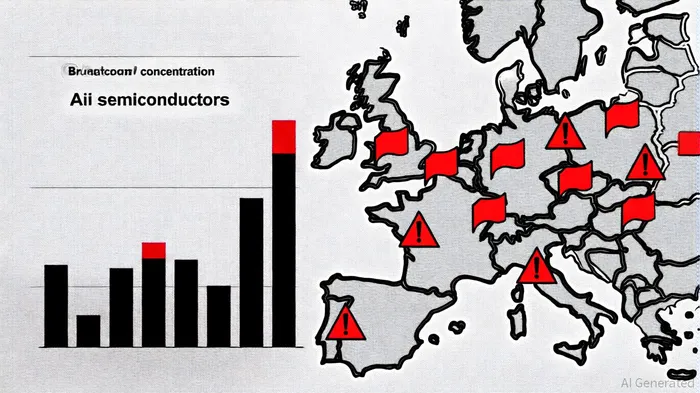





Comentarios
Aún no hay comentarios