
Britons' Economic Confidence Hits Record Low: Implications for Investors
The British public’s confidence in the economy has plummeted to its lowest level since Ipsos MORI began tracking the metric in 1978, according to its April 2025 poll. With a net balance of -68—calculated by subtracting the 75% of respondents predicting economic decline from the meager 7% expecting improvement—the results reveal a level of pessimism unmatched even during previous crises like the 1980 recession, the 2008 financial collapse, or the 2020 pandemic. For investors, this stark data underscores both risks and opportunities in the UK’s economic landscape.
The Current Sentiment: A Historic Low
The April 2025 survey shows Britons are deeply skeptical about the economy’s near-term prospects. A staggering 75% of respondents believe the UK economy will worsen over the next 12 months, a sharp rise from the 67% recorded in March . This pessimism has surged since Prime Minister Keir Starmer’s Labour government took office in July 2024, with economic confidence dropping by 30 percentage points compared to June 2024. Such a rapid decline suggests public trust in the government’s ability to deliver on its growth agenda—vowing to make the UK the fastest-growing G7 economy—is eroding.
Historical Context: A Depression-Level Mood
The -68 net balance shatters previous records. During the 1980-82 recession, confidence dipped to -64; during the 2008 financial crisis, it reached -60; and in the 2020 pandemic, it hit -62. The current figure marks the first time the index has crossed into the negative double digits since the series began.
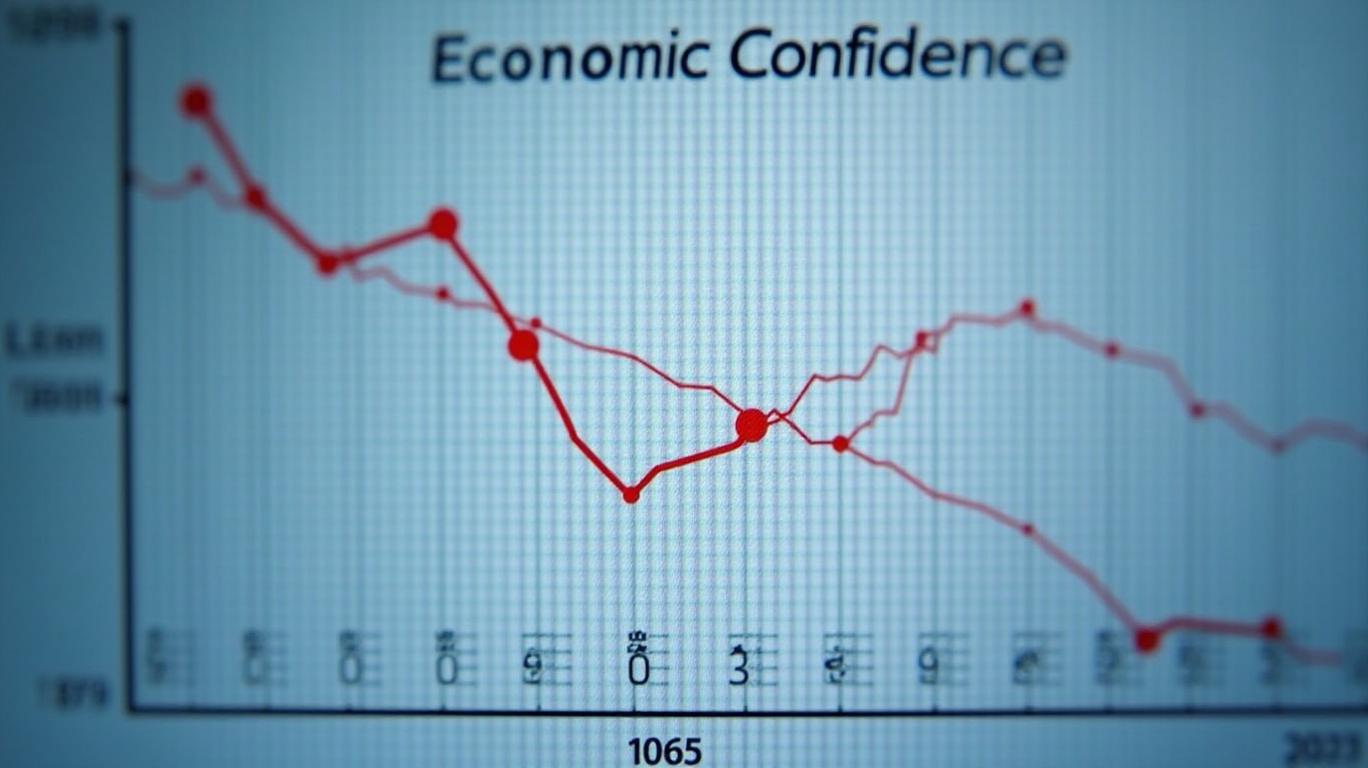
This historic low is not merely a statistical curiosity. It reflects a collective anxiety about trade, inflation, and political leadership. For investors, such sentiment often precedes market turning points—either as a catalyst for policy intervention or a harbinger of prolonged stagnation.
Key Drivers: Trade Tensions and Political Headwinds
Two factors dominate the pessimism:
1. US Tariffs and Trade Challenges: The UK’s trade-intensive economy (it has the third-highest trade-to-GDP ratio among G20 nations) leaves it vulnerable to global headwinds. Negotiations with the U.S. over avoiding retaliatory tariffs—potentially affecting sectors like automotive and financial services—add uncertainty.
2. Political Fallout: Starmer’s government faces a credibility test. Its growth-focused agenda now competes with public skepticism, with 62% of respondents in a separate Ipsos poll calling the Labour Party’s economic plans “unrealistic.”
Meanwhile, inflation—though moderating—remains a concern. While global inflation has eased to 4.2% (per December 2024 data), the UK’s cost-of-living crisis lingers, with housing costs and energy prices disproportionately affecting households.
Investment Implications: Navigating the Storm
The data paints a bleak near-term outlook for UK equities. The FTSE 100, which has underperformed the S&P 500 by 15% over the past five years, may face further pressure as consumer discretionary sectors (e.g., retail, travel) suffer.
However, sectors insulated from economic cycles—such as utilities, healthcare, and infrastructure—could outperform. Additionally, companies with exposure to global markets or defensible pricing power (e.g., luxury goods, tech) might weather domestic pessimism better.
The UK government bond market also merits attention. With inflation expectations subdued and the Bank of England likely to hold rates steady, long-dated gilts could offer yield stability.
Conclusion: A Crossroads for the UK Economy
Britons’ record-low economic confidence is a warning sign for investors. The data underscores that the UK is in uncharted territory: not just a post-crisis hangover but a structural skepticism about growth.
Key takeaways:
- Political Risk: Starmer’s government must deliver tangible improvements to rebuild trust. Failure could amplify market volatility.
- Sector Rotation: Defensive stocks and global earners are safer bets than domestic consumer plays.
- Historical Precedent: Previous -60+ lows were followed by rebounds, but only after policy shifts (e.g., fiscal stimulus or trade deals).
The stakes are high: with confidence at a 47-year low, even incremental positive data—like a modest uptick in manufacturing orders or a US-UK trade deal breakthrough—could spark a market rebound. Until then, caution and sector-specific focus are paramount.
In the words of Gideon Skinner of Ipsos: “This is not just a cyclical dip—it’s a deep-seated loss of faith in the system.” For investors, that faith may take years to rebuild.







Comentarios
Aún no hay comentarios