
Britain's Wind Energy Revolution: A Gusty Opportunity for Investors
The British government’s recent allocation of £720 million ($720 million) to wind farm incentives marks a pivotal moment in the nation’s renewable energy journey. This funding boost, aimed at accelerating offshore and onshore wind projects, signals a bold commitment to achieving net-zero emissions by 2050. For investors, this is more than a policy update—it’s a call to recognize the transformative potential of wind energy in a rapidly decarbonizing economy.
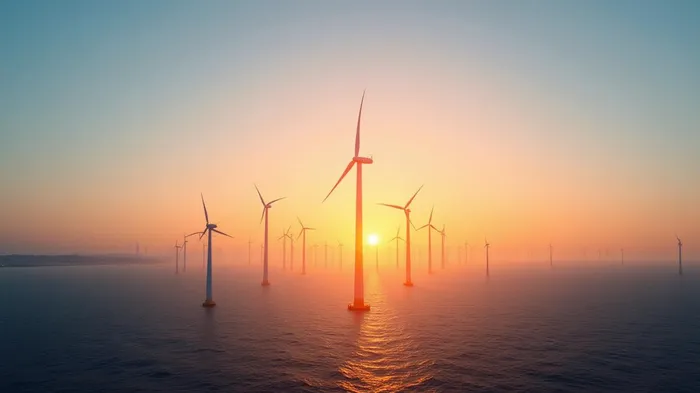
The Wind Shift: Why This Funding Matters
The UK has long been a leader in offshore wind, already supplying nearly 15% of its electricity. However, the new funding targets a critical gap: scaling up projects to meet rising demand while reducing costs. Historically, wind energy has seen dramatic cost declines—offshore wind prices fell by 65% between 2015 and 2022—making it increasingly competitive with fossilFOSL-- fuels. This latest investment will further drive economies of scale, potentially lowering costs even further.
Winners in the Wind Race
The funding directly benefits developers and manufacturers. Key players include Ørsted (ORSTED.CO), a global offshore wind leader with a dominant UK presence, and Siemens Gamesa (SGRE), a turbine manufacturer. Meanwhile, smaller firms like Mainstream Renewable Power and CIP (now part of Copenhagen Infrastructure Partners) are also positioning to capitalize on the expansion.
Investors should also consider supply chain opportunities. Companies like Rolls-Royce (RR.L) and Amec Foster Wheeler (AMCZF) are increasingly involved in turbine manufacturing and grid infrastructure. Additionally, the rise of floating offshore wind—a technology still in its infancy but critical for deeper waters—opens doors to innovators like Principle Power Inc.
Risks on the Horizon
While the outlook is promising, challenges remain. Intermittency of wind power requires robust energy storage solutions, and grid modernization to handle variable supply. Political risks, such as regulatory delays or subsidy cuts, also loom. Furthermore, competition from solar and hydrogen technologies could divert investment.
Conclusion: A Breeze to Success?
The £720 million investment is a catalyst, not an endpoint. By 2030, the UK aims to have 50 GW of offshore wind capacity, up from 14 GW today—a goal that, if met, would power every home in the country. With global wind installations projected to grow at a 7.5% annual rate until 2030 (per GWEC), British firms are poised to lead.
For investors, the numbers are compelling:
- Ørsted has delivered a 220% total return over the past decade.
- UK wind energy jobs have surged to over 30,000, with potential for 27,000 more by 2030.
- The funding will reduce carbon emissions by an estimated 12 million tons annually—equivalent to taking 2.7 million cars off the road.
While risks exist, the long-term tailwinds of climate policy, technological advancement, and public demand for clean energy make wind a strategic bet. As turbines harness the North Sea’s winds, they also promise to fuel returns for forward-thinking investors. The gales of opportunity are here—act before they blow past.







Comentarios
Aún no hay comentarios