
Bristol Myers Squibb and insitro's AI-Driven Collaboration: A Strategic Leap for Shareholder Value and Competitive Edge
Bristol Myers Squibb (BMY) and insitro's extended collaboration represents a pivotal shift in the pharmaceutical industry's embrace of artificial intelligence (AI) for drug discovery. By leveraging insitro's ChemML™ platform, the partnership aims to accelerate the development of therapies for amyotrophic lateral sclerosis (ALS), a neurodegenerative disease with no approved disease-modifying treatments. This collaboration, which includes up to $20 million in new funding and potential milestone payments exceeding $2 billion, underscores BMY's strategic pivot toward AI-driven innovation to address unmet medical needs and secure long-term shareholder value [1].
Strategic AI Integration: A New Paradigm in Drug Discovery
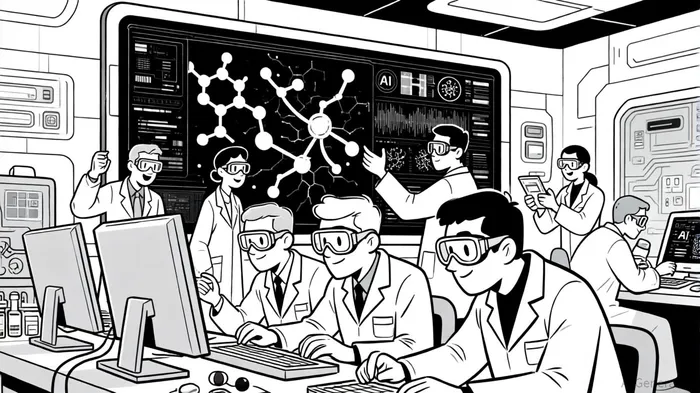
insitro's ChemML platform combines AI-driven modeling, medicinal chemistry, and structural biology to rapidly translate novel targets into advanced small-molecule leads [1]. The platform's integration of 192 H100 GPUs and proprietary libraries for drug-target binding data generation enables iterative design cycles that reduce preclinical R&D costs by 25–50% and accelerate timelines by up to 60% [4]. For BMYBMY--, this represents a departure from traditional, resource-intensive drug discovery models. Daphne Koller, CEO of insitro, emphasizes that the platform's ability to identify and validate targets in under 18 months-compared to the industry average of five years-positions the collaboration to deliver transformative therapies for ALS [1].
Financial Implications: Milestones and Market Potential
The collaboration's financial structure reflects its high-stakes nature. BMY has already paid $50 million upfront and $25 million in milestone fees for the identification of the first novel ALS target [3]. With potential aggregate value exceeding $2 billion, including royalties on net product sales, the partnership aligns BMY's financial incentives with successful clinical outcomes. Analysts note that such high-value deals are becoming standard in AI-driven pharma, with 42% of firms reporting R&D savings through AI integration [1]. For insitro, the collaboration validates its AI-native model, which has demonstrated 80–90% success rates in Phase I trials-far exceeding traditional methods' 40–65% [4].
Industry Context: AI as a Catalyst for Market Growth
The AI-driven drug discovery market is projected to grow from $2.35 billion in 2025 to $7.61 billion by 2034, driven by 65% of pharmaceutical firms adopting AI to streamline trials and improve data integration [1]. BMY's collaboration aligns with this trend, as competitors like Pfizer and Roche invest in AI platforms such as NVIDIA's "Charlie" and "lab-in-the-loop" strategies [5]. However, BMY's vertically integrated approach-combining AI with specialized disease models and high-content imaging-creates a compounding competitive advantage [2]. This is particularly critical as BMY navigates patent expirations for blockbuster drugs like Eliquis and Revlimid, with AI-driven pipelines offering a buffer against revenue declines [2].
Competitive Positioning: BMY vs. Peers
While companies like Roche and Pfizer leverage AI for broad R&D optimization, BMY's focus on high-unmet-need diseases like ALS differentiates its strategy. insitro's success in identifying ALS targets that reverse cellular deficits in patient models highlights the platform's precision [1]. In contrast, generalist AI platforms often struggle with data quality and model interpretability [5]. BMY's collaboration also benefits from North America's dominance in AI adoption (56.18% market share in 2024), where robust R&D ecosystems and venture capital support accelerate innovation [1]. This positions BMY to outpace peers in Asia-Pacific markets, where AI adoption is growing but still lags in regulatory maturity [1].
Shareholder Value and Investment Case
For investors, the BMY-insitro collaboration offers dual upside: near-term milestone payments and long-term therapeutic breakthroughs. With BMY's stock trading at a P/E of 6.5 and a P/S ratio of 2.0, the company appears undervalued despite its strong $14.6 billion free cash flow [2]. Analysts project a 31.37% stock price increase over the next year, driven by AI's potential to offset patent cliffs and unlock new revenue streams [5]. Moreover, the collaboration's $2.1 billion potential value-combined with BMY's $2 billion cost-saving initiatives-signals disciplined capital allocation [2].
Conclusion: A Compelling Case for Early Investment
BMY's partnership with insitro exemplifies how AI is reshaping pharmaceutical innovation. By combining cutting-edge technology with a focus on high-impact diseases, the collaboration not only addresses unmet patient needs but also strengthens BMY's competitive positioning in a rapidly evolving market. For investors, the alignment of financial incentives, technological differentiation, and industry tailwinds makes this a compelling case for early investment in AI-enabled drug discovery.







Comentarios
Aún no hay comentarios