
Bridging the Gap: Institutional Adoption of Crypto Assets Through Binance and Franklin Templeton's Initiatives
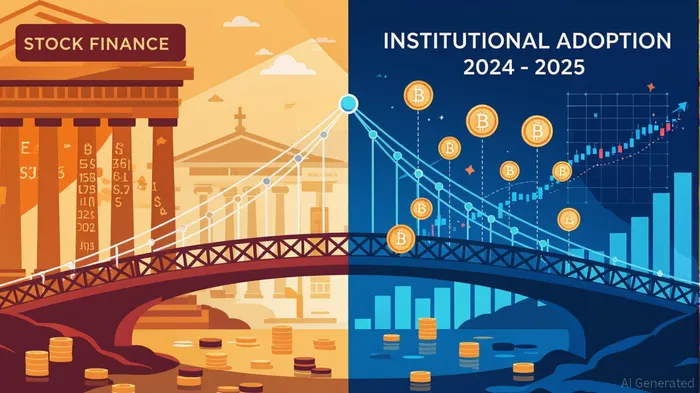
The institutional adoption of crypto assets has accelerated in 2024-2025, driven by evolving regulatory frameworks, technological advancements, and growing demand for diversified portfolios. While direct collaborations between traditional finance giants and crypto platforms remain sparse, companies like Binance and Franklin Templeton are independently advancing integration efforts, albeit with distinct strategies and challenges.
Binance: Expanding Institutional Infrastructure Amid Regulatory Scrutiny
Binance, the world's largest cryptocurrency exchange by trading volume, has prioritized institutional services to solidify its role in bridging traditional and digital finance. According to user discussions on RedditRDDT--, the platform has introduced tailored solutions such as custody services, staking products, and API-driven trading tools for institutional clients[3]. These initiatives aim to address the needs of hedge funds, asset managers, and corporations seeking exposure to crypto markets.
However, Binance's expansion faces significant hurdles. Regulatory pressures, particularly in the United States, have limited functionalities for U.S. users, with reports of restricted deposit options and compliance challenges[6]. Additionally, concerns about fund safety persist, as highlighted by community debates on Reddit, where users question the exchange's resilience amid global regulatory shifts[5]. Despite these risks, Binance's aggressive innovation—such as its recent forays into tokenized assets and cross-chain interoperability—signals a long-term commitment to institutional adoption[1].
Franklin Templeton: A Cautious Approach to Crypto Integration
Franklin Templeton, a global asset management leader with over $1.8 trillion in AUM, has not yet announced concrete initiatives to integrate crypto assets into its institutional offerings, based on publicly available data up to September 2025[4]. This contrasts with its peers, such as BlackRockBLK-- and Fidelity, which have launched bitcoinBTC-- ETFs and custody services. Franklin Templeton's silence may reflect internal deliberations over regulatory clarity, market volatility, or strategic prioritization of ESG and alternative assets.
That said, the firm's potential entry into crypto could catalyze broader institutional adoption. For instance, its expertise in structuring complex financial products—such as its existing ETPs (exchange-traded products)—could translate into crypto-linked instruments if regulatory frameworks stabilize. The absence of public partnerships or product launches, however, underscores the sector's fragmented landscape and the hesitancy of traditional players to commit without clearer guidelines[2].
Implications for Investors and the Market
The divergent approaches of Binance and Franklin Templeton highlight the dual tracks of institutional adoption: crypto-native platforms pushing regulatory boundaries and traditional firms awaiting clarity before committing. For investors, this duality presents both opportunities and risks. Binance's institutional tools offer direct exposure to crypto markets but carry counterparty and compliance risks. Conversely, traditional firms like Franklin Templeton may provide safer, more familiar vehicles once they enter the space—but their delayed action could leave a void for aggressive crypto-native players.
Regulatory developments will be pivotal. The U.S. Securities and Exchange Commission's (SEC) ongoing enforcement actions against crypto platforms, including Binance[6], and its cautious stance on bitcoin ETFs could shape the timeline for traditional players like Franklin Templeton. Meanwhile, regions with friendlier regulations, such as the EU and Singapore, may see faster integration of crypto into institutional portfolios.
Conclusion
While Binance and Franklin Templeton have not directly collaborated to bridge traditional and crypto finance, their individual strategies reflect the broader tensions and opportunities in the sector. Binance's institutional push underscores the crypto ecosystem's maturation, even as regulatory headwinds persist. Franklin Templeton's cautious stance, meanwhile, illustrates the hesitancy of traditional players to fully embrace digital assets without clearer guardrails. For investors, navigating this landscape requires balancing innovation with prudence—a challenge that will define the next phase of institutional adoption.






Comentarios
Aún no hay comentarios