
Bridgewater's Sudden 65.3% Nvidia Exit: A Macro Signal or Market Correction?
The Macro-Driven Pivot: From AI Hype to Risk Mitigation
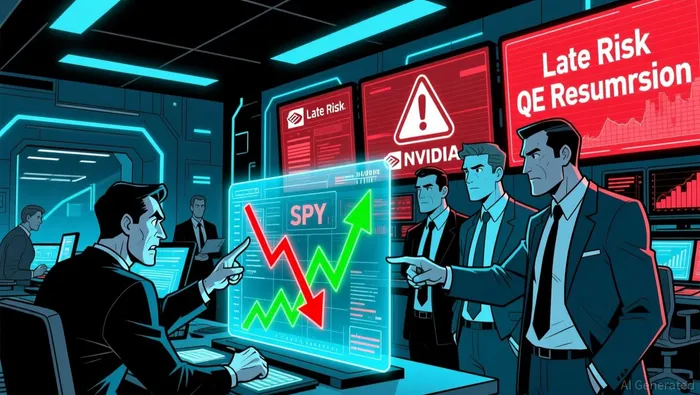
Bridgewater's exit from NVIDIANVDA-- aligns with a strategic pivot toward risk management. The firm simultaneously increased its holdings in the SPDR S&P 500 ETF (SPY) by 75.3% according to trade data, while trimming positions in other "Magnificent Seven" stocks like Google, Meta, and Microsoft according to reports. This reallocation reflects a macroeconomic playbook: reducing exposure to high-growth, high-volatility assets and pivoting to broad-market stability.
Ray Dalio's public commentary provides context. He warned that the global debt cycle has entered a "late-stage risk phase," with sovereign debt-rather than speculative markets-posing the next crisis catalyst according to Dalio's analysis. Bridgewater's Q3 moves mirror this thesis. By cutting NVIDIA and other tech bets, the firm is hedging against tightening fiscal and monetary policies, including the Federal Reserve's potential resumption of quantitative easing in a high-deficit environment as reported.
AI Valuations and the Cooling Hype Cycle
The AI sector's valuation dynamics also played a role. NVIDIA's meteoric rise in 2024–2025-driven by AI infrastructure demand-left the stock trading at a stratospheric multiple. Bridgewater's exit coincided with broader market skepticism about AI's sustainability. For instance, C3.ai (AI), another AI-focused stock, saw its valuation plummet 55% in 2025 amid leadership turmoil and a $116.8M net loss according to financial reports. Analysts project a 450% year-over-year earnings decline for C3.ai in Q4 2025 as analysts project, underscoring the sector's fragility.
Bridgewater's Q3 trades suggest a recognition that AI hype may be peaking. While the firm retained smaller positions in semiconductors (e.g., Lam Research (LRCX) according to trade data), it avoided overexposure to speculative AI plays. This nuanced approach highlights a shift from "trend following" to "risk-aware positioning."
The Macro Case: Debt Cycles and Fed Policy
Dalio's macroeconomic framework is central to understanding Bridgewater's strategy. He emphasized that the next crisis is more likely to stem from sovereign debt-not traditional market speculation according to Dalio's analysis. With global debt levels exceeding $400 trillion according to Bridgewater's data, and the U.S. fiscal deficit widening, Bridgewater's Q3 moves reflect a defensive stance.
The firm's increased SPY allocation also signals a bet on the S&P 500's resilience amid rate cuts. While the Fed paused hikes in 2025, markets priced in a 75% probability of cuts by mid-2026 according to market analysis. Bridgewater's SPY bet aligns with this expectation, leveraging the ETF's exposure to large-cap, cash-flow-driven companies that thrive in lower-rate environments.
Is This a Market Correction or a Macro Signal?
The answer is both. Bridgewater's exit from NVIDIA reflects a dual response:
1. Macro-Driven Risk Management: Hedging against debt-cycle risks and Fed policy shifts.
2. Market Realignment: Reacting to overvalued AI stocks and sector-specific volatility.
However, the broader implications are macro-centric. Bridgewater's Q3 trades-alongside similar moves by Renaissance Technologies and Two Sigma according to trade data-signal a systemic shift in institutional sentiment. The firm's emphasis on SPY, gold, and foreign equities according to reports underscores a preference for diversified, macro-resilient assets over concentrated tech bets.
Conclusion: A New Era of Macro-Driven Investing
Bridgewater's 65.3% exit from NVIDIA is not merely a stock-specific correction but a macroeconomic signal. It reflects a world where debt cycles, fiscal policy, and geopolitical risks dominate investor calculus. For retail investors, the takeaway is clear: the AI hype cycle is maturing, and macro fundamentals are reasserting their influence. Bridgewater's playbook-diversification, risk mitigation, and a focus on cash-flow stability-offers a roadmap for navigating the next phase of market dynamics.





Comentarios
Aún no hay comentarios