
BRICS Divisions and Middle East Tensions: Navigating Emerging Markets Amid De-Dollarization Risks
The BRICS bloc's fractured stance on the Israel-Iran-Gaza conflict has exposed both vulnerabilities and opportunities in emerging markets, particularly in currencies and commodities. As geopolitical divisions within the group deepen—marked by Brazil's humanitarian rhetoric, India's pro-Israel military sales, and China's quiet pragmatism—the interplay between BRICS' economic ties to the U.S.-Israel military-industrial complex and its push for de-dollarization creates a volatile yet fertile investment landscape.
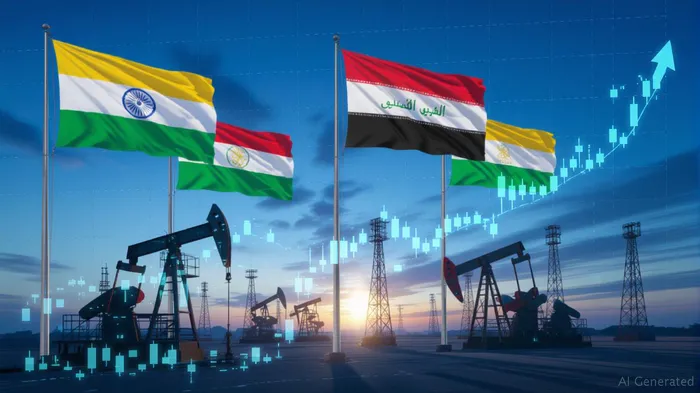
The BRICS Paradox: Division Amid Economic Interdependence
BRICS members are both partners and rivals in shaping global economic dynamics. While the bloc's 2025 summit avoided direct condemnation of U.S.-Israeli actions in Gaza, its members' economic dependencies reveal a complex calculus:
- Brazil: Despite President Lula's public criticism of Israel's Gaza campaign, Brazil remains a top exporter of soybeans to Israel, with agricultural trade reaching $2.1 billion in 2024.
- India: The world's largest democracy has supplied drones, AI systems, and labor to Israeli infrastructure projects in Gaza, bypassing U.S. sanctions—a move analysts estimate could generate $3 billion in revenue for Indian firms.
- China: While publicly advocating Palestinian rights, Chinese tech firms like DJI continue supplying drones to Israel, underscoring the disconnect between political rhetoric and commercial realities.
This duality creates a paradox: BRICS nations are economically tethered to Western-led systems (e.g., the dollar, global supply chains) while simultaneously advocating for alternatives like the New Development Bank (NDB) and local-currency trade agreements.
Opportunity 1: Commodities as Safe Havens in a De-Dollarizing World
BRICS' push to reduce reliance on the U.S. dollar could boost demand for commodities priced in alternative currencies or gold. Key plays include:
- Oil and Natural Gas: With Russia and Iran (a BRICS observer) under U.S. sanctions, Middle Eastern crude exports may increasingly bypass the dollar. Investors could benefit from exposure to oil ETFs (e.g., USO) or sovereign debt of energy-rich BRICS members like Russia and Brazil.
- Precious Metals: Gold has historically been a hedge against currency volatility. If BRICS accelerates de-dollarization, gold ETFs (e.g., GLD) or miners like Anglo American (AAL.L) could outperform.
- Base Metals: China's infrastructure projects in Africa and South America, funded through the NDB, may drive demand for copper and nickel (e.g., Freeport-McMoRanFCX-- (FCX)).
Opportunity 2: Emerging Market Currencies on the Brink
BRICS' internal divisions create asymmetric risks, but also pockets of undervalued currencies:
- Turkish Lira (TRY): Turkey's pivot toward BRICS (as a prospective member) and its role as a Middle Eastern mediator could stabilize its currency if de-dollarization gains traction.
- South African Rand (ZAR): South Africa's diplomatic clout in the bloc and its ties to African commodity exports position the rand as a proxy for BRICS cohesion. A could signal turning points.
Risk 1: Geopolitical Volatility Derails BRICS Momentum
Internal BRICS rifts—such as India's pro-Israel stance versus South Africa's support for Palestinian rights—could stall infrastructure projects and NDB loans. A breakdown in Middle East diplomacy might also reignite U.S. sanctions, destabilizing currencies like the ruble (RUB) or yuan (CNY).
Risk 2: The U.S. Counterpunch
Washington's tools—such as tariffs, SWIFT exclusion, or tech embargoes—remain potent. A shows how geopolitical flare-ups correlate with EM sell-offs.
Investment Strategy: Balance Exposure and Hedging
- Commodity Plays: Allocate 20-30% to oil/gold ETFs and base-metal miners.
- Currency Bets: Use inverse ETFs (e.g., UDNT for shorting USD) or long positions in TRY/ZAR if BRICS unityU-- improves.
- Equity Hedges: Pair BRICS ETFs (e.g., BKF) with U.S. military-industrial stocks (e.g., Raytheon (RTN)) to capture both sides of the dependency divide.
- Monitor Geopolitical Triggers: Track BRICS summits, Middle East ceasefire talks, and U.S. sanctions data for portfolio adjustments.
Final Take
BRICS' divided stance on Middle East tensions presents a high-reward, high-risk scenario. While de-dollarization is a long-term tailwind for commodities and emerging currencies, investors must remain nimble—ready to capitalize on BRICS cohesion or hedge against its collapse. As the bloc's 2025 summit showed, the path to multipolarity is littered with contradictions, but for the agile investor, it's a roadmap to profit.
Disclosure: This analysis is for informational purposes only. Always consult a financial advisor before making investment decisions.







Comentarios
Aún no hay comentarios