
Brent at $100+: Is the Market Overestimating the Chokepoint Risk?
The core event is stark: the U.S.-Israeli war on Iran, which began on February 28, has effectively shut the Strait of Hormuz. This narrow waterway is a global chokepoint, through which roughly one-fifth of the world's oil and natural gas supply passes. The immediate market reaction was extreme. Fueled by fresh strikes and missile barrages, oil prices surged, with Brent futures hitting $119.50 a barrel last week-the highest level since mid-2022. This spike triggered a sharp sell-off in U.S. stock index futures, with the Dow, S&P 500, and Nasdaq all down more than 1% as investors rushed to safe havens like gold and bonds.
Yet the reversal was just as swift. A de-escalation signal from President Trump caused Asian equities to rebound and oil prices to moderate. The catalyst was Trump's announcement that he was holding off on planned strikes on Iranian energy infrastructure for five days, citing "major points of agreement" in talks with Tehran. This abrupt shift caught traders off guard, with West Texas Intermediate crude rising after plunging more than 10% in the previous session.
This sets up the central question. The market's initial panic pushed oil to over $119, while equities sold off sharply on fears of prolonged disruption and inflation. The subsequent relief rally shows how quickly sentiment can flip. The key now is to assess whether the current price level for oil-still well above pre-conflict levels-already reflects the risk of a prolonged, severe disruption, or if the market is still pricing in a more optimistic, short-lived resolution.
Assessing the Priced-In Disruption
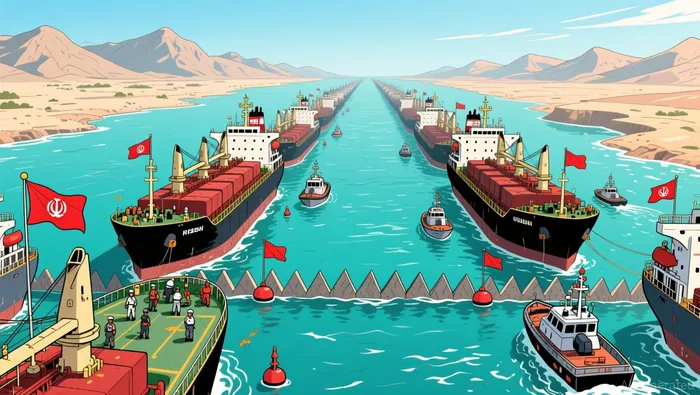
The market's current price for oil is a direct reflection of the conflict's severity and duration. Goldman Sachs's model provides a clear benchmark: a two-month disruption to the Strait of Hormuz would push its fourth-quarter Brent forecast from $71 a barrel to $93 a barrel. That's a significant premium, suggesting the market already prices in a major, but contained, supply shock. More broadly, the bank expects Brent to average over $100 a barrel in March and $85 in April, indicating a prolonged period of elevated prices is baked into the market's forward view.
This sets a high bar for the current price action. Brent futures have already traded above $100, and the bank's warning that prices could exceed its all-time high of around $147 per barrel if disruptions lengthen shows the upside risk remains substantial. In this light, the market appears to be pricing for a scenario that is worse than Goldman's two-month model, or at least one where the disruption is more persistent than the bank's base case.
Yet a counter-narrative of de-escalation introduces critical uncertainty. President Trump's recent signal to delay strikes for five days and cite "major points of agreement" with Tehran has already caused a sharp relief rally in oil. This diplomatic overture, coupled with a UK defense official's comment that partners are unlikely to send military assets into the strait, suggests the conflict may not escalate to a full, sustained blockade. The core question is whether the market's current price already reflects the worst-case scenario of a long, severe disruption, or if it is overestimating the likelihood of that outcome.
The asymmetry here is key. The risk of a prolonged blockade is priced in, as shown by the elevated forward curves. But the market may be underestimating the probability of a diplomatic resolution that shortens the disruption. This creates a setup where the downside risk to oil prices-should talks bear fruit-could be more significant than the upside, which is already stretched. The market is thus positioned for a conflict that may not last as long as its pricing suggests.
Financial and Economic Implications
The financial and economic fallout from sustained high oil prices is already beginning to show. The U.S. economy was in a fragile state before the conflict, with GDP growing at just a 0.7% annual rate in the fourth quarter, a sharp downgrade from the initial estimate. Inflation was also stubborn, with PCE inflation at 2.8% year over year in January. These pre-existing pressures create a vulnerable backdrop where elevated energy costs could easily exacerbate both inflation and growth concerns.
Corporate earnings face a direct squeeze. Higher input costs for transportation and manufacturing will likely compress margins, particularly for companies with limited pricing power. This risk is compounded by a broader economic slowdown, as seen in the Eurozone industrial production retreat and a stalled U.K. economy, both of which are expected to face added challenges from the jump in energy prices. The market's reaction to this dual threat has been one of selective hedging rather than broad capitulation. While oil prices have pushed stocks lower at times, the overall equity response has been muted, with the S&P 500 finishing a recent session relatively unchanged.
Analysts describe this as a market "hedged for conflict", where the upside from earnings and AI-driven growth is simply delayed rather than derailed. Julian Emanuel of Evercore ISI notes that strong corporate earnings beats have kept the market's forward view intact, suggesting a 6,520 support level in the S&P 500 holds. This cautious resilience is reflected in investor flows, which showed selective repositioning into energy ETFs and AI names, rather than a panic sell-off across the board.
The bottom line is a complex setup for central banks. They are already navigating a delicate balance between inflation and growth, with underlying inflation at 2.8%. Sustained oil prices above $100 would add a persistent upward pressure on headline inflation, potentially complicating any policy pivot. Yet the market's measured response suggests it is pricing in this risk without triggering a full-scale reassessment of economic prospects. The asymmetry remains: the downside risk to oil prices from a diplomatic resolution could be sharp, but the economic and corporate impact of a prolonged high-price environment is already being felt and is likely to be the more persistent headwind.
Catalysts and Risks: What to Watch
The market's current stance hinges on a fragile diplomatic thread. The primary catalyst is the outcome of the U.S.-Iran talks, which President Trump says are progressing. Any tangible progress could rapidly deflate the current price premium, as seen in the sharp relief rally when he first delayed strikes for five days. The reversal showed how quickly sentiment can flip. Yet, as Morgan Stanley's Chris Larkin noted, follow-through on any relief rally will likely require tangible follow-through on the geopolitical front. The market is living in a headline-driven state, and the absence of concrete deals means the premium remains vulnerable.
Conversely, the risk of renewed escalation is a persistent upside driver. The Strait of Hormuz has been effectively closed for 19 days, a disruption that Goldman Sachs calls "the largest oil supply shock on record". The bank warns that if this persists, Brent could exceed its all-time high of around $147 per barrel. Any shift in the U.S. or allied military posture that signals a return to full-scale strikes on Iranian energy infrastructure would likely push prices even higher, testing the market's resolve.
This creates a clear asymmetry. The market has priced in a severe, long disruption, with Goldman's model suggesting a two-month blockade would lift its fourth-quarter Brent forecast to $93 a barrel. Yet the latest signals point to a de-escalation path. This sets up a potential expectations gap. If diplomatic progress accelerates, the downside risk to oil prices could be more significant than the upside, which is already stretched. The market is positioned for a conflict that may not last as long as its pricing suggests.
The central question is whether the market's current stance is one of priced-in perfection. The evidence shows a setup where the worst-case scenario is reflected in the forward curves, but the probability of a swift resolution may be underappreciated. For now, the risk/reward favors a wait-and-see approach. The catalysts are clear: watch for diplomatic breakthroughs to deflate the premium, or for military signals to escalate and push prices higher. The current price level is a bet on the conflict's endurance, but the latest headlines suggest that bet may be getting ahead of itself.







Comentarios
Aún no hay comentarios