
Breaking Blockchain Silos: Avail's Nexus Unifies Liquidity and Execution
Avail's Nexus has launched as a cross-chain infrastructure solution aiming to unify liquidity and user flows across major blockchain ecosystems, positioning itself as Web3's execution spine rather than a mere bridge. The platform, developed by modular blockchain infrastructure provider Avail, connects rollups, appchains, and decentralized applications into a single operational framework where assets, liquidity, and users move seamlessly. This marks the first time Web3 has access to a coordinated, liquidity-aware cross-chain network, enabling developers and users to interact across ecosystems without fragmentation or reliance on traditional bridging tools according to reports.
The launch addresses long-standing challenges in blockchain interoperability, where siloed interactions and risky bridges have hindered user experience and developer innovation. Nexus employs an intent-solver architecture, allowing users to define their desired outcomes while the system autonomously determines optimal execution paths, liquidity sources, and routes. This approach eliminates the need for manual bridging, gasGAS-- token swaps, and fragmented liquidity management, streamlining transactions and ensuring predictable outcomes regardless of where liquidity resides. Key features include multi-source liquidity aggregation, exact-out execution, and unified verification powered by Avail's data availability (DA) layer, which aims to provide verifiable cross-chain actions.
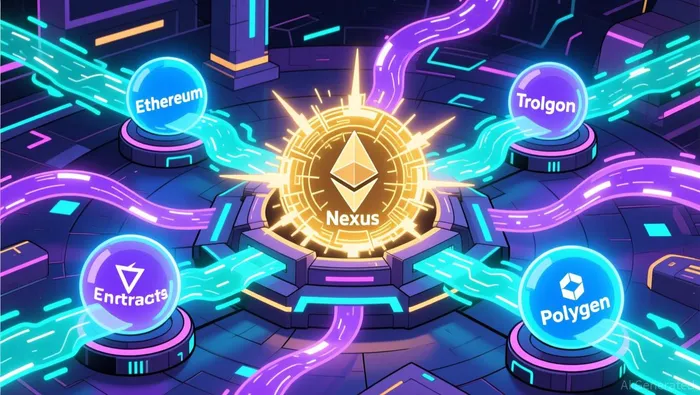 For users, Nexus offers a unified experience across ecosystems, enabling access to applications and deeper liquidity pools without navigating chain-specific complexities. Developers benefit from streamlined integration via SDKs, APIs, and modular elements, reducing the cost and complexity of building multichain applications by an order of magnitude. Avail co-founder Prabal Banerjee emphasized that Nexus transforms cross-chain execution from a fragmented process into a seamless, composable experience, where liquidity and execution become network-wide resources rather than chain-specific constraints.
The platform is already operational across EthereumETH--, TronTRX--, Polygon, Base, ArbitrumARB--, Optimism, BNBBNB-- Chain, and others, with SolanaSOL-- integration pending. Early adopters include DeFi protocols like Lens Protocol, infrastructure providers such as Sophon, and cross-chain tooling projects like Space & Time. These integrations unlock use cases such as unified collateral management for DeFi, intent-based trading across liquidity venues, and multi-chain liquidity aggregation according to analysts. The $AVAIL token serves as the coordination asset, facilitating cross-chain transactions and incentivizing participation in the network.
The platform's Infinity Blocks roadmap, targeting 10 GB block sizes, aims to support high-throughput appchains while maintaining verifiable cross-chain data.
Industry analysts view Nexus as a potential game-changer for blockchain interoperability, addressing fragmentation that has stymied mainstream adoption. By abstracting technical complexities and prioritizing user intent, Avail's solution could redefine how decentralized applications are built and used, fostering a more cohesive onchain economy.






Comentarios
Aún no hay comentarios